
Tucked into Ōtemachi, one of Tokyo's most buttoned-up business districts, sits a small monument guarded by stone frogs and a lantern: the kubizuka of Taira no Masakado. A kubizuka is literally a 'head tomb' — and in feudal Japan there were enough of them to make the word common.
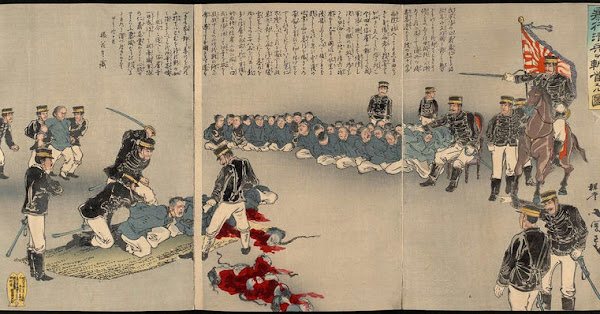
The practice goes back to the country's long civil war eras, when beheading was the standard punishment for serious crimes and the standard fate of defeated samurai. Under the Tokugawa shogunate (1603–1868), severed heads of criminals and rebels were put on public display as a deterrent. But Japanese religious tradition, drawing on both Buddhism and Shinto, holds that violent deaths leave restless spirits — onryō — behind. So the heads were buried with memorial rites to keep them quiet. Hence the shrines.
Masakado's story is the most famous of them all. A 10th-century warrior from the powerful Taira clan in the Kantō region, he started with a family land dispute in the 930s that snowballed into outright rebellion against the imperial court. By 939 he had seized provincial government offices and, by some accounts, declared himself ruler of eastern Japan. The court in Kyoto sent armies; in 940 he was killed at the Battle of Kojima, and his head was carted off to the capital and put on display.
Then the legend kicks in. The head, so the story goes, refused to rot — it glared at crowds and cried out for its body. After months on show, it supposedly flew through the night sky back east and landed near what is now Tokyo, where frightened villagers buried it and built a monument to calm its wrath. Ever since, disasters in the Kantō region have been blamed on Masakado's angry spirit.
The modern twists are what make the site genuinely strange. After the Great Kantō Earthquake of the early 1920s, the Ministry of Finance decided to build its new headquarters right on the shrine and flattened it. Within two years, fourteen employees of the temporary office on the site had died. The ministry relented, demolished the new building in 1928 and restored the kubizuka — but bad luck kept coming. In 1940, lightning struck ministry buildings and nine burned down. The ministry relocated to Kasumigaseki, and by the 1970s the shrine had passed into Tokyo municipal hands.
For something darker but related, head to Kyoto: the Mimizuka, or 'Ear Mound', holds the noses and ears Japanese troops collected from slain enemies during the invasions of Korea (1592–1598). Heads were too impractical to ship home, so facial trophies made the journey instead. The mound still stands today.
Why bother visiting a grave for a body part? Because kubizuka are where Japanese folklore, samurai history and modern urban life collide. Office workers still bow politely to Masakado's shrine on their way past — nobody wants to test the curse. It's a two-minute stop that says more about how Japan remembers its violent past than any museum plaque, and it pairs neatly with a walk through the Imperial Palace grounds just nearby.