A 56-year-old man went overboard from Carnival Panorama off Mexico's Baja Peninsula on 19 September, during the final stretch of a seven-night sailing. It's the kind of story that makes headlines precisely because it's so unusual — but it raises an obvious question for anyone eyeing up a cruise: what actually happens next?
First, the numbers. Tracking site Cruise Junkie counts 11 man-overboard cases so far this year, following 12 in 2025. Those incidents ranged from tragic to remarkable: a five-year-old girl fell from the fourth deck of Disney Dream on a sailing from the Bahamas, and her father jumped in after her, keeping her afloat for nine minutes until crew pulled both to safety. By contrast, a 77-year-old woman who went overboard from Holland America's Nieuw Statendam on New Year's Day was never found after an eight-hour search. Roughly 32 million people cruise each year, which works out to odds of about one in 1.4 million for a passenger, according to cruise blogger Emma Le Teace.
If you witness someone going into the water, the drill is simple: shout "man overboard" — sometimes announced internally as "Code Oscar" — alert a crew member, and throw anything that floats. The ship stops, outer decks may close, rescue boats launch, and the coastguard plus nearby vessels are notified to keep watch. Ships sailing from US ports with more than 250 passengers must carry camera systems, and some newer vessels have sensors that detect an overboard event automatically. The sobering stat: of 212 incidents between 2009 and 2019, just 48 — under 29 per cent — ended in rescue.
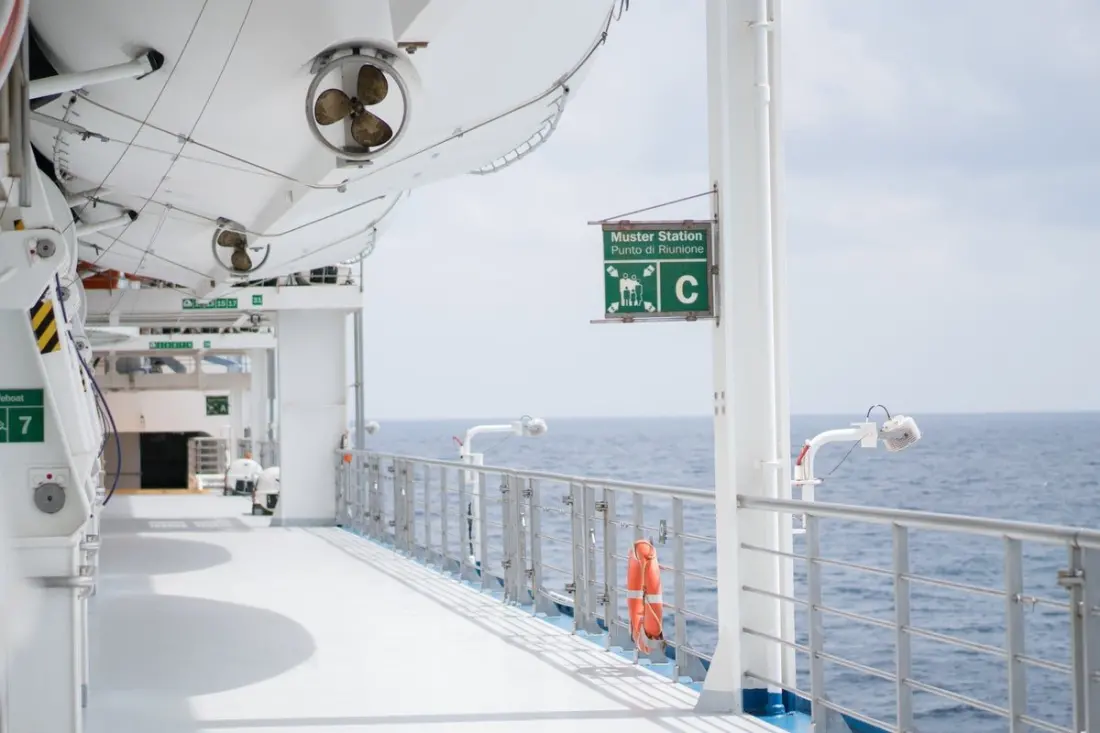
The industry's argument is that prevention is the real story. Cruise Lines International Association (CLIA) data shows every overboard incident recorded from 2009 to 2019 was deemed an intentional or reckless act, and the association says no one acting responsibly has ever accidentally fallen over a ship's railing. Railings on outer decks must stand at least 42 inches high, balcony railings a full metre, and ships face dozens of announced and unannounced safety inspections a year under International Maritime Organisation rules.
There's a legal angle worth knowing, too. Maritime lawyer Brad Huffman points out that cruise line liability is often capped by the fine print in ticket contracts — documents few passengers actually read — which can limit a family's options for compensation. One family is currently suing Royal Caribbean after 66-year-old Dulcie White went overboard during a Taylor Swift-themed cruise in October 2024, alleging staff kept serving her drinks despite her being visibly unsteady.
The takeaway for holidaymakers: cruising remains statistically one of the safest ways to travel, and falling off one is extremely difficult if you're not climbing railings or drinking past your limit. Book the cruise, read the ticket contract, skip the balcony gymnastics.