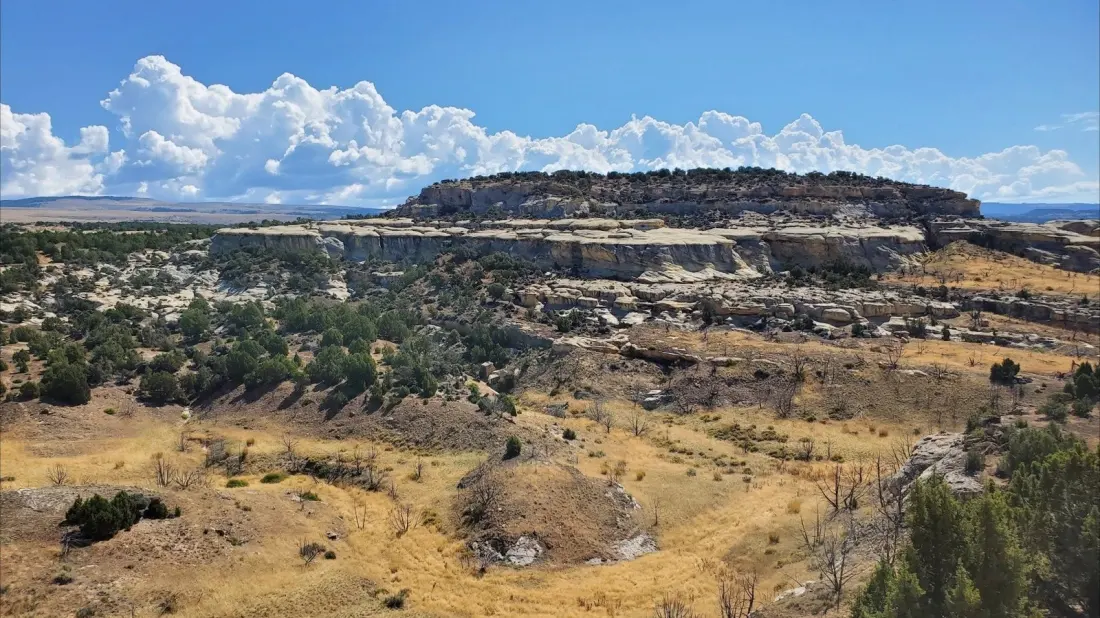
A 750-foot sandstone bluff in northern Wyoming carries one of the most complete human records on the continent — and you can pitch a tent a short walk from it. Medicine Lodge Archaeological Site, near the base of the Bighorn Mountains, protects rock art and cultural deposits that document more than 10,000 years of continuous habitation.
Excavations led by state archaeologist Dr. George Frison from the late 1960s onward took eight years and uncovered more than 60 distinct cultural levels, some buried over 20 feet deep. Diggers found tools, bones, and fire pits from the Paleoindian, Archaic, and Late Prehistoric eras. The site was designated a protected area in 1973 and now sits within the 12,000-acre Medicine Lodge Wildlife Habitat Management Area.
The centrepiece is the rock art along the bluff. Petroglyphs and pictographs — some around 2,000 years old — show warriors, bighorn sheep, bison, grizzly bears, elk, birds, and horses from later periods. There are rare female figures with tear streaks and a dart, plus what look like dance or ceremony scenes. The Rock Art Trail runs along the base of the cliff with 10 markers and interpretive signs, and unlike many rock art sites behind barriers, this one lets you view the panels up close.
What makes Medicine Lodge unusual for a state archaeological site is how much else there is to do. The 32-site campground — split into upper, middle, and lower loops for tents and RVs, with water spigots, restrooms, playgrounds, and one accessible site — earns regular praise as among the cleanest in Wyoming's parks system. Medicine Lodge Creek offers year-round fishing from four accessible piers, including fly-fishing for brown trout and a summertime swimming option. Off-road riders get a 28-mile two-track loop past the cliff and into red rock canyon country, though rain may demand four-wheel drive. There are also hiking and biking trails, horseback riding, hunting, and winter sports. The site is a stop on the remote Red Gulch/Alkali Backcountry Byway, which is at its best in autumn.
A nature trail along the creek adds wildlife watching: mule deer, cottontail rabbits, northern sagebrush lizards, prairie rattlesnakes, belted kingfishers, and mountain bluebirds are all commonly seen. Note that winter snow can limit access, including to some ADA-accessible areas.
For travellers, Medicine Lodge works as both a half-day stop and a proper base camp. It's under two hours' drive from Cody, making it easy to pair with a Yellowstone or Bighorn Basin trip. If you care about archaeology, it's one of the few places where you can read thousands of years of human history on a single cliff face and then sleep nearby. If you care more about getting outside, the fishing, trails, and off-roading alone justify a weekend. Either way, it remains one of Wyoming's quieter corners — few people outside the region know it exists.