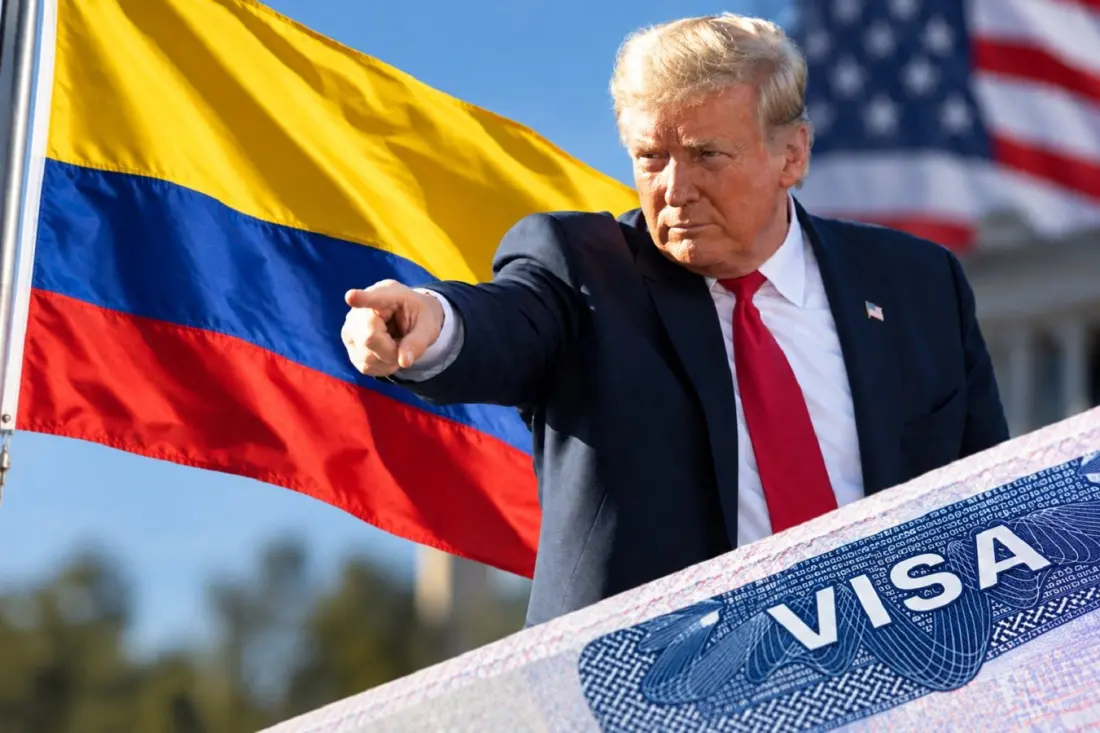
Colombians are getting more US visas overall — but almost all of the growth is in short-term tourism and business travel. State Department figures show 567,359 visas issued to Colombian citizens in 2025, up roughly 11% on 2024. Dig into the numbers, though, and the picture splits sharply in two.
B1/B2 visas, the permits covering holidays and business trips, jumped about 14%, from 465,051 to 531,431. They now make up more than 90% of all US visas granted to Colombians. Everything else is heading the other way: strip out B1/B2 visas and nonimmigrant visas fell around 22%, from over 36,000 to about 28,100.
The steepest drops are in categories tied to longer stays. F student visas fell 30%, from 4,293 to 3,018, while J exchange visas dropped 25%, from more than 12,000 to 9,327. A new rule effective September 15 replaced the old duration-of-status system with a capped admission period — generally four years maximum — for students and exchange participants. H-1B skilled worker visas fell 17% to 897, and new petitions for workers abroad now carry a $100,000 payment under a White House measure running for 12 months. Journalist visas fell 42%, with a new 240-day stay limit.
Permanent migration narrowed too: immigrant visas declined from roughly 10,300 to 7,800. Enforcement has tightened as well — the State Department said in August that more than 175,000 visas had been revoked since Donald Trump returned to office.
Getting a tourist visa is also harder than the headline growth suggests. An analysis by Visas Gomez & Asociados, cited by El Tiempo, found over 123,000 B1/B2 applications filed in the first three months of the year, with more than 40,500 denied — a 32.87% rejection rate, up from 26% at the end of 2025. The firm estimated Colombians spent around 36 billion pesos (about US$11.2 billion) on applications that failed.
The data can't separate the effect of new restrictions from lower demand or stricter vetting, but the shift in composition is clear and tracks with the administration's wider immigration stance.
For travellers, the practical read is this: if you're a Colombian planning a holiday in the US and already hold a valid B1/B2, little has changed day to day. But budget extra time and money for the application process if you're applying fresh — denial rates are climbing, and the non-refundable fees add up fast. Anyone considering study, exchange or work routes should assume shorter permitted stays, higher costs and more paperwork than a year ago, and check current rules directly with the US Embassy before committing to a program. Figures like these also matter for airlines, tour operators and universities that rely on Colombian visitors, since the mix of who can travel — and for how long — is being redrawn.