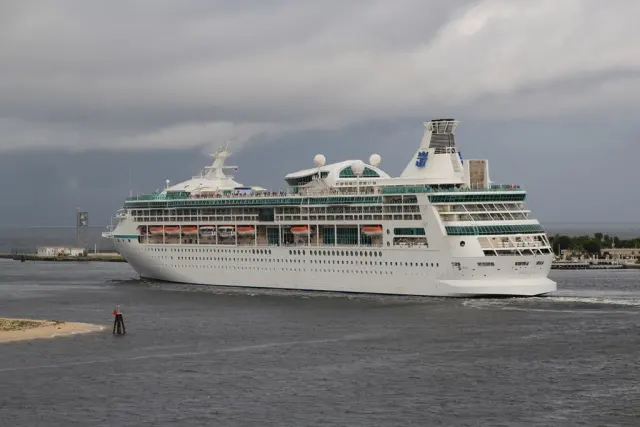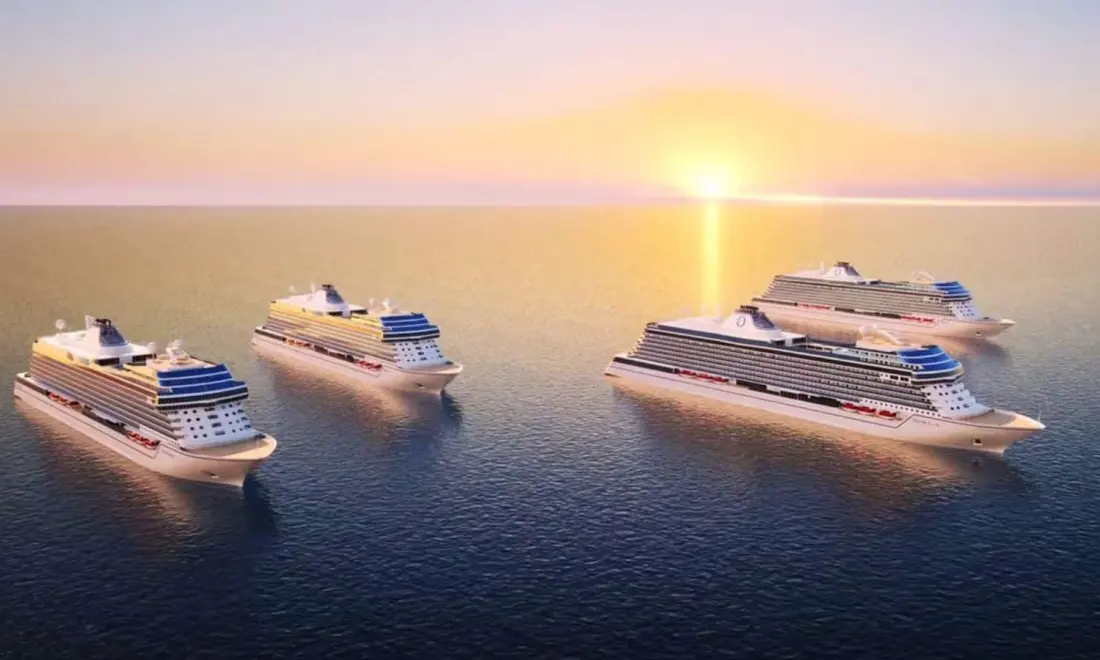
Oceania Cruises is quietly redesigning itself around a simple idea: some travellers want to stay on board a lot longer than a week. From 2027, the line's new ships will be up to 30% larger than the existing fleet while carrying barely more passengers — the extra space goes into bigger, apartment-style cabins designed for voyages that stretch to six months.
The shift starts with Oceania Sonata, the first of five new Sonata-class ships debuting in August 2027. Alongside it, the existing Nautica is being completely rebuilt as Oceania Aurelia, returning to service in 2027 as a dedicated world-cruise ship. Aurelia's headline act is a 180-day Around the World sailing departing Miami in January 2028, calling on six continents with overnight stops in Papeete, Bora Bora, Sydney, Bali, Tokyo, Bangkok and Mumbai. Nearly 100 UNESCO World Heritage sites sit within reach of the full itinerary.
If half a year sounds like a lot, the line has split that voyage into 12 segments of 10 to 19 days, now on sale. Highlights include a 17-day Miami to Los Angeles run through the Panama Canal, a 19-day South Pacific hop from Papeete to Sydney via Bora Bora, Pago Pago and Port Vila, and a 14-day Bali-to-Taipei route taking in Singapore, Manila and Palawan. Sonata, meanwhile, has shorter-but-still-substantial trips on sale: 44 days from Los Angeles to Miami, 55 nights from Barcelona to Los Angeles, and 36 days from London to Istanbul.
The positioning is deliberate. Fully residential ships like The World or Villa Vie Cruises ask buyers to purchase or lease a cabin — a genuine life change. Oceania is pitching the middle ground: immersive, months-long journeys with hotel-style comfort, but no property commitment. Jason Montague, the line's Chief Luxury Officer, frames it as ships that 'feel like home' for travellers who want to relax rather than plan.
Oceania isn't alone. Viking runs its World Discoveries itineraries, Regent Seven Seas pushes Legendary Journeys, Silversea keeps adding world cruises, and Azamara's slow-travel style keeps winning fans. The pattern is clear: cruise lines are chasing guests — often recently retired, or otherwise free of fixed schedules — who'd rather unpack once than navigate airports, connections and hotel changes every few days.
For anyone with time and flexibility, these long sailings change the maths of travel. One booking covers dozens of countries, small-group shore excursions handle the logistics, and the ship doubles as home base between ports. It's not residential cruising — but it's closer to it than mainstream cruising has ever been.