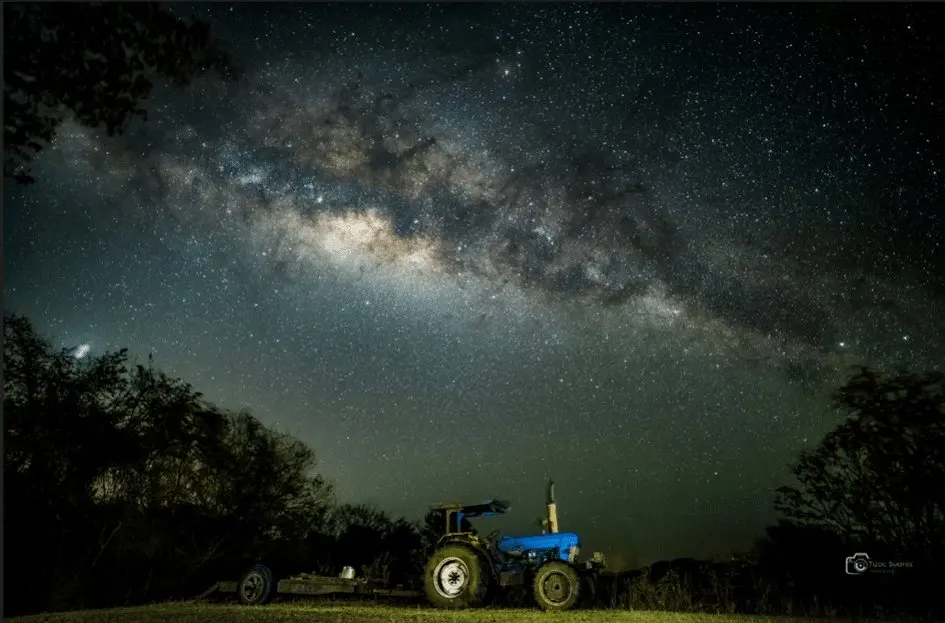
Costa Rica's October sky is packed. Saturn swings into opposition, two meteor showers peak, and a new moon mid-month hands stargazers some of the darkest skies of the season — all viewable without fancy gear.
The headline event is October 4, when Saturn reaches opposition and Earth passes directly between the ringed planet and the Sun. From Costa Rica, Saturn will be up essentially all night and well placed for telescopes, with its rings on show. Two days later, on October 6, the Moon sidles up to Jupiter in a pairing that's especially good for photography; Jupiter rises in the early morning hours through the month. Mars is also a morning target, and on October 7 Venus and Mercury appear together low in the western sky just after sunset — you'll need a clear horizon for that one.
The meteors come in two waves. The Draconids peak October 8–9, and because the Moon is nearly new, fainter shooting stars should be visible. The Orionids — debris from Halley's Comet — peak October 21–22 and are usually one of the year's better showers, though this year a brighter Moon will wash out some of the fainter streaks.
If you only remember five dates: October 4 (Saturn at opposition), October 6 (Moon and Jupiter), October 8–9 (Draconids), October 10 (new moon — the month's best night for the Milky Way and faint deep-sky objects), and October 21–22 (Orionids). Binocular users can also hunt for Uranus in the early morning and faint Neptune later in the night.
Costa Rica has a real edge here. Its tropical latitude means you can see both northern and southern parts of the celestial sky — a wider slice of the heavens than most North American guides describe. To get the most out of it, leave San José behind. Rural spots in Guanacaste, the Nicoya Peninsula, around Arenal, and the Osa Peninsula offer much darker skies when the weather plays ball.
That weather caveat matters: October sits squarely in Costa Rica's rainy season, so even a spectacular astronomical event can be lost behind cloud. Build flexibility into any trip, keep a few nights free rather than betting on one, and treat clear skies as a bonus rather than a guarantee.
For travellers, this is a neat excuse to combine a nature-heavy Costa Rica trip with something you don't get in cities: genuinely dark skies. Pair a rainforest or beach stay with a couple of late nights, pack binoculars rather than a telescope, and check the western horizon at sunset on October 7. Casual stargazers and photographers get the most out of this calendar — no expertise needed for a bright Saturn or a full Hunter's Moon rising on the night of October 26.
Full story from Howler Costa Rica.