Somewhere between a rosé and a light red sits palhete, one of Portugal's oldest and strangest wine styles — and right now, as chillable reds dominate wine lists, it's having a moment.
The name literally means "little straw wine" (palha is straw), a nod to its sometimes straw-coloured hue. In the Alentejo it's nicknamed petroleiro — petroleum — for its faint purple shimmer. Neither name does justice to a wine that can land anywhere between salmon, strawberry, ruby and deep fuchsia in the glass.
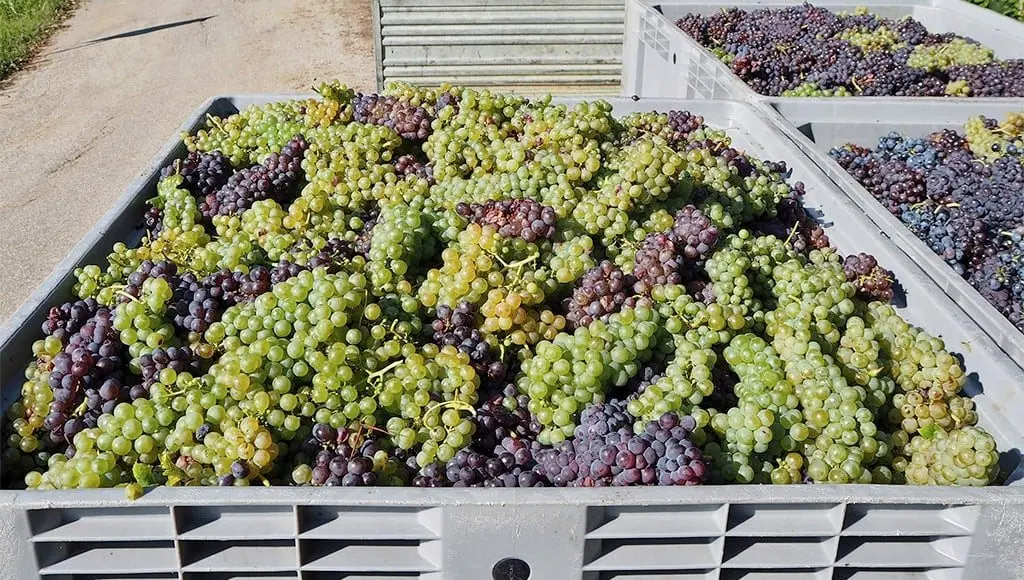
What makes palhete different from a clarete (Portugal's legal term for a pale red) is the method: palhete involves co-fermenting red and white grapes, with whites capped at 15% of the mix, or partially macerating reds. The result is typically a light-bodied, low-extraction red at 11-12% alcohol, made to be served cold. White grapes add citrus and orchard fruit; reds bring fresh berry and spice.
The tradition has murky origins. A legend tying the name to treaty negotiator Paul Methuen has been debunked, and the more romantic stories point to the Cistercian monks who arrived at the Alcobaça monastery in the 12th century. But the roots go deeper — field-blend viticulture, where 30 to 40 different red and white varieties were planted in the same plot, was a pre-Roman insurance policy against disease. Farmers harvested everything at once and fermented it together, producing a wine whose odd colour is the fingerprint of that ancient practice.
The style nearly died under the Estado Novo dictatorship (1933-1974), which forced growers to rip out field blends for grain monocultures. Stubborn pockets survived, and palhete is now sought after precisely for its lightness and its story.
One region stands apart: the small village of Ourém, north of Lisbon, still farms medieval vineyards in tiny parcels under 0.3 hectares. Its palhete — now under the Encostas d'Aire DOC, created in 2005 — flips the usual recipe: 80% white Fernão Pires to 20% red Trincadeira, essentially a white wine "painted" with red grapes.
Sommelier Candace Olsen, writing in Portugal Resident, calls it her "breakfast, lunch and dinner wine" and pairs it with grilled sardines, cataplana, octopus and black pork chops. Every bottle differs — some taste like rosé, others like red Burgundy — so exploration is the point. When in doubt, chill the bottle 20 minutes before opening.
Standout bottles to hunt down: Quinta do Montalto's organic Medieval de Ourém 2021, the Moreish and António Madeira field blends from the Dão, Monte da Casteleja from Lagos in the Algarve, and talha (clay-amphora) versions from Vila Alva and Vila de Frades in the Alentejo, plus a Douro field blend from Quinta do Infantado. Most are available at natural wine shops, wine bars or cellar doors.
For travellers touring Portugal between seasons, palhete is the ideal bridge — light enough for late-summer heat, substantial enough for autumn evenings. Ask for it by name at any tasca or wine bar; older staff may know it as petroleiro.