
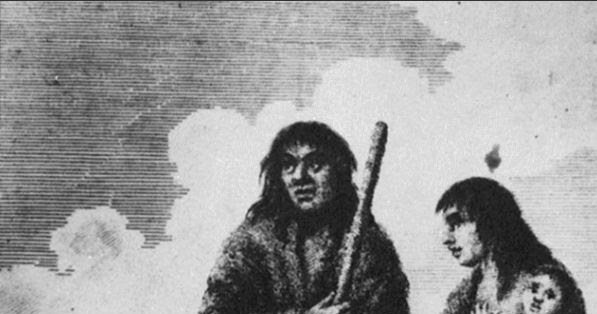
Before Patagonia became a byword for glaciers, guanacos and end-of-the-world road trips, it was famous across Europe for something stranger: giants. For nearly three centuries, sailors returned from the southern tip of South America insisting the region was home to people of enormous height, and the tale became one of geography's most durable myths.
The story starts in 1520, when Ferdinand Magellan anchored off the coast of what is now Argentina. His chronicler, Antonio Pigafetta, described meeting an Indigenous man so tall that the tallest Spaniard barely reached his waist — a naked figure on the shore, dancing and throwing dust on his head, who apparently believed the newcomers had descended from the sky. Pigafetta's account caused a sensation. Sailors began calling the locals "Patagones", and the name stuck to the land itself. One theory ties it to "pata" (foot), reading Patagonia as "Land of the Bigfeet"; another credits Patagón, a giant in a popular Spanish romance of the era.
The myth only grew. In 1628, a book about Sir Francis Drake's circumnavigation repeated the giant stories, though Drake's nephew did some damage control, trimming the claimed height from ten feet down to seven and a half. In 1766, word spread that Captain John Byron — grandfather of the poet — had encountered a tribe of nine-foot Patagonians. Other voyagers were more sober: the Wallis and Carteret expedition of 1767 reported men between 5'10" and 6'7", while French explorer Louis de Bougainville measured his tallest at 6'4". When Byron's official account finally appeared in 1773, it debunked the nine-foot rumours, though he still recorded the people as an impressive 6'6".
So who were the "giants"? Most were almost certainly Tehuelche, the Indigenous people of the Patagonian plains. They genuinely were tall for their time — men often exceeding six feet when the average European stood around five and a half — and their thick hide cloaks and sturdy build amplified the impression. Add the theatrical instincts of sailors spinning tales back home, and ordinary tall people became ten-foot monsters. By the 19th century, scholars had filed the legends under exaggeration.
For travellers, the story is part of the region's charm. The very name Patagonia carries this history of wonder, and it colours everything from the windswept Atlantic coast around Puerto San Julián — where Magellan wintered and met his "giant" — to the steppe towns where Tehuelche heritage is still remembered. It's a good reminder that the far south of Argentina has always drawn people hungry for the extraordinary; today they come for the Perito Moreno glacier, the granite spires of El Chaltén and Torres del Paine just over the Chilean border, and the same endless, wind-scoured plains that once convinced Europeans the earth's tallest humans lived there.
The myth faded, but the sense of scale never left. Patagonia remains a place that makes visitors feel small — just not quite as small as Pigafetta claimed.