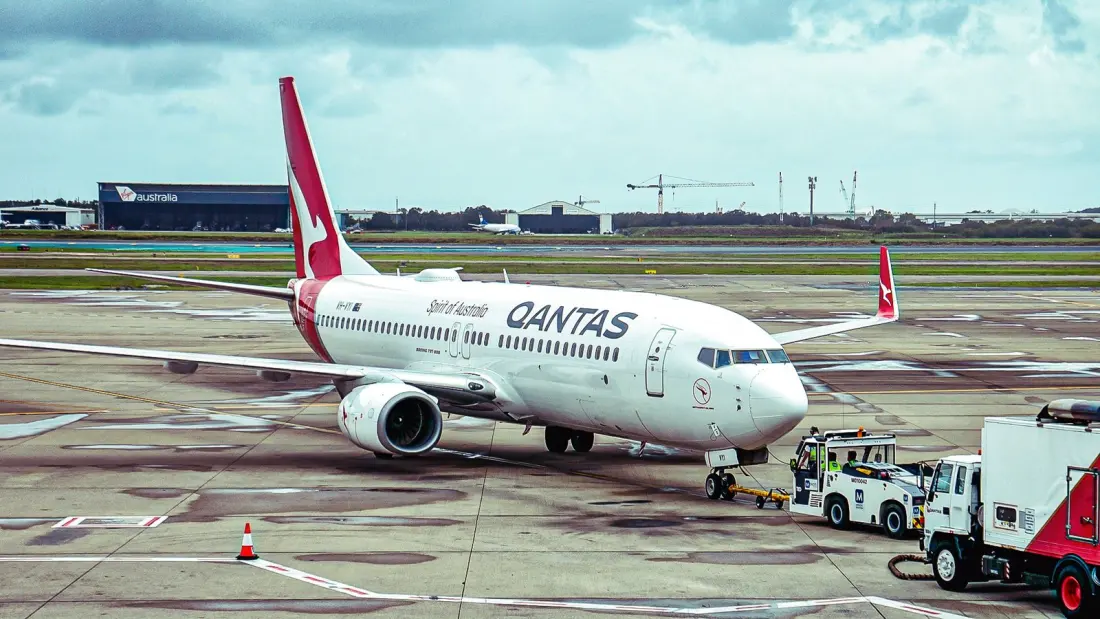
Qantas is about to pull off one of the trickiest fleet transitions in modern aviation, and it's spending AUD 12.8 billion to do it. The Australian carrier starts phasing out its Boeing 737 fleet in late 2026, swapping in Airbus A321XLRs on busy city routes and smaller A220-300s on regional sectors. The catch: a pilot trained on a 737 can't just hop into an Airbus flight deck. Converting requires full ground school, simulator checks and supervised line flying, so for a window in early 2027 Qantas will temporarily have more 737-qualified captains and first officers than it has 737 flying hours for them.
Rather than forcing redundancies, the airline is leaning on natural attrition. Around 300 pilot retirements are expected across the group over the next five years, which gives Qantas a release valve: displaced 737 crews can sit on reserve rosters or fill dedicated Airbus transition slots without permanently swelling the payroll. The company's finances can absorb the friction too — it posted an underlying profit before tax of AUD 2.064 billion in FY26.
There's a big payoff on the other side. The two-pronged Airbus plan, known as Project Winton, sees the A220-300 fly thin regional routes with 20% less fuel burn per seat, while the A321XLR takes over dense trunk routes between Sydney, Melbourne and Brisbane with more seats and cargo space. The A321XLR's 4,700 nautical mile range also opens up narrowbody international flying to Southeast Asia and the Pacific that the 737-800 couldn't manage without payload penalties. Qantas expects the swap to add AUD 150-200 million in annual earnings by 2027, most visible on the competitive Sydney–Perth corridor.
There's a long-haul angle as well. The first Airbus A350-1000ULR for Project Sunrise is due in April 2027, and A321XLR command experience is designed to feed pilots toward those 22-hour nonstop flights to London and New York. The main risk is outside Qantas' control: industry-wide Airbus and Boeing delivery delays could leave trained crews waiting for airframes. Next on the retirement list, meanwhile, are the ten A380s — now slated to go four years earlier than first planned.
For travellers, the practical upshot is a newer, quieter, more fuel-efficient fleet on domestic routes from 2027, with more nonstop options to nearby international destinations. The transition itself shouldn't mean cancellations — that's precisely what Qantas is engineering to avoid.