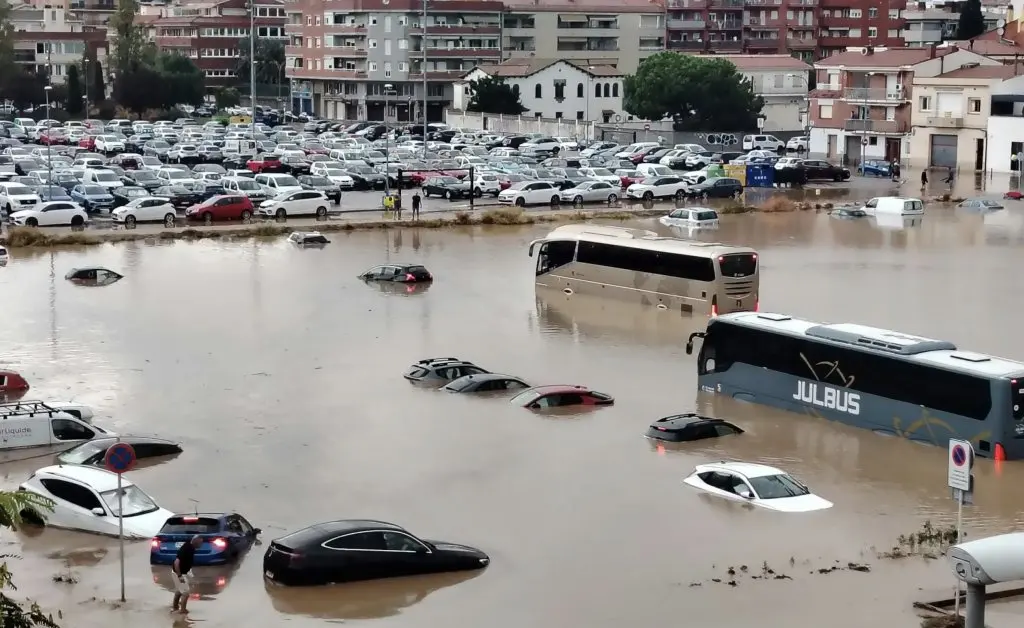
Torrential rain has battered Catalonia in north-eastern Spain, killing at least two people and leaving one missing, as rivers burst their banks, hospitals flooded and rail and air travel ground to a halt across the region.
Barcelona recorded its wettest day since rainfall observations began in 1883. The Can Bruixa station in the Les Corts district logged 213 millimetres, the highest figure ever recorded in the city, while Granollers saw 248 litres per square metre, including 68 millimetres in just half an hour. Mataró (244mm) and Cabrils (232mm) were also hit hard. The Catalan weather service Meteocat described the system as a disturbance of tropical origin, with its director Sarai Sarroca suggesting it marks a shift in Catalonia's climate pattern; a 'mini-hurricane' had been forecast to move inland from the Mediterranean before the worst of the downpour.
A 65-year-old man died in Tordera when a wall collapsed at a campsite where he was pumping out floodwater, and a second death was confirmed in Montornès del Vallès. A search continued for a person missing in the Pineda stream. Emergency services were stretched overnight: the 112 line took 5,904 calls, firefighters handled more than 1,400 incidents, and medics attended 237 people, none seriously hurt in that tally.
Emergency restrictions covering 20 districts ran from Saturday evening until 2pm on Sunday, banning non-essential travel and suspending outdoor and cultural events. Barcelona's Gran Teatre del Liceu cancelled a performance of Aida and football fixtures were called off. Trains were suspended, including Ferrocarrils de la Generalitat services, and high-speed rail was interrupted. Roads closed after a landslide on the C-16 at Vallvidrera, and Barcelona-El Prat airport saw cancellations and delays. Granollers General and Blanes hospitals both flooded, with patients directed to facilities in Mollet del Vallès, Mataró, Vic or Sant Celoni.
The danger was not confined to the coast. Civil Protection sent repeated ES-Alert phone warnings about the Besòs river, which was flowing at 903 cubic metres per second near Santa Coloma de Gramenet — well above safe levels — and about the Ridaura and Daró rivers near Girona. Authorities urged people to stay away from rivers, avoid basements and ground floors if water reached their buildings, and keep travel to a minimum as the storm's focus shifted north-east towards Girona province.
For anyone with trips planned to Barcelona or the Costa Brava, this is a reminder to keep an eye on Meteocat warnings and Catalan emergency alerts, follow official guidance during ES-Alert notifications, and build flexibility into bookings during the autumn storm season. Prime Minister Pedro Sánchez echoed the official advice: avoid unnecessary journeys and follow the emergency services' updates.