
A new black-and-white documentary, Gianfranco Rosi's Pompei: Below the Clouds (out on Mubi since March), has inspired a fresh look at the territory around Naples — and it turns out the best route in is the train the crowds take without looking out the window.
Most visitors to the area catch the narrow-gauge Circumvesuviana from Napoli Porta Nolana and head straight to Pompei or Herculaneum. Rosi's film, shot without narration, argues for staying aboard and watching the region unfold: Vesuvius to the east, the smoking volcanic craters of the Phlegraean Fields to the west. The journalist behind this piece, a Naples-based film-maker, followed suit — and found some remarkable stops along the way.
East of the city, the line skims the bay through towns where history stacks up in the walls. At Torre Annunziata, Roman brickwork, salvaged Doric columns and postwar apartment blocks sit in visible layers. A short detour leads to Villa Oplontis, thought to have been built for Poppaea Sabina, Nero's second wife — its frescoes and colonnade remarkably intact, and usually almost empty. Further along at Somma Vesuviana, a University of Tokyo team has spent decades excavating the Villa Augustea, the imperial estate where Emperor Augustus is believed to have died in AD14, buried not by the famous AD79 eruption but a later one in AD472.
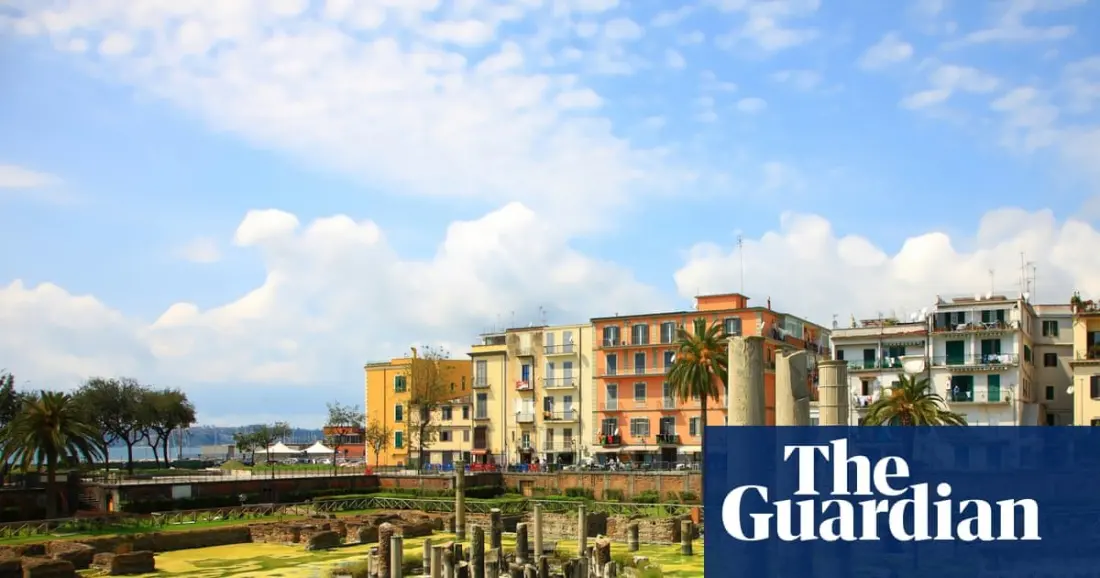
The other line, the Cumana, leaves from Montesanto in central Naples and reaches Pozzuoli in about 25 minutes. This port town of 75,000 sits inside one of the world's most active volcanic calderas, and you can smell it: sulphuric steam drifts over the harbour. At the Macellum, a 2nd-century Roman market, bands of mollusc-bored holes halfway up the columns show how the land has sunk and risen with bradyseism — the whole city breathes with the ground. Offshore, the submerged ruins of nearby Baia hold marble statues standing upright on the seabed, fish swimming over the mosaics.
Back in the city centre, the Museo Archeologico Nazionale houses the finest of what these digs have produced — marble torsos, bronzes and frescoes pulled from the same volcanic earth that buried Pompei and Herculaneum. For a different kind of relic, the church of Santa Maria Francesca delle Cinque Piaghe in the Quartieri Spagnoli is lined with hundreds of ex-votos shaped like pregnant women, offerings to the city's fertility saint that are still actively left today.
Who is this for? Anyone who has done Pompei and Herculaneum and wants more, or who prefers their archaeology without the coach crowds. The trains are noisy and often packed, but they're cheap, frequent, and they turn the journey itself into part of the story — ancient, layered and very much alive, all within half an hour of central Naples. Pompei: Below the Clouds makes a good primer before you go.