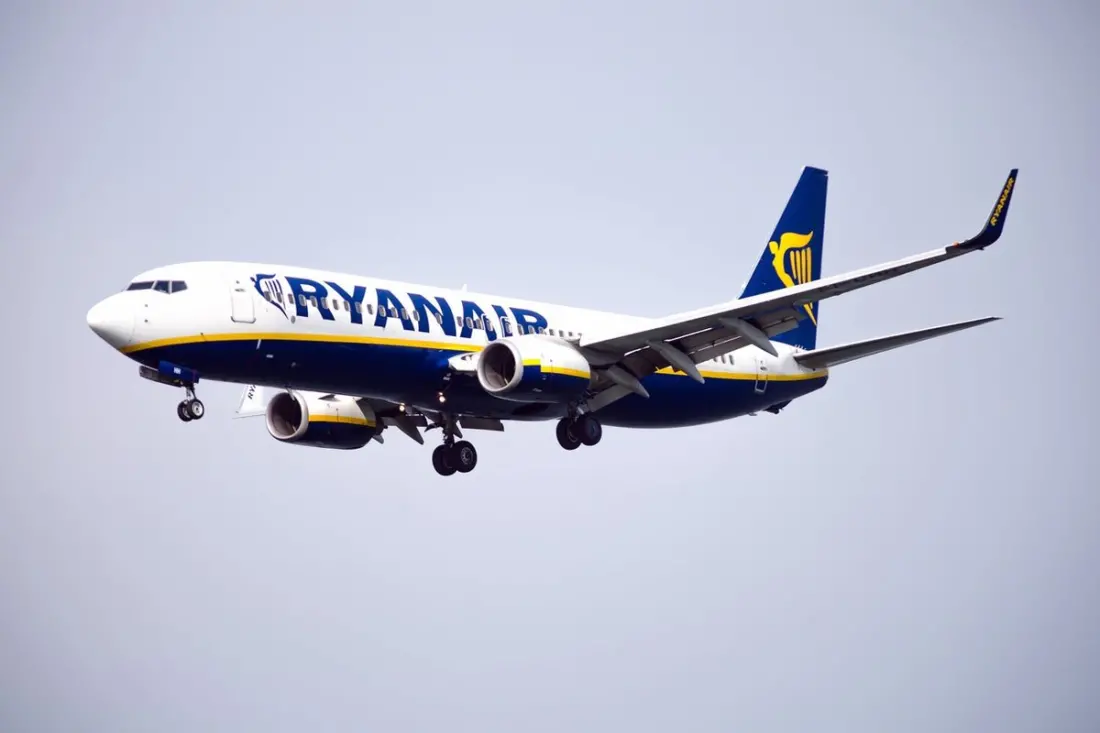
A Ryanair flight bound for Dublin from Porto found itself heading back to where it started in the early hours of 22 September, after a false security report prompted the crew to turn around mid-air.
Flight FR7073 departed Francisco Sá Carneiro airport at 10.55pm for the roughly two-hour hop to Dublin. About 15 minutes in, just short of the Portuguese-Spanish border, the Boeing 737 swung around and headed back to Porto. According to aviation monitoring outlet Air Live, the captain transmitted squawk code 7500 — the universal transponder signal for a hijacking or unlawful interference with the flight deck, designed to quietly alert air traffic control and security services without tipping off anyone on board.
Ryanair did not explain what prompted the signal, but described the return as the result of a "false security report" that was "quickly resolved". The aircraft touched back down in Porto around 35 minutes after take-off, landing shortly before 1am. It was airborne again within half an hour and delivered its passengers to Dublin just after 3am — a two hour and 33 minute delay overall, disruptive but mercifully painless as these things go.
The incident echoes a stranger case from July, when a LOT Polish Airlines-operated flight from Warsaw to Tel Aviv accidentally transmitted the same 7500 code. Israeli fighter jets scrambled to intercept the aircraft, which was carrying 180 passengers, with Bulgaria and Turkey also launching aircraft. That episode was traced to an incorrectly set transponder — most likely simple human error, according to LOT spokesperson Krzysztof Moczulski, who called it "absolutely exceptional". The plane landed safely in Bulgaria.
For flyers, both stories are a useful reminder of how sensitive the system is. A single transponder code can trigger military responses and emergency diversions, so an alert — even a false one — is always taken seriously. They're also a small nod to how well these situations can end: in the Ryanair case, passengers were back on the move the same night and arrived only a couple of hours late. If you're ever on a diverted flight, the practical playbook is dull but effective: follow crew instructions, keep an eye on the airline app for rebooking options, and check your rights — under EU261 rules, flights departing from EU airports like Porto are covered for delay compensation and care when the disruption is within the airline's control.
For anyone booked on Ryanair's dense Porto-Dublin route, there's nothing here to worry about — this was a rare, swiftly resolved scare rather than a systemic problem. The route operates regularly, and the aircraft was cleared to continue the same night.
Story reported by The Independent Travel.