
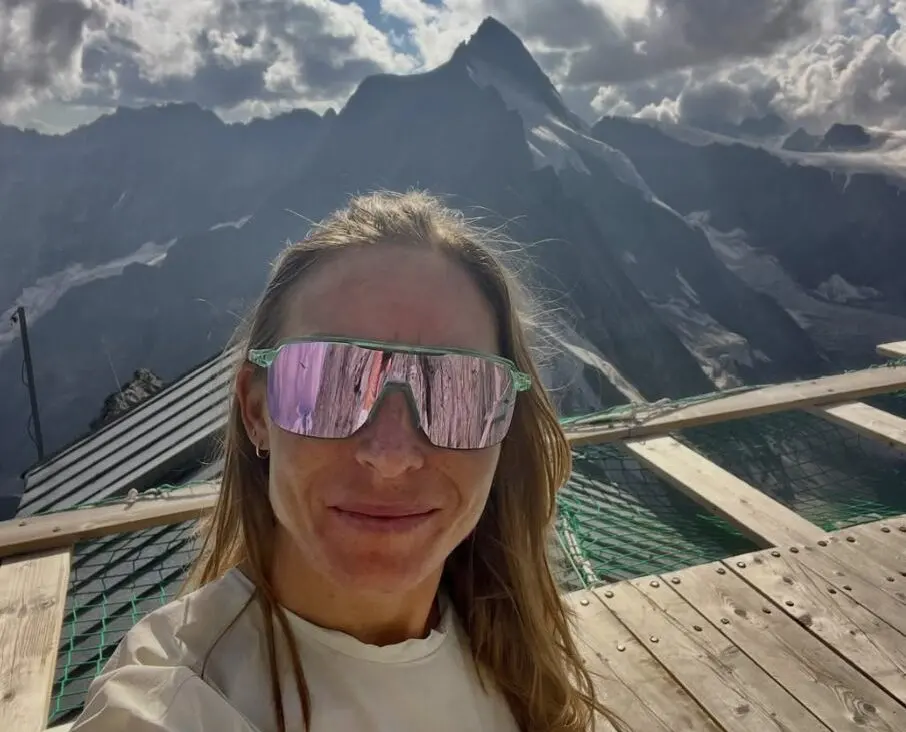
Canadian trail runner Kalie McCrystal, 38, has been missing on the Italian side of the Matterhorn since September 1, and the aerial search has now been called off without a trace of her.
McCrystal, who lives in Squamish, British Columbia, had travelled to the Alps this summer to chase Fastest Known Time records on the Matterhorn. Last seen above the Capanna Carrel hut at 3,830m — the usual launch point for the Lion's Ridge, the standard Italian-side route — she was scouting the line for a planned round trip in under five hours. Helicopters searched both the Italian and Swiss flanks until Thursday, scanning with a RECCO detector and trying to pick up a phone signal, but found nothing. Mountain guides working the route have since been asked to keep an eye out.
She was no newcomer to big objectives. In late July she smashed the FKT on the Tantalus Range traverse near Squamish, cutting the existing record to nine hours 40 minutes. Days later in Switzerland she ran the Hornli Ridge from Zermatt and back in 6:47:33 — originally intended as a recon, as she noted in the FKT database. After a fourth-place finish among women at the Kima Trophy in Val Masino, she shifted focus to the Italian side.
Timing was the problem. A major rockfall hit the mountain's Italian face on August 6, close enough to the route that local guides suspended client trips and the Carrel hut emptied. McCrystal publicly said she'd wait for conditions to settle. Not everyone did: US runner Karina Andersen recced the same terrain on August 9 and took the women's round-trip FKT from Cervinia in 5:14:53, beating Swedish runner Jenni Jalonen's late-July time by more than two hours. Andersen argued the rock was no less stable than it had been all summer during repeated heat waves, and that empty routes actually made competent soloing safer. By late August the guides announced they'd resume work and the hut would reopen on August 29. McCrystal went up to scout three days later. That was the last anyone saw of her.
The episode highlights a broader tension on the Matterhorn, where hot summers are loosening rock and a competitive FKT scene keeps drawing elite runners onto a mountain that still demands scrambling and roped climbing over big sections. Guides and athletes disagree about where the line between acceptable risk and recklessness sits — a debate this incident will only sharpen.
For travellers, it's a timely reminder that the Matterhorn's normal routes are serious alpine climbs, not hikes, and that late-summer heat and rockfall can close huts and guiding operations with little notice. Check conditions with the local guide companies before committing to anything on either the Zermatt or Cervinia side.