
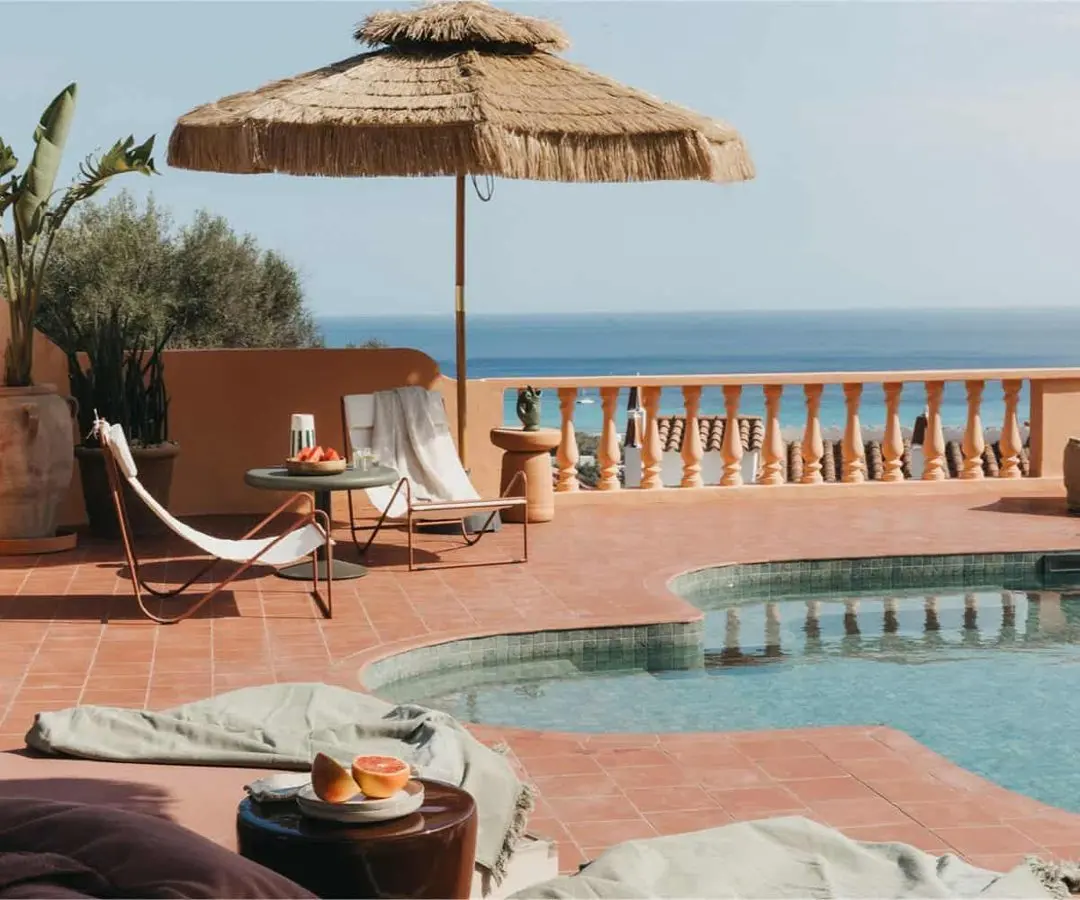
August gets all the glory, but for villa holidays in the Mediterranean, the first three weeks of September quietly beat it on almost every count — price, weather, crowds and even how flexible the owners are.
Start with the money. Villa rates in September can run 20–30% below peak summer pricing, sometimes more, for exactly the same property — same pool, same views, same staff. Villa specialists report clients booking places in the Algarve or the Ionian Islands for roughly half what they'd have paid three weeks earlier. The gap starts closing again around the late-October half-term, so early-to-mid September is the sweet spot.
The weather, counterintuitively, is better too. August's 38-degree afternoons make long outdoor lunches a trial; by mid-September most of the Mediterranean settles into that rare balance of warm-enough-to-swim and cool-enough-to-walk-around-a-town-at-2pm. Crowds thin out dramatically as well — restaurants that needed booking weeks ahead take same-day tables, beaches empty, and roads actually move.
There's a bonus most people miss: owners become more accommodating once the peak block-booking season ends. Shorter minimum stays, flexible check-in days, even the odd added extra like a private chef's evening are all worth asking for directly, because the rate card often isn't fixed in September.
Not everywhere works equally well, though. The Greek islands are the standout case — the sea stays warm well into autumn, and islands like Lefkada and Kefalonia go from busy to calm almost overnight. Puglia's Salento peninsula loses its punishing July heat just in time for long dinners outside. Tuscany and Umbria arguably peak in September thanks to harvest season: grape picking, olive presses starting up, markets living their normal life rather than performing for tourists. The South of France holds on longest, running well into October inland around the Luberon, a light photographers actively travel for.
The caution list is short but real. Some Adriatic beach towns shut down seasonal infrastructure the moment September starts, and smaller islands can see ferry timetables thin out fast. Coastal Croatia is mixed — Dubrovnik and the main Dalmatian coast stay lively, but quieter islands start winding down restaurants and beach clubs early. A quick call to the villa manager usually settles it before you commit.
For families, this is where it gets interesting. Taking children out of school for a late-September villa week is a far less apologetic decision than it once was — the trip is calmer, better value and, in the right destination, genuinely educational in the harvest-season sense. Check your school's absence policy first, obviously, but where it's feasible the quality gap versus an August trip is hard to argue with.
One booking tip: reserve earlier in the year, not because September sells out like August does, but because the very best properties — the ones with the evening-sun pool and properly angled sunset terrace — still go first.
If your idea of luxury is the same Mediterranean everyone fought over in August, minus the queues, the heat and a chunk of the bill, September is the month that's never been marketed as well as it deserves.
Story via A Luxury Travel Blog.