
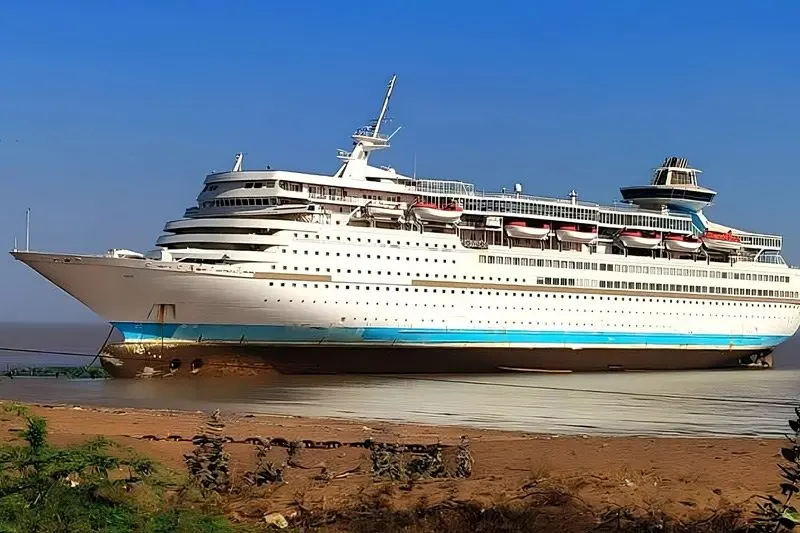
The cruise world said goodbye to more ships in 2025 than it had in years. New figures from Cruise Industry News' 2026 Cruise Ship Secondhand Market Report count seven vessels permanently withdrawn from service during the year — a big jump from just three in 2024.
Most of them went the way of the beach: five were scrapped. The largest was the former Celestyal Olympia, a 37,773-ton ship with a story stretching back to the early 1980s, when it sailed for Royal Caribbean as the Song of America. After more than a decade cruising the Eastern Mediterranean for Celestyal, it was sold in 2024 to undisclosed buyers and beached for demolition at an Indian scrapyard in February 2025.
Its former fleetmate, the Celestyal Crystal, was also dismantled, alongside two smaller vessels. The American Empress spent its career mostly on US rivers and domestic waters, while the Ocean Atlantic began life as a Soviet cruise ferry before being reworked into an expedition ship — a reminder of how many second lives these vessels can have before their last one.
The most poignant retirement belonged to the Astoria. A true ocean liner, it first entered service in the 1940s and, at the end, carried just 492 passengers. Dropped from the Cruise & Maritime Voyages fleet in 2020, it sat in layup for five years before being auctioned and sold in June 2025 to Belgian recycling specialist Galloo Gent. A career spanning roughly eight decades is almost unheard of in modern cruising.
The final two ships weren't scrapped at all. Both former coastal cruise vessels left the market for conversions into other types of maritime service — a small bright spot in a year otherwise defined by demolition.
For travellers, the takeaway is subtle but real: the older, smaller, character-rich ships that offered an alternative to mega-resorts at sea keep disappearing. If you've been meaning to sail on one of the last classic vessels, the window is closing. Ships on rivers, in expedition waters and in regional Mediterranean markets are aging out, and replacements tend to be bigger and newer rather than like-for-like. It also matters for the secondhand market: fewer retirements usually mean higher prices for used tonnage, which shapes what new boutique cruise lines can afford to launch.
For the industry-minded, the full 2026 report includes a transaction-by-transaction market overview plus a Retirement Data section with year-by-year tables going back to 1977 — a long view on how the fleet turns over, and how 2025 compares with decades past.
Credit: Cruise Industry News