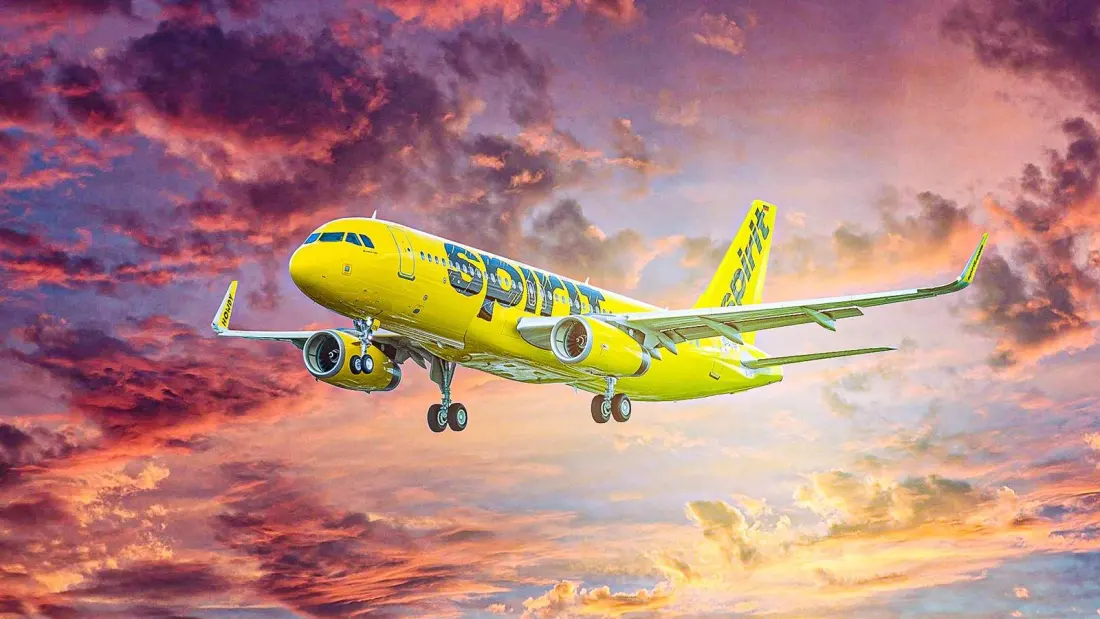
The big yellow airline is officially down to zero planes. A US bankruptcy judge approved Spirit Airlines' final aircraft sales, wrapping up the liquidation of a carrier that shut down in early May after years of financial trouble.
The last batch covers 27 Airbus A320ceo-family jets, split across two deals worth a combined $668 million. Four A321-200s — registrations N661NK, N665NK, N670NK and N671NK — went to FTAI Aircraft Leasing Bermuda for $100.7 million. The remaining 23 (ten A320-200s and thirteen A321-200s) were bought for $567.4 million by Save 2026-B LLC, a firm controlled by Spirit's own aircraft lenders. All 27 jets carry V2500 engines, and under the sale terms the buyers take on parking and storage costs once the aircraft are handed over.
For travellers, the more interesting story is what Spirit's exit has done to ticket prices. August marked the ninth straight month of rising airfares in the United States, and while pricier fuel has played a part, the loss of the country's most aggressive ultra-low-cost carrier has thinned out competition in the budget sector. Former Spirit flyers told USA Today what they miss: rock-bottom base fares and the freedom to pay only for the extras they actually wanted. One pointed out that if you skipped the perks, you simply paid very little — a model that's harder to find now that rivals are absorbing Spirit's routes.
The fleet sale also closes the book on a surprisingly varied aviation history. Although Spirit ended as an all-Airbus operator with more than 250 A320-family aircraft, ch-aviation records show it once flew McDonnell Douglas MD-80s (36 across four variants), a small fleet of DC-9s, and even a single Learjet 60 — a reminder of how far the airline had come from its earlier incarnation.
Why should a holidaymaker care? If you fly domestic US routes — especially in Florida, the Caribbean or Latin America markets where Spirit was strong — expect fewer ultra-cheap options and shop around harder. Budget carriers still exist, but the deepest discounts of the Spirit era are likely gone for good. For aviation watchers, the sight of parked yellow A320s being dispersed to lessors and lenders is the final image of one of America's most distinctive airlines.