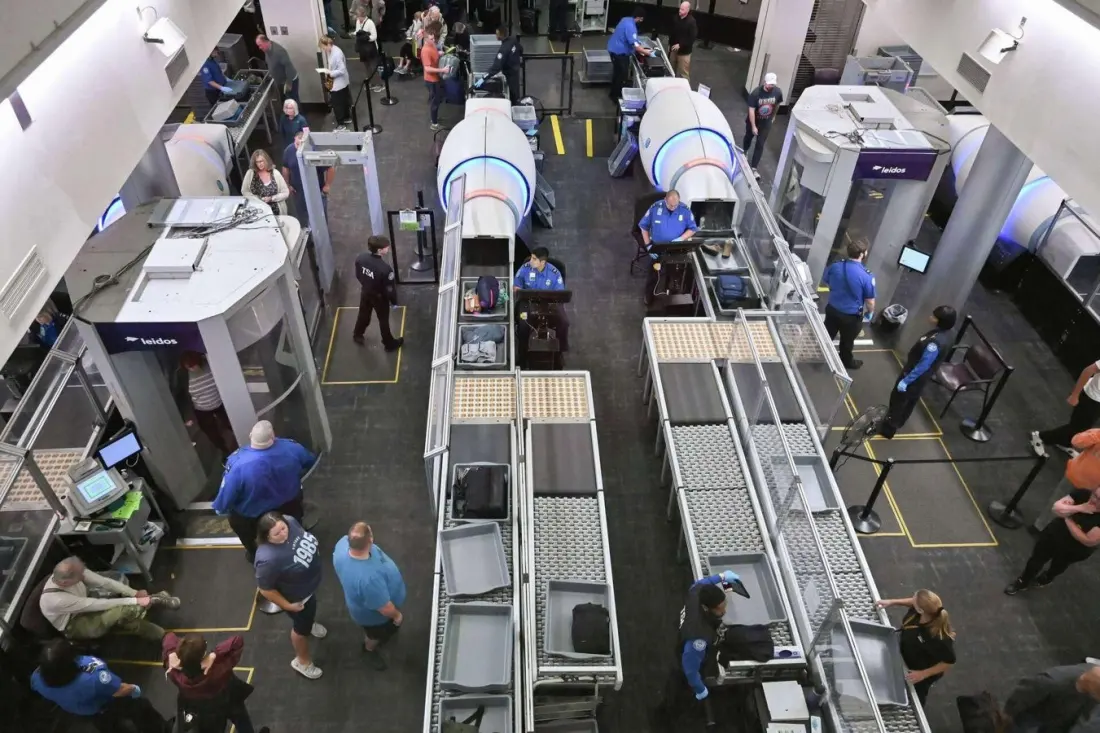
America's airport security upgrade is quietly creating a new headache for carry-on travellers. The TSA has been rolling out computed tomography (CT) scanners across the country — about 1,200 machines at nearly 300 airports so far — and while they speed things up for many passengers, they come with a catch: the tunnel opening is smaller than the X-ray machines they replace.
The upside first. Because CT scanners build a detailed 3-D image of what's inside your bag, you can leave laptops, tablets and TSA-approved travel-sized liquids where they are. No more digging out your electronics or dumping your toiletries into a plastic tray. For most flyers, that's a genuine time-saver at the checkpoint.
The downside is geometry. The new scanners' openings measure roughly 24.5 inches wide by 16.5 inches tall — less than an inch narrower on each side than the old machines. That still clears the standard airline carry-on allowance of 22 by 14 by 9 inches, but only just. Fully packed bags bulge, and a stuffed suitcase that fits the airline sizer can still fail to slide through the scanner tunnel.
What happens then? Options are limited. Officers can hand-search the bag or route it through an older machine if one is still available, but reporting from aviation site Simple Flying suggests the default outcome at many CT-equipped checkpoints is being sent back to the ticket counter to check the bag. That means leaving the security line, paying a typically steep same-day checked-bag fee, and queuing for security all over again — a scenario that can easily eat 30-45 minutes and $50 or more.
There's one more wrinkle: CT machines don't take bags straight onto the belt. Everything has to go into checkpoint bins first, so your bag also needs to physically fit in the bin, not just the scanner.
The fix is simple if slightly annoying: pack leaner. Choose a bag that measures at or under airline limits even when full, skip the expandable zipper sections that add bulk, and don't cram external pockets with bulky items that make the bag wider than its official dimensions. A soft-sided bag that can give slightly will also fare better than a rigid hardshell that's jammed to capacity. If your everyday carry-on is already on the larger side of legal, this is a good moment to consider sizing down — especially for any US trip booked in the coming months, since more airports are getting CT units all the time.
For anyone flying carry-on-only within or to the United States, this is worth taking seriously before you pack, not after you're stuck in the security line.