Vukovar, the Danube-side city in eastern Croatia, paused on 25 September 2026 to mark 35 years since the Battle of Vukovar and the founding of the 204th Vukovar Brigade, one of the defining chapters of the Croatian Homeland War of 1991.
The central ceremony took place at the Croatian Home, organised by the Ministry of Croatian Veterans, Defence and Interior ministries alongside Vukovar-Srijem County and the city itself. Deputy Prime Minister and Defence Minister Ivan Anušić used the occasion to frame the battle's role in the country's independence: a roughly three-month siege that, while devastating for the city, drained Serbian forces of more than 400 tanks and armoured vehicles and 25 aircraft, buying the rest of Croatia time to organise its defence. He called it the bloodiest battle of the war and honoured both soldiers and civilians who died.
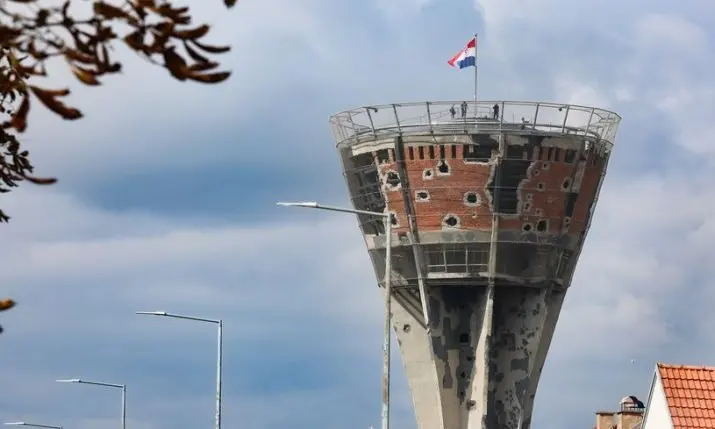
The anniversary programme stretched across the whole day. It started with a traditional musical wake-up call through the streets, followed by a procession of wartime flags. Veterans, army cadets and police raised a Croatian flag at the top of the Vukovar Water Tower — the battle-scarred landmark that has become the city's most recognisable symbol. Two Croatian Air Force Rafale fighters then flew over the city, and wreaths were laid at the Memorial Cemetery of Homeland War Victims. Visitors could also see an open display of military and police vehicles, equipment and live demonstrations of capabilities.
What made the day notable was who attended. Alongside officials and serving personnel came families of killed and missing defenders, wartime commanders and veterans' associations — a reminder that for many Croatian families this is living memory, not distant history. The 204th Brigade, formed in the early weeks of the war, remains closely tied to the city's identity.
For travellers, Vukovar is one of the most moving places to understand contemporary Croatia beyond the coast. The Water Tower still bears the damage it took in 1991, the memorial cemetery is a solemn, beautifully maintained site, and the city sits on the Danube in the wine-growing region of Syrmia, close to the Odesalj vineyards and the border town of Ilok. It's also the anchor of eastern Croatia's slow-tourism revival — Danube riverfront walks, Vukovar's baroque old town, and the Vučedol culture archaeological site just outside town. If you visit in late September, you may catch commemorative events; the rest of the year, the city's museums tell the 1991 story in depth for those who want context. Croatia Week covered the anniversary.