
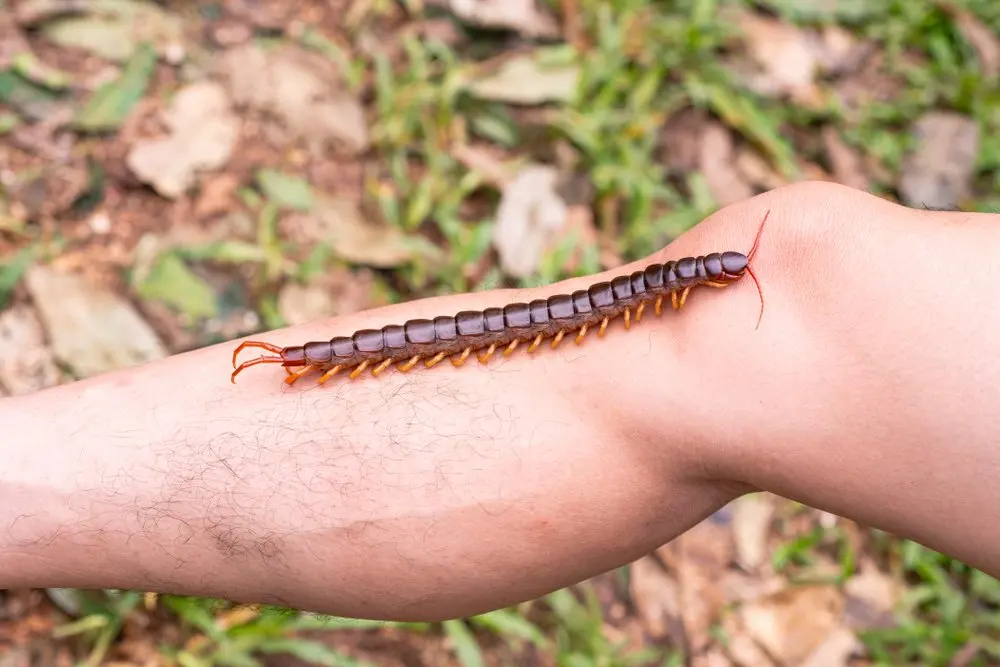
Entomologist Justin Schmidt's famous sting pain index has a level four reserved for the bullet ant, the tarantula hawk and the warrior wasp. It only covers stinging insects, though. Add giant centipedes to the mix and, by one writer's account, you'd need to invent a level five.
The story comes from an island many travellers have on their Southeast Asia shortlist: Koh Rong, off Cambodia's coast. A camper at a beachside campsite had spent an idyllic evening swimming through bioluminescent plankton, then walked barefoot back to their tent along a trail between beach and jungle. Less than 20 metres from shelter, something struck the top of their big toe. In the dark, it looked like a snake sliding away.
It turned out to be a Scolopendra — one of Asia's giant venomous centipedes. These things sting rather than bite, driving venom through fang-like head appendages called forcipules. The venom is a mix of cytotoxins and neurotoxins that destroys cells and disrupts nerve signals. Out in the wild, centipedes use it to take down prey as large as snakes, rats and birds. A Thai name for the creature apparently translates as "Seven Days of Crying," which gives you some idea.
The unlucky camper's night went from bad to worse. With storms keeping boats ashore and no strong painkillers at the campsite, the pain climbed for six or seven hours to a point where an amputation sounded appealing. Two sleeping pills plus aspirin did nothing. A local snake expert checked blood clotting, ruled out a cobra or krait, and delivered the grim verdict: not a venomous snake — a giant centipede. "You're going to wish it was a snake," he said, helpfully.
At dawn, a fishing boat braved rough seas to get the victim back to the mainland — a crossing that normally takes half an hour by ferry but stretched past two hours, with passengers clinging to the sides and vomiting. At a hospital in Sihanoukville, the nurse gasped unwrapping the foot: the big toe had ballooned into something unrecognisable, and staff gathered to photograph it. Morphine took the edge off; blisters had to be burst and cleaned. Total pain duration: about five days, followed by a full recovery.
The reassuring stats: human stings are rare, and the few documented deaths involved anaphylaxis or heart attacks rather than the venom itself. Even Coyote Peterson, the YouTube adventurer deliberately stung by more than 50 species — including all three of Schmidt's level-four insects — was hospitalised by a giant desert centipede, a milder cousin of the Asian species. It was the first sting to send him to urgent care.
Why should this matter to you? Koh Rong and similar islands are exactly where jungle trails, beach camps and barefoot evenings meet centipede habitat. These animals are large and easy to spot, but fast, aggressive and sensitive to vibration. Pack closed-toe shoes for after-dark walks, carry a torch, and check that your island accommodation actually has a plan for medical emergencies — because on Koh Rong, help may be a stormy fishing boat away.
Story via ExplorersWeb.