
A former head chef in a quiet corner of eastern Sweden has turned one awkward interview question into a whole regional food movement. Asked years ago why he cooked what he cooked, Stefan Johansson realised he had no good answer — his Stockholm training had taught him that world-class ingredients were always a phone call away. So he did the opposite: he closed the sourcing window down to the region. "It was the best thing I've ever done," he says.
Johansson now handles sustainability at Högbo Brukshotell, a hotel set in a 19th-century ironworks two hours north of Stockholm. The Made in Högbo project started with lamb — reared and butchered on site — then added kitchen gardens and greenhouses. Refugees from Myanmar helped establish the early growing schemes, and newcomers from the Democratic Republic of the Congo now split their time between language classes and placements in the greenhouses, where papaya and bananas grow alongside more expected Swedish crops. An aquaponics setup pairing greenhouse vegetables with tilapia farming is planned. There's also a sourdough bakery, a microbrewery run by one of the chefs, a fresh-cheese dairy and a deli. Doubles at the hotel start at 1,995 Swedish kronor (about £155), B&B.
Travel a few hours through Gästrikland and neighbouring Hälsingland and you find the same idea everywhere. Gammelstilla, another old ironworks, now distills whisky. In Gästrike-Hammarby, The Old Mill serves an award-winning tasting menu built on local producers — and, intriguingly, Japanese knotweed, an invasive species put to work on the plate. In Norrsundet on the Baltic coast, Bergmans Fisk is run by a seventh-generation fishing family who smoke salmon in wooden smokehouses by the water; in 2020 they added a waterfront restaurant and also run a travelling fish van, with a small hotel in the works.
Inland in Hälsingland, hand-painted signs and honesty boxes of potatoes, eggs and strawberries line the roads. At Teve Kvarn near Järvsö, Anna Larsson is a seventh-generation miller — her newest machine dates from 1930 — sourcing grain within roughly 150km. Her husband Jonas runs the Tevsjö distillery next door, making vodka, gin and aquavit from mill grain, powered by hydroelectricity from the stream; production has grown more than tenfold and created ten local jobs.
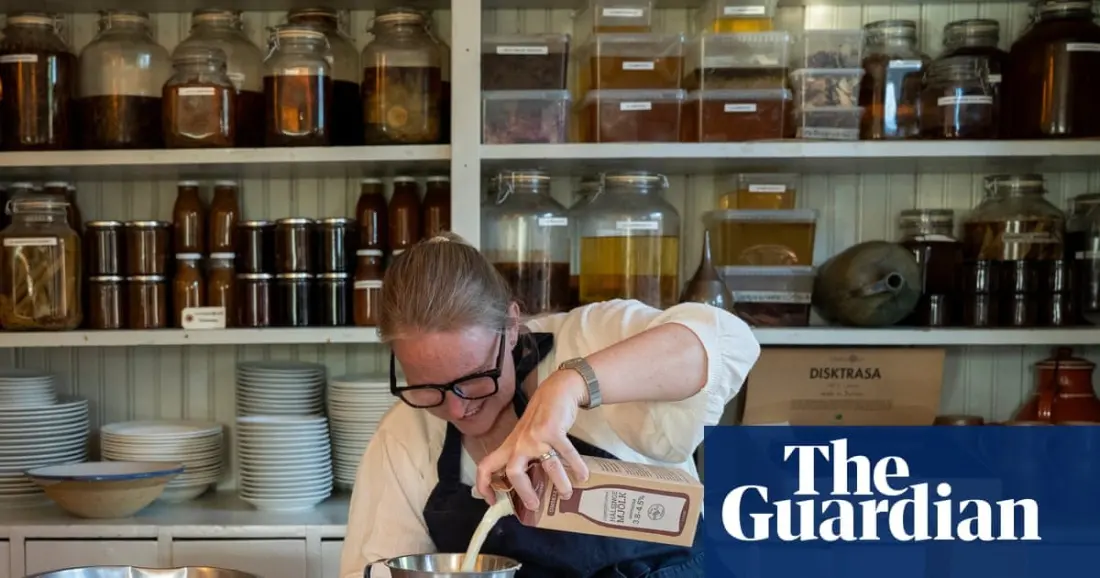
Chef Tobias Annerhult takes the philosophy to its extreme at Järvsö Lanthandel, a general store and restaurant where the only things he buys in are salt, pepper, sugar and oil. Everything else is grown, preserved, cured or fermented locally — and he offers cooking classes for private groups, which is how the writer of the piece ended up making fermented pea pancakes and fresh pasta with mill flour, honesty-box cheese and garden herbs.
Why it matters for travellers: this is a two-to-three-hour trip from Stockholm that swaps city tasting menus for something more personal — you meet the miller, the fisher, the distiller. It suits slow travellers, food obsessives and anyone pairing forest hiking, cycling or cross-country skiing with serious eating. Trip info via gastrikland.se and destinationhalsingland.se.