
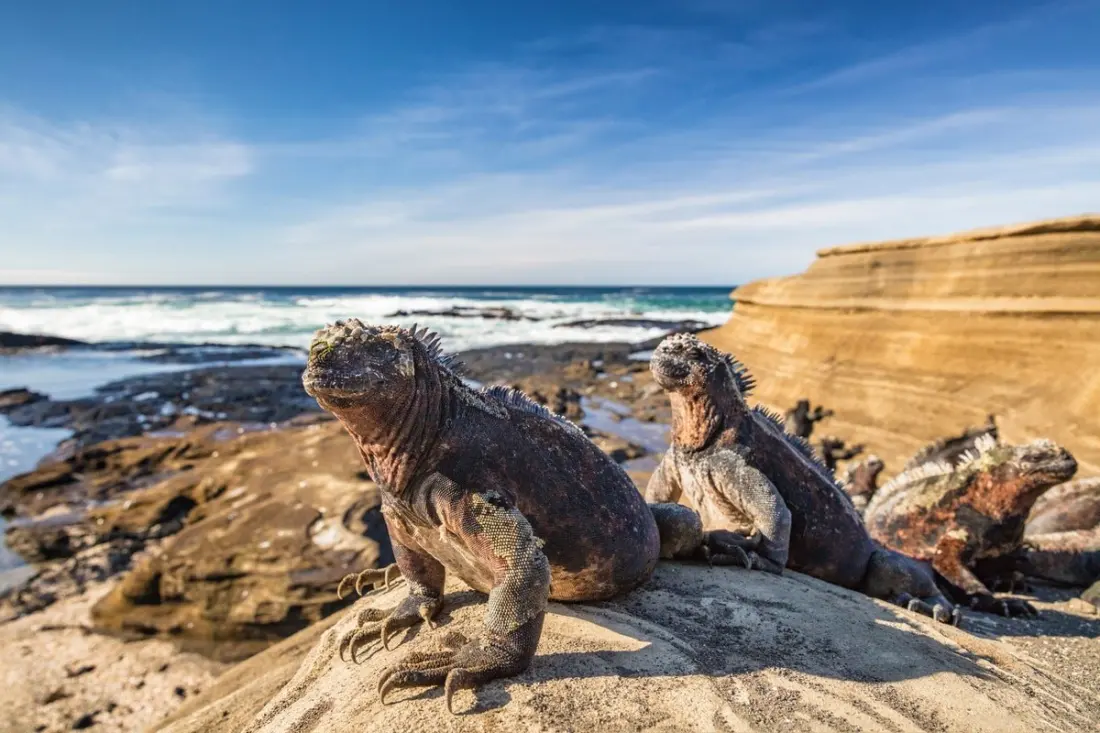
No waterslides, no ice-cream bars, no room keys. A Galapagos cruise with National Geographic Lindblad Expeditions looks nothing like the mega-ships most people picture — and that's exactly the point.
One travel writer took his two daughters, aged 11 and 13, on a four-night sailing aboard the 48-guest National Geographic Islander II, and came back convinced it changed how the whole family sees wildlife. The trip begins with a short flight from Quito, Ecuador's capital, to Baltra Island, where a zodiac whisks you out to the ship. From there, days run on nature's schedule: 5.45am wake-up calls to beat the heat and catch the animals at their calmest.
The pitch for parents is simple. Instead of LED screens and kids' clubs, the children spent their time kayaking towards penguins that barely flinched, snorkelling with turtles, parrot fish and manta rays, and even learning to pilot a zodiac. This is one of the few places on Earth where animals show almost no fear of humans — a legacy of strict protections — so encounters happen at arm's length rather than behind glass.
The itinerary stacks up highlights fast. South Plaza Island delivers sleepy sea lions and swallow-tailed gulls, the world's only nocturnal gulls. Las Bachas has red-footed and Nazca boobies nesting right beside the marked paths. Sullivan Bay offers hikes across century-old black lava, and at Rancho El Manzanillo you can watch giant tortoises graze, entirely unbothered by visitors.
There are rules, and they matter. Every excursion is led by a naturalist guide, capped at 16 guests per group. You must stay two metres from wildlife and take nothing off the islands — not even a shell. Ship capacity across the archipelago is limited to 100 passengers, keeping crowds thin and the experience quiet. Landings are either "wet" — hopping off the zodiac into shallow water on a beach — or dry onto rocks, so pack for everything getting sandy and salty.
Back on board, it's an informal, education-heavy atmosphere. Evening talks recap the day's sightings and preview the next, plus daytime lectures on everything from Darwin (who spent just five weeks in the islands and never returned) to smartphone photography. Meals lean Ecuadorian — think ceviche in a sweet tomato-lime broth — and there's a sociable, almost family feel among the mostly American guests.
Who is this for? Families with school-age kids who are curious rather than thrill-seeking, and anyone who'd rather snorkel with rays than queue for a waterslide. Be aware it's a serious investment: seven-day itineraries start from £4,931 per person year-round, with all meals, tours and internal flights from Quito or Guayaquil included. That's far from budget territory, but it buys you one of the most intimate wildlife experiences available anywhere — the kind that makes a zoo visit feel hollow afterwards.
The writer's verdict says it all: his daughters, nervous about small lizards in Miami days earlier, ended the trip obsessively photographing giant iguanas.