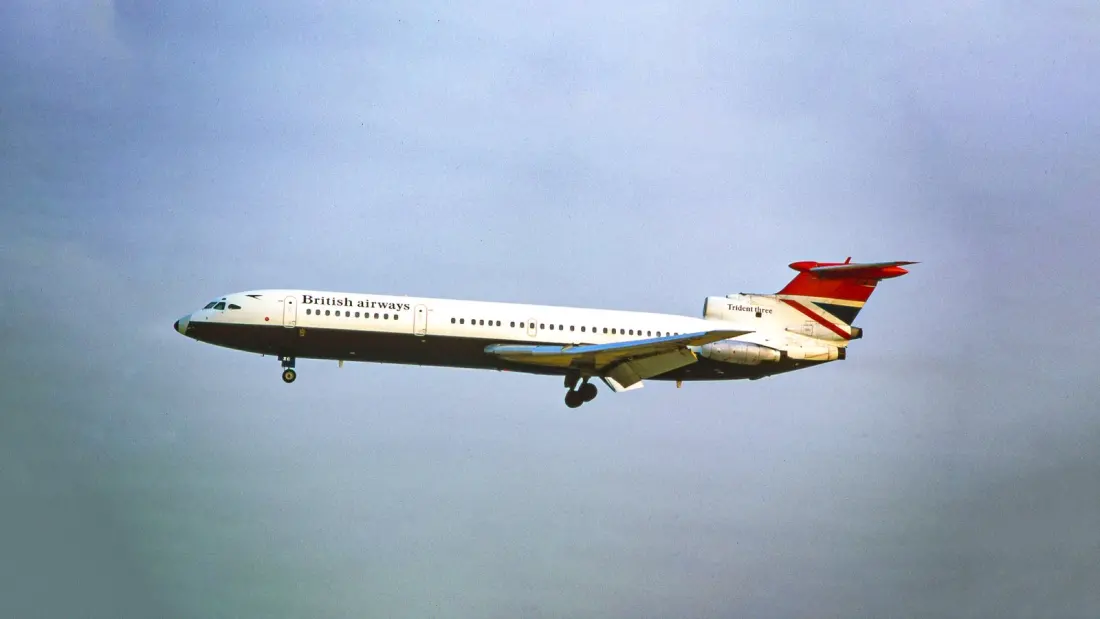
On January 9, 1962, the de Havilland DH.121 — later the Hawker Siddeley Trident — became the world's first trijet to fly, beating Boeing's 727 by nearly two years. By the time production ended, Boeing had built 1,832 sevens... sorry, 727s; the Trident managed just 117. The gap wasn't about engineering talent. It was about one airline getting exactly the plane it asked for.
British European Airways, then state-owned, worried that European air travel might plateau in the 1960s. So it pushed de Havilland to shrink the original DH.121 from 111 seats to 97 and cut range from 2,070 miles to just 930. The compromise meant swapping larger planned engines for three smaller Rolls-Royce Speys, leaving the aircraft underpowered — a serious problem on hot days and high-altitude runways. American Airlines, which had shown real interest in the original specification, took one look at the downsized Trident 1 and walked. Then it went to Boeing.
Boeing did the opposite of everything Hawker Siddeley had just done. Instead of designing for a single launch customer, it consulted American, Eastern, United and TWA. The resulting 727-100 shared the 707's fuselage width for six-abreast seating, packed a maximum takeoff weight of 170,000 lb against the Trident's 115,000, and flew well over 2,300 miles versus 930. Its Pratt & Whitney JT8Ds delivered 42,000 lbf of combined thrust to the Speys' 29,550 — enough to lift full loads from short runways and warm-climate airports where the Trident had to offload fuel or cargo just to meet climb requirements.
The British aircraft did pioneer genuinely world-first technology: on June 10, 1965, a BEA Trident flew the first commercial automatic blind landing, from Heathrow to Paris-Le Bourget, using the triplex Smiths Autoland system built to beat European fog delays. But most airlines saw autoland as a luxury and short-field performance as a necessity. Even a late stretch couldn't save the type — the Trident 3B needed a small fourth booster engine bolted into the tail just to get off the ground, while Boeing executed a clean 20-foot stretch for the 727-200 and sold 1,261 of them alone. China's CAAC flew Tridents into the mid-1990s; British Airways retired its last in 1985.
The postscript matters beyond aviation trivia. Europe's manufacturers took the Trident's collapse as a lesson: single-customer, single-nation airliner projects were a dead end. When Airbus formed in 1970, its charter explicitly required broad airline input before an airframe's dimensions were locked in. The A300's collaborative model — and every Airbus since — traces directly back to the day BEA asked for a smaller plane and Boeing quietly built the one everyone else actually wanted.