Some structures look too ambitious for the era that built them, and some natural formations look too neatly made to be an accident. Europe's answer to both, for centuries, was folklore: giants, dragons and a famously gullible devil. A recent Smithsonian Travel feature rounds up seven of these storied sites — and the legends turn out to be as much a part of the trip as the sights themselves.
The devil's bridge story is a European-wide template. A crossing seems impossible; the devil offers to build it in exchange for the first soul to cross; he ends up cheated. At Devil's Bridge near Aberystwyth in Wales, three bridges stack above one another over the Mynach Gorge — the lowest possibly medieval, built by monks from Strata Florida Abbey, with later additions in 1753 and 1901. Legend has an old woman throwing bread across and sending her dog after it, sparing the human soul. Folklorists note the devil's link to the bridge barely predates the 18th century, and that he's less a demon than a dim-witted ogre who loses every bargain. The same motif shows up at Tarragona's Pont del Diable in Spain, a first-century Roman aqueduct spanning 712 feet, where the locals' donkey drank first.
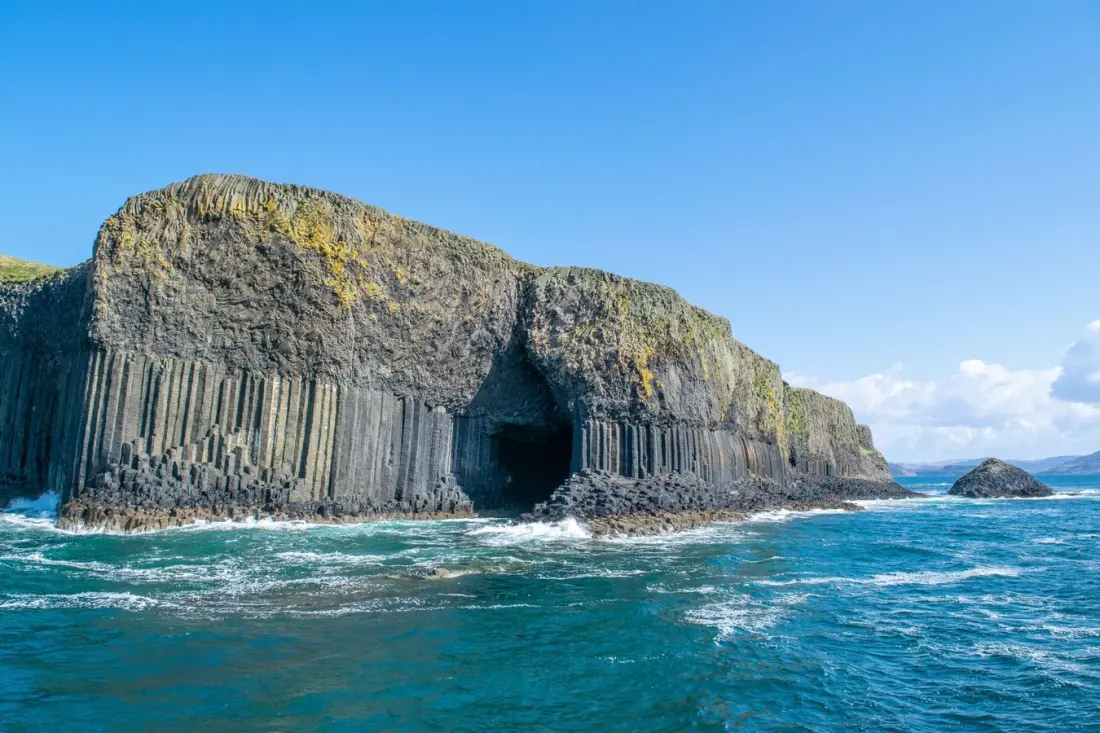
Other legends explain geology. Northern Ireland's Giant's Causeway, roughly 40,000 interlocking basalt columns on the Antrim Coast formed by volcanic activity 50 to 60 million years ago, gets a spicier origin story: the giant Finn McCool built the causeway to fight a Scottish rival, disguised himself as a baby when he realised the rival was bigger, and terrified Benandonner fled, ripping up the causeway behind him. Fingal's Cave on the uninhabited Scottish island of Staffa shares the same columnar basalt and the same myth — and such remarkable acoustics that Mendelssohn wrote his Hebrides Overture after visiting.
Some sites earned their legends through danger. Mount Pilatus above Lake Lucerne in Switzerland, at 6,995 feet, was considered perilous in the Middle Ages, hence its resident dragons — including a dragonstone supposedly dropped by one flying between mountains in 1421. Germany's Lorelei Rock, a 410-foot slate outcrop above one of the Rhine's narrowest, most treacherous stretches, became home to the singing siren of Heinrich Heine's 1824 poem, distracting boatmen to their doom. And St Michael's Mount in Cornwall combines an archangel sighting in 495 CE with the giant Cormoran, felled by Jack the Giant Killer.
Folklorists make a good point: these tales weren't ignorance stubbornly surviving science — people just like their landscapes storied. For travellers, that's the payoff. Hiking the Causeway, timing the tide at St Michael's Mount or riding up Pilatus is better with the story attached, and the legends give you a thread to connect wildly different corners of Europe in a single trip.