
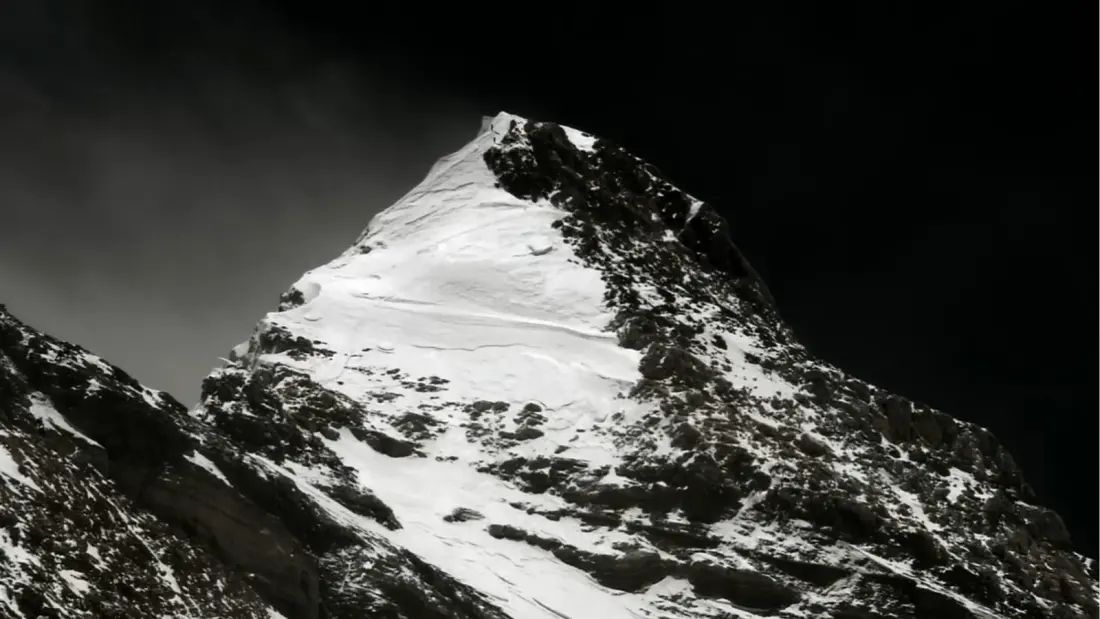
Did George Mallory reach the top of Everest 29 years before Hillary and Norgay? That question drives The Wildest Dream, a 2010 documentary now worth a rewatch for anyone drawn to high-altitude stories.
The film runs two timelines in parallel. The first follows the life of Mallory, the son of a Northern English vicar who fell for climbing as a teenager, survived the Battle of the Somme, married Ruth Turner, and became consumed by Everest. The second follows Conrad Anker, the modern climber who in 1999 found Mallory's frozen body lying lower on the mountain, 75 years after Mallory and climbing partner Sandy Irvine vanished during their 1924 summit bid.
The discovery gave Mallory's family closure, but it opened a fresh puzzle. The body was found below and east of where the pair was last seen, and the photograph of Ruth that Mallory swore he'd leave on the summit was missing. To some, that points to one answer: he made it, and died coming down.
Proving that idea possible falls to Anker. Free climbing the Second Step — the notorious rocky obstacle near the summit that today's climbers bypass with a ladder — would have been a serious feat in 1924. Anker takes on the challenge with Leo Houlding, then a gifted young Brit with zero high-altitude experience. The pair even attempts parts of the route in period kit, including hobnail boots that neither man enjoys. It looks stylish. It performs badly.
There's a personal echo, too. Ruth begged Mallory not to join the 1924 expedition; decades later, Anker's wife Jennifer Lowe-Anker voices the same fears. She knew the cost of Himalayan mountaineering firsthand — her first husband, the legendary Alex Lowe, died in an avalanche there.
Without spoiling everything: weather window shrinking, monsoon approaching, ladder and fixed ropes stripped away, and Anker and Houlding climbing past the point where Mallory and Irvine disappeared from view in 1924. Anker's verdict, after topping out, is measured — that their climb showed the route was at least plausible for the two men in 1924. It's as close to an answer as anyone will get.
For travellers, this is armchair mountaineering at its best: dramatic reconstructions, sweeping Everest footage, and a surprisingly stacked voice cast carrying the 1920s storyline. It's a good pick before a trip to Nepal or Tibet, or simply for a weekend film night when the mountains are calling and you'd rather keep your toes warm. It also doubles as a primer if you're trekking to Everest Base Camp and want to understand why Mallory's name still looms over the valley.
Full review via ExplorersWeb.