
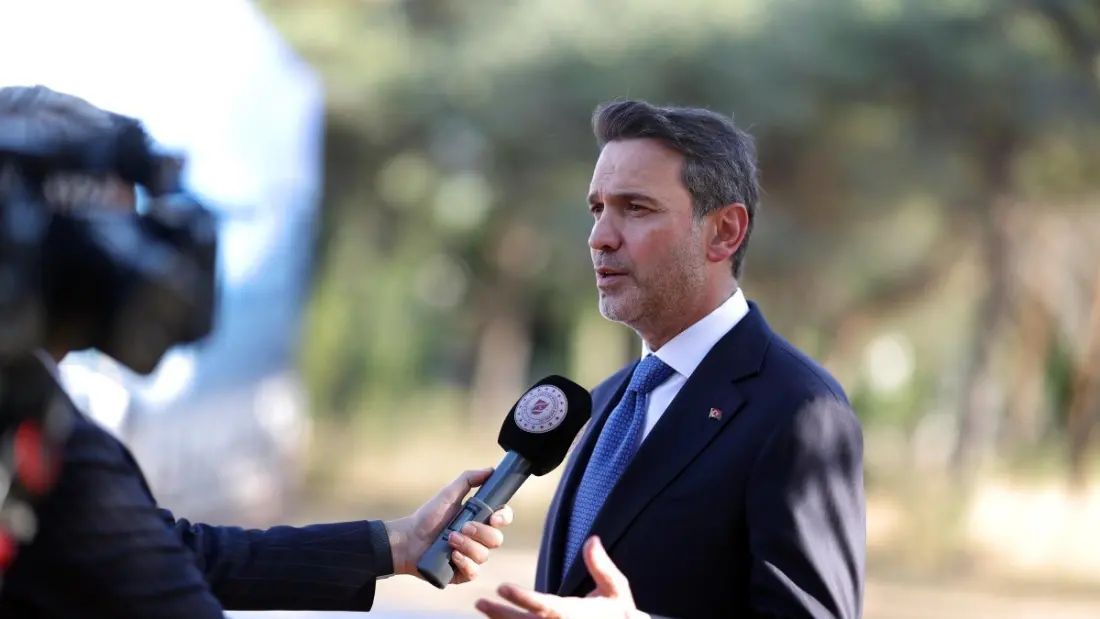
Türkiye has mapped out one of the bigger energy spending plans you'll hear about this decade: roughly $108 billion (about TL 5.26 trillion) on power generation and grid infrastructure by 2035. Energy Minister Alparslan Bayraktar announced the figures under the country's Renewable Energy 2035 Road Map, which targets 120 gigawatts of installed wind and solar capacity — around $80 billion of the total going to generation and $28 billion to transmission.
The grid build-out is the interesting part. Transmission lines have already grown 80% in recent years to 77,000 kilometres, and between 2005 and 2025 the number of TEIAŞ substations jumped from 512 to 824, with transformer capacity up 226% to 236,913 MVA. Next comes a new layer of high-voltage direct current (HVDC) corridors — about 9,580 kilometres with 28 GW of capacity — plus 15,000 kilometres of new AC lines.
Why the push? Demand is climbing fast from data centres, AI, electric vehicles and air conditioning, and Türkiye wants a grid flexible enough to absorb all that new solar and wind. The country is aiming for 35% electrification by 2035.
There's a travel angle too: Türkiye will host COP31 in Antalya, and electrification will be its headline message on the world stage. The coastal resort city — better known for beaches and all-inclusive holidays than climate summits — will welcome delegates and media from around the globe, putting its hotels, airports and infrastructure in the spotlight. Bayraktar framed the summit as a chance to take Türkiye's grid transformation experience to international cooperation.
For travellers, the practical upshot is straightforward: a more resilient power system means fewer outages at your coastal hotel and a grid increasingly powered by sun and wind — fitting for a country with some of the Mediterranean's best solar conditions. And if you're planning a trip around COP31 itself, expect Antalya's accommodation to tighten up during the summit dates, so book early or shift your dates. Everyone else can simply enjoy the fact that one of the world's most popular holiday countries is quietly rewiring itself for the next couple of decades.