
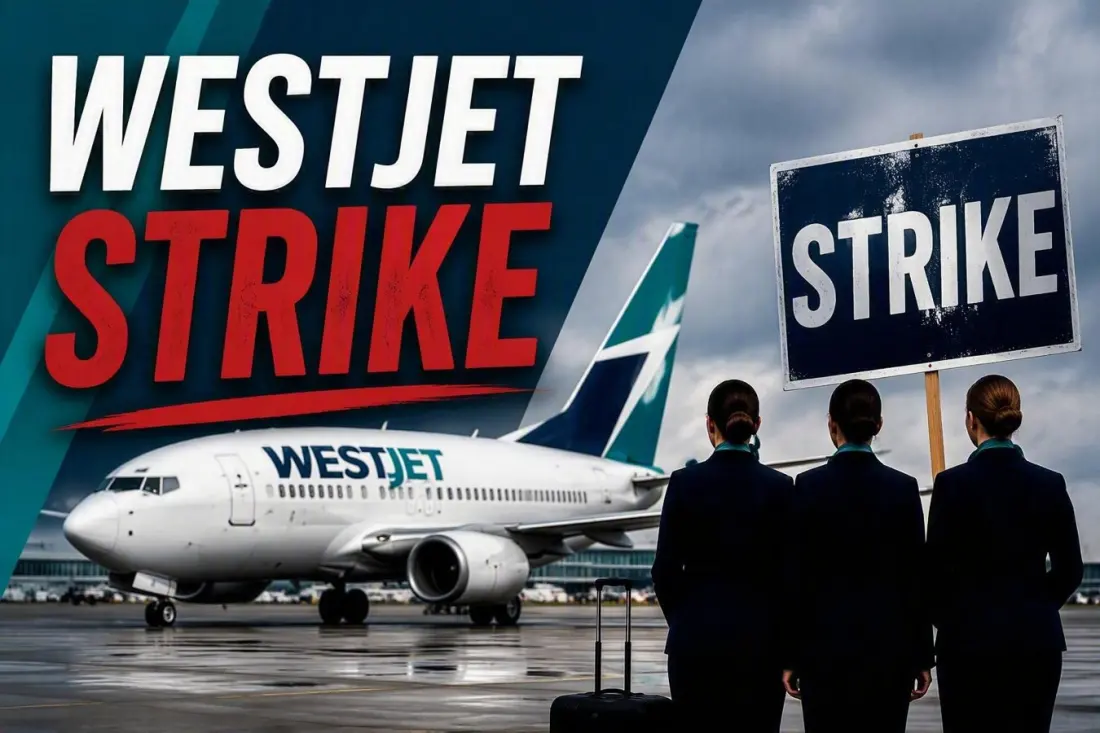
Roughly 250,000 WestJet passengers are caught up in a cabin crew strike that hit during one of Canada's busiest travel weekends — the August civic holiday long weekend — with hundreds of flights already cancelled. WestJet normally operates more than 600 flights a day, so the timing could hardly be worse for summer holidaymakers heading to weddings, cruises, tours and family reunions.
What makes this dispute unusual is that WestJet took the step of publishing its final offer in full, billing it as a "transformational" package. On paper, it looks substantial: a 13% wage increase from October 2026, further 2.5% annual bumps through 2029, retroactive pay back to January 2026, a duty pay premium the airline values at about another 12% of compensation, a $300 annual healthcare spending account, a 13% boost to per diems, a fifth week of vacation after 25 years, improved maternity top-ups, a new part-time scheduling option, extra rest periods and caps on duty-day lengths for multi-leg trips.
So why did cabin crew walk out anyway? The core issue is how flight attendant time is defined. Like most North American carriers, WestJet pays via a credit-hour system tied largely to flying time — meaning the hours spent before boarding, during ground delays and after landing often go unpaid or underpaid. The union, which had a strike mandate backed by over 99% of voting members, judged that the new duty-pay offer still didn't properly compensate that unseen ground work. It's less a fight about the headline wage numbers than about whether the full scope of the job gets recognised.
Neither side comes out clean here. The union is holding firm on what it sees as a fairness principle; WestJet is absorbing serious operational and financial damage at peak season. And passengers — who have no seat at the bargaining table — are the ones rebooking itineraries and rearranging trips.
If you're flying WestJet in the coming days, don't wait for the airline to contact you. Check your reservation regularly, look at alternative flights or other carriers early, and build flexibility into any connecting plans. Until both sides return to the table, further disruption is a safe assumption.
Story via Travel Codex.