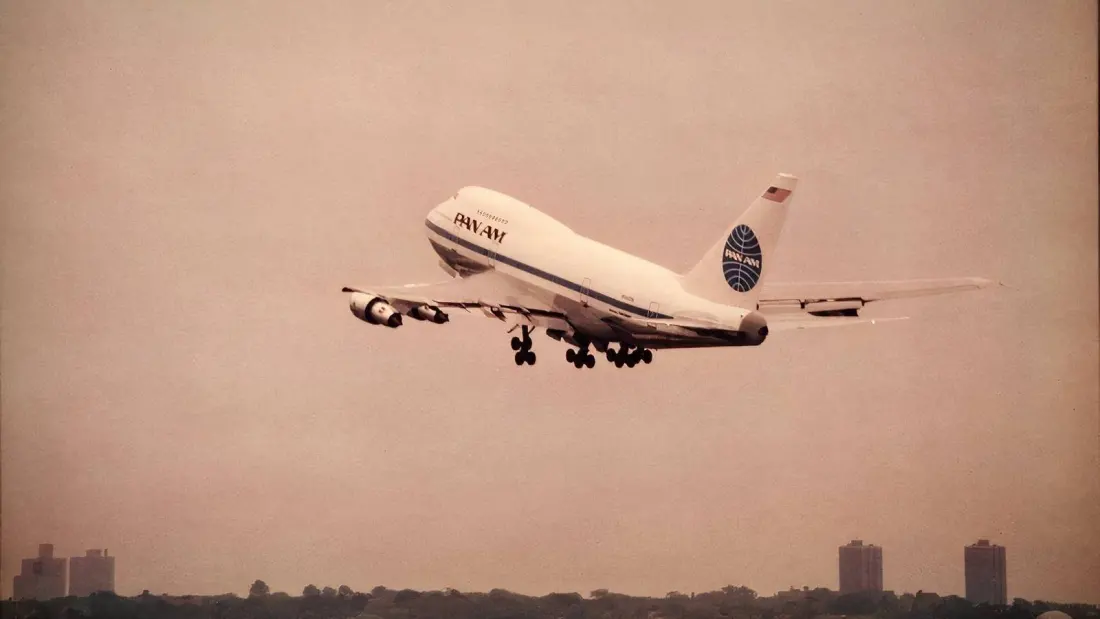
The Boeing 747SP is one of the strangest-looking airliners ever built — a jumbo jet chopped by more than 45 feet, dominated by an oversized wing and a stubby, exaggerated hump. It was also one of the most capable long-haul aircraft of the 1970s, and the story of why it could never be built again says a lot about how air travel has changed.
The SP — short for Special Performance — came about because carriers like Pan Am and Iran Air wanted jumbo-jet range without jumbo-jet seating. Rather than design something new, Boeing cut down the standard 747, keeping the huge wing and fuel capacity but removing a big chunk of fuselage. Range and climb performance were exceptional for the era, but the shortened body changed the aircraft's aerodynamic balance so much that the vertical stabilizer had to be enlarged, and key structures were reinforced to handle different bending and fatigue loads.
Only 45 were sold, and that's the crux of the problem. In the 1970s, Boeing could lean on existing 747 tooling and infrastructure, and airlines accepted quirky, single-purpose aircraft because four-engine planes ruled long-haul routes and twinjets lacked the regulatory freedom that came later with ETOPS. Today, a niche variant would need to survive billions in development and certification costs against investor scrutiny that punishes exactly this kind of experiment.
Then there's the twinjet factor. Aircraft like the Airbus A350-900 and Boeing 787-9 now fly ultra-long routes with a fraction of the fuel burn and maintenance burden of a quad. The SP existed because airlines needed four-engine robustness without full 740 capacity; modern twinjets solve that equation outright, designed from scratch around long-range missions. Airlines have spent decades retiring quadjets, and few passenger 747s remain at all — Lufthansa is now the largest operator with 27, followed by Air China with nine and Korean Air with eight.
The famous upper-deck hump complicates things further. Boeing originally designed it so the nose could open for cargo loading, hedging against a supersonic passenger future that never arrived. Modern freighters use side cargo doors, modern jets prioritise aerodynamic cleanliness, and the structural complexity of a hump on a shortened fuselage is something no engineer would sign off on today. Add environmental targets, noise rules and airlines' obsession with fleet commonality, and the business case collapses entirely.
Why should a traveller care? Because the 747SP represents an era of genuine experimentation in commercial aviation — a manufacturer willing to build something odd because it solved a specific problem. The long-haul planes you fly now are safer, quieter and vastly more efficient, but they're also products of a conservative industry that no longer takes those risks. If you want to experience four-engine jumbo travel, your window is closing: Lufthansa's 747-8s are essentially the last act, and even the SP itself survives mostly with governments and a handful of specialist operators. Spot one on a ramp and you're looking at a design philosophy that has quietly gone extinct.