France is one of the friendlier countries in Europe for pitching a tent in the wild — but the rulebook has more layers than most campers realise. The good news: wild camping isn't banned outright. The catch: it's only tolerated under conditions, and those conditions change depending on where you stand.
At national level, the law works on permission. Private land needs the owner's OK — in practice, that often means knocking on a farmhouse door and asking, which many farmers will happily grant for a single night. Then there are blanket no-go zones regardless of permission: the coast, protected natural areas, heritage sites, land near historic monuments, and anywhere within 200 metres of a drinking water source. Camping on or beside a public road is always off-limits. Permits exist for some restricted zones, but they're a slog to obtain.
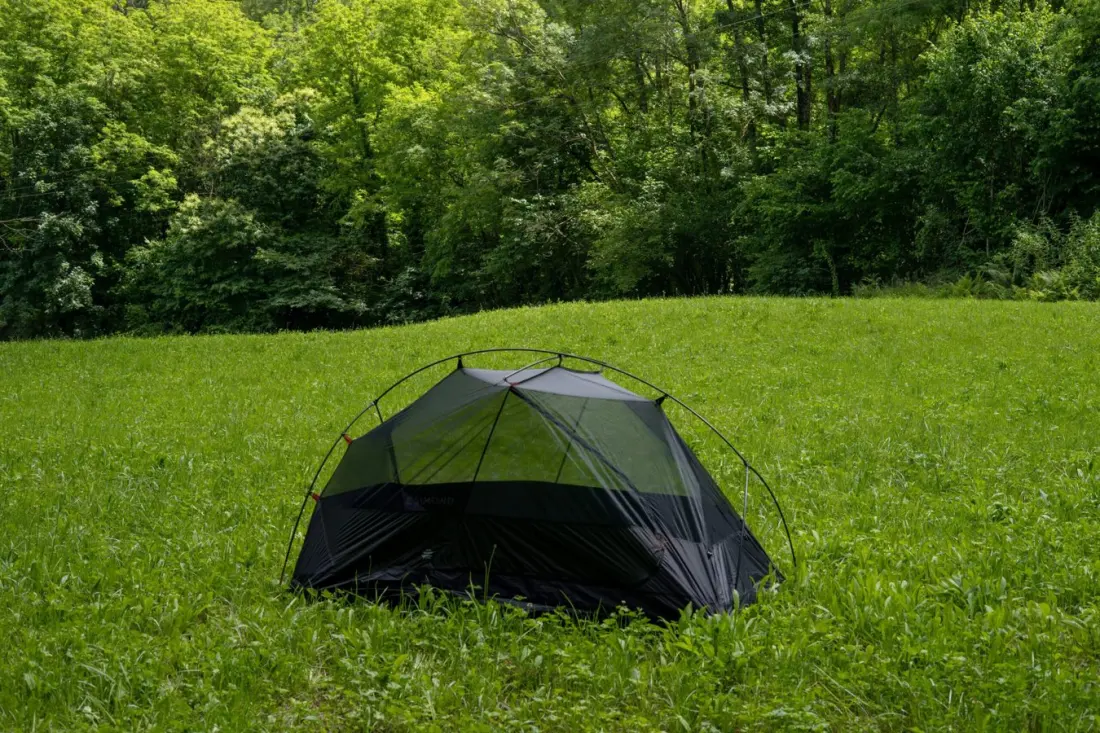
National law makes no legal distinction between a one-night bivouac with a lightweight tent and parking a campervan. Regions do, though, and this is where it gets useful for hikers. France's national and regional parks often explicitly permit bivouacking rather than just tolerating it. In the Parc national des Cévennes, for example, you can sleep out as long as you're on foot, stay within 50 metres of a marked trail, and camp for one night only. The Parc naturel régional des Vosges du Nord designates specific zones where both bivouacking and camping are allowed.
Most parks share the same basic template: arrive after around 7pm, pack up by 9am, tent only, no fires, take every scrap of rubbish with you. Crucially, regional bans only count if they're signposted — if there's no sign at the entrance to an area, you can reasonably assume an overnight stay is fine.
The practical route in is simple: pick a park, check its website for its bivouac rules, and plan your stages accordingly. A handy resource is Le Camping Sauvage, a platform mapping more than 500 wild camping spots across France, including private gardens where locals host campers for a small fee — a gentler introduction if you're nervous about your first proper wild night.
Why does this matter? Because France is laced with long-distance walking routes and empty upland scenery where a paid campsite is often hours away. Knowing that a one-night, tent-only bivouac is legal in much of the national park network turns a forced 30-kilometre day into a relaxed two-day stretch. Just keep the golden rules: ask on private land, avoid the coast and protected zones, no fires, and leave your pitch exactly as you found it.