
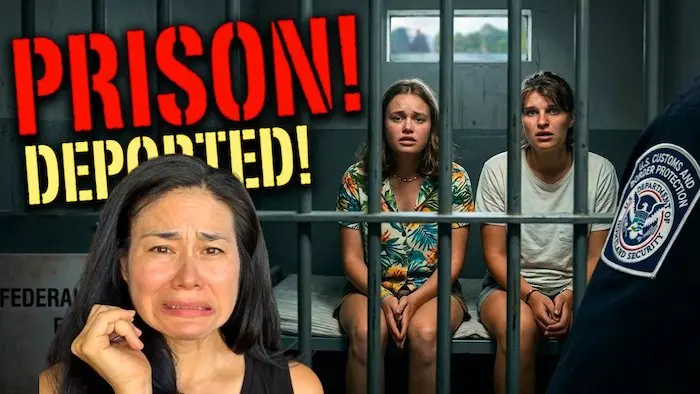
A 28-year-old UK backpacker spent 19 days in a US prison for doing laundry in exchange for a free bed. Two German teenagers, 18 and 19, were strip-searched and deported from Honolulu after one overnight in a federal detention facility — despite holding valid ESTA approvals. Neither had criminal records or bad intentions. Both tripped over the same thing: immigration rules that don't match what travellers consider 'tourism'.
The first case involved Rebecca Burke, detained at the US-Canada border on 26 February 2025. She'd been doing a Workaway exchange — light chores in return for accommodation — on a tourist visa, and assumed that counted as cultural travel. Canadian officials disagreed and turned her back, which flagged her US entry for border agents. Workaway, for its part, leaves it to users to research the right visa. The German backpackers, denied entry in Honolulu on 18 March 2025, fell into a different trap: they had only two nights booked for a five-week trip, no onward flight out of the US, and had mentioned freelance work. Their spontaneity read as a work-overstay risk.
The core lesson many travellers miss: if an activity benefits you financially or professionally — paid or unpaid — many countries count it as work. That includes farm stays, WWOOFing, pet-sitting, house-sitting and volunteering. In the US, Canada and Germany, even unpaid volunteering typically requires a work visa; Australia makes it legal for 18-to-30-year-olds under a Working Holiday Visa instead. Bali has also been cracking down on content creators and remote workers since May 2026 without yet offering a visa category for them.
There are subtler missteps too. A yoga course or cooking class doesn't make you a 'student' — student visas are for accredited institutions, not hobby programmes. Calling yourself a 'journalist' because you run a blog can trigger a media visa requirement with guarantor rules and, in politically sensitive countries, real complications. And showing up with no accommodation booked and no ticket out doesn't break a visa rule technically, but it hands an immigration officer every reason to be suspicious. Hawaii's roughly $300-400-a-night peak-season accommodation makes a vague five-week plan even harder to justify.
Who needs to pay attention? Digital nomads, long-term backpackers, work-exchange participants, content creators — and honestly, anyone who likes to land with no fixed plan. Border decisions are black-and-white, and the consequences stack up fast: fines, deportation, detention or a five-year ban. Get refused entry and you're usually on the next flight back to wherever you came from — these two Germans had to ask to be rerouted to Japan instead, and the overnight wait for that flight landed them in the federal prison system. The officials didn't punish them; that's simply how holding facilities work.
The fix is boring but effective: check the official government visa site for your destination, email the embassy or consulate if anything is unclear, carry accommodation bookings and proof of onward travel, and never wing it at the border.