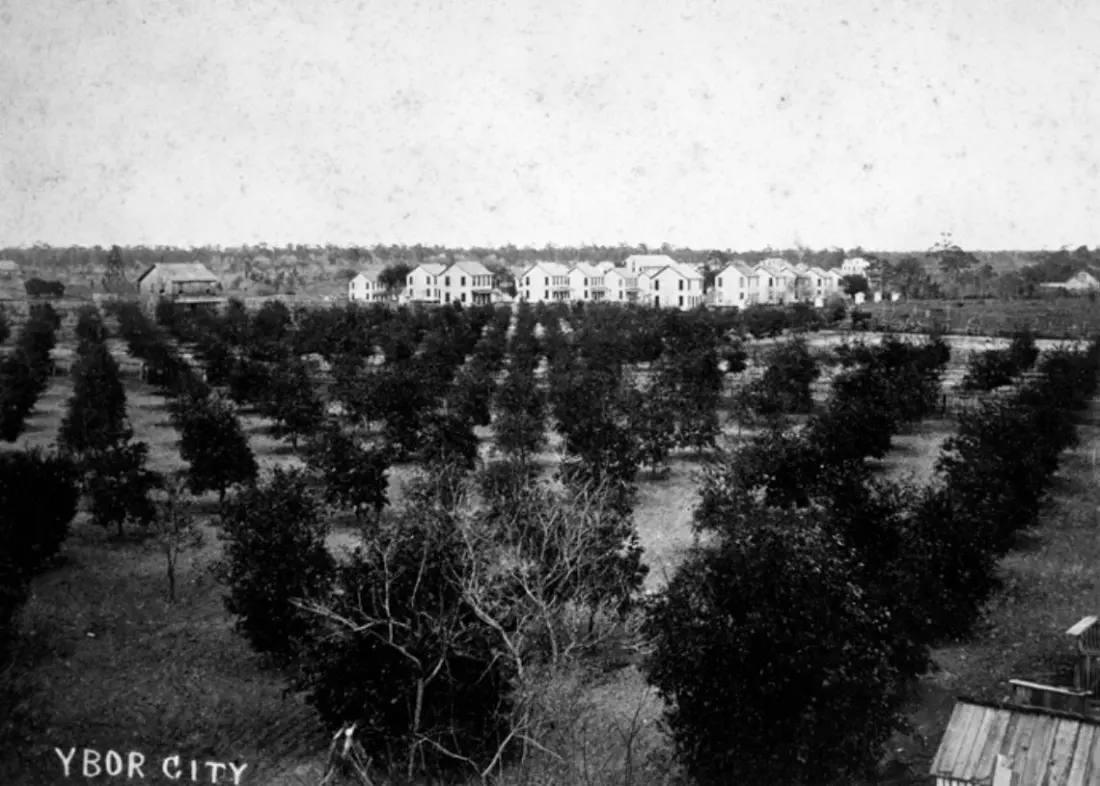
In 1885, a 66-year-old Valencian businessman signed for 40 acres of swampy land near a fishing hamlet of barely 800 people. It sounded like a terrible bet. Instead, Vicente Martínez Ibor's purchase created Ybor City, the neighbourhood that turned Tampa into the Cigar Capital of the World — and one of Florida's most distinctive heritage destinations.
Martínez Ibor had already lived several lives by then. Sent to Cuba as a teenager to dodge military service, he built a tobacco empire in Havana under the brand El Príncipe de Gales, then fled to Key West in 1868 after backing Cuban independence forces with his own money. Key West proved frustrating: strikes, transport headaches and unstable labour. When his compatriot Gavino Gutiérrez — who had been scouting the area for guava and instead spotted a deep bay, empty land and a fresh rail line — pitched Tampa as the future, he listened. A fire that gutted Key West in April 1886 sealed the deal; days later he stepped off the steamship Mascotte.
What followed was remarkable speed. Two cigar factories opened immediately, workers' houses went up for under $200 each, and land that sold for 25 cents an acre in the early 1880s was fetching $500–$1,000 by 1890. The site was first registered as Cubatown, but everyone simply called it after its founder — Ybor, in the English spelling. Tampa absorbed the town entirely by 1887.
By 1897, Ybor City held some 6,000 residents, mostly Cuban, with Spanish signage dominating Seventh Avenue. Cubans were the largest group, joined by Spaniards, Italians, Jews and Chinese immigrants. At the heart of it all sat the Príncipe de Gales factory, producing 900,000 cigars a month within its first year. It was also socially progressive for its era: Black cigar makers worked alongside white colleagues for equal pay, and workers could buy affordable homes. The factory's paid 'reader' — a man on a podium reading newspapers and literature aloud while others rolled — turned figures like José Dolores Poyo into civic voices; Poyo's El Yara became Tampa's first Spanish-language newspaper.
The neighbourhood also became the cradle of Cuban independence politics. José Martí arrived in November 1891 to a packed station, toured the Martínez Ibor factory and delivered two landmark speeches at the Liceo Cubano, including the famous 'With all, and for the good of all.' Cigar makers soon pledged a slice of their wages to the cause.
For today's traveller, this history is exactly why Ybor City merits a detour from Florida's beaches. The brick factories, the Liceo Cubano, the worker cottages and the streetcar lines all grew from that original 40 acres, and much of the district's Latin character — cafecito, pan con lechón, live music on Seventh Avenue — is a direct inheritance. Walk it with this backstory and the neighbourhood stops being a quaint old quarter and becomes one of America's great immigrant success stories, built by people with, as the account puts it, strong hands and clear dreams.