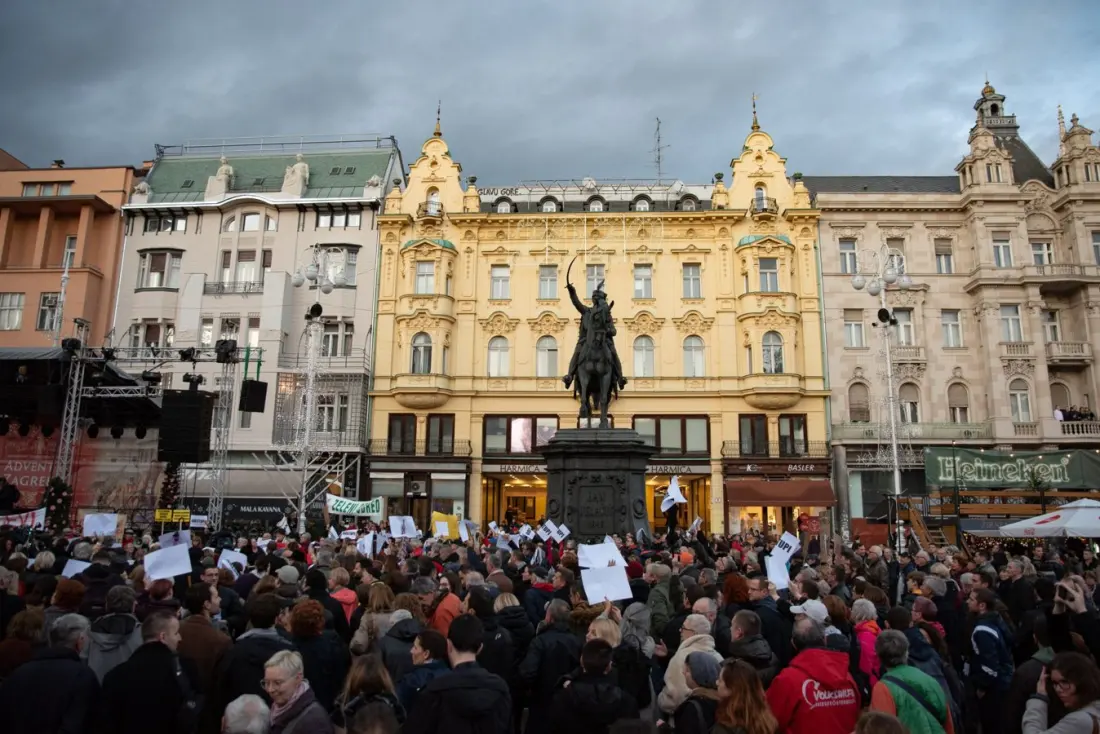
Zagreb's Zrinjevac park will host a sizable protest on Saturday, 10 October 2026, from midday, under the banner 'Enough of the levies'. The demonstration has been called by two groups: Glas poduzetnika (Voice of Entrepreneurs), a business association, and Spasimo male obiteljske iznajmljivače (Save Small Family Renters), which represents the small, family-run guesthouses and apartments that form the backbone of Croatia's private tourism sector. Organisers say the protest is independent of any political party and is open to entrepreneurs, craftspeople, renters, workers, pensioners and students alike.
The core complaint is the gap between what work costs and what people actually keep. UGP board member Dario Kožul argued that an employee's net pay is only a slice of what an employer spends, with taxes and contributions eaten before payday and VAT taking another bite at the till. His point: the debate should be about how much money people genuinely have left to live on, and what the state delivers in return.
Fellow board member Kristina Bakula laid out a long list of demands. Among them: scrapping so-called anchor prices and mandatory online price-list publishing, cutting contributions for lower earners without adding new taxes on higher ones, making membership of chambers and tourist boards voluntary, and applying a 'warn and correct first' approach to minor administrative slip-ups. For the family renters, the key ask is that the state respects permits and categorisations already granted — people who invested in good faith want predictable rules, not moving goalposts. Bakula also took a swipe at government communication style, saying ministers should talk to citizens seriously and 'the ministry is not a private lodge'.
UGP president Bruno Samardžić tied rising prices to state decision-making, arguing that levies and red tape feed directly into what consumers pay and hold back wage growth. His challenge to government: show where you have cut your own costs before adding new burdens. The organisers' headline structural demand is memorable — for every new administrative obligation introduced, at least two existing ones should be abolished — plus a requirement that tax changes go through genuine public consultation rather than urgent procedures.
For anyone travelling in or to Croatia, this matters on a few levels. Zagreb city-centre protests are usually peaceful but can snarl traffic around Zrinjevac and the main square area on a Saturday afternoon, so allow extra time if you are moving through the centre. More broadly, the protest signals pressure on the costs that shape a Croatian holiday: small family accommodation providers — a huge share of the coastal and village room stock — are feeling squeezed by levies, tourist board fees and regulation. Where that lands eventually is on room rates and on how many small hosts stay in business. Croatia's tourism model depends heavily on these micro-renters, so their grievances are worth watching if you book private apartments rather than hotels. An October Saturday in Zagreb will also see the city busy regardless; the protest adds colour, crowds and a louder-than-usual political conversation about what a Croatian holiday really costs.