
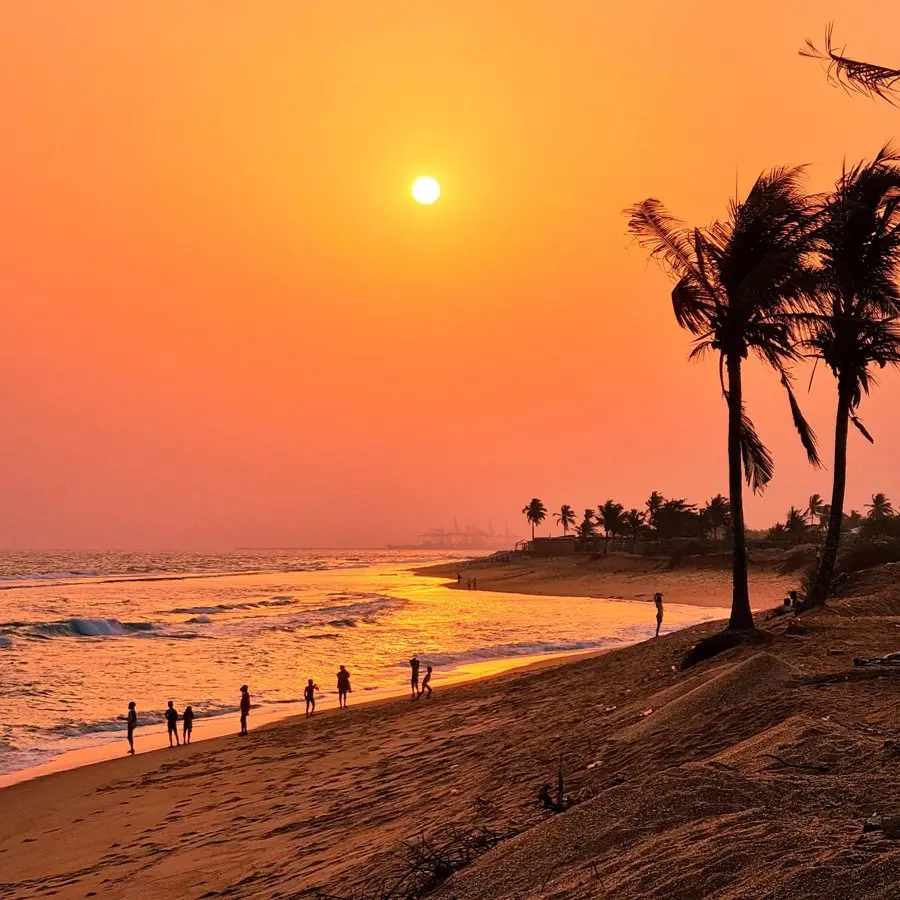
Lomé doesn't get the attention that Accra or Dakar do, and that's exactly why it's worth a look. Togo's coastal capital packs markets, contemporary art, living Vodun traditions and a working fishing harbour into a city where the ocean is never more than a short walk away. Two days is enough to get a real feel for it.
Start at the Grand Marché, also known as the Adawlato market, the busiest trading hub in the city and famous for its wax-print fabrics. It's tied to the story of the Nana Benz, the Togolese women who built textile trading empires across West Africa — history that gives the market a character beyond souvenir stalls. It runs all week, though Sundays are quiet. Come hungry: grilled fish, pâte and fufu with spicy sauces are the local staples, and small street-side restaurants beat formal dining here.
The afternoon belongs to the Palais de Lomé, a 1905 building that housed German colonial governors, then Togo's presidency, before years of abandonment. Renovated and reopened as an art and cultural centre in 2019, it now hosts exhibitions, gardens and sea views — a neat example of the city turning its past into contemporary culture. As evening comes, join the crowds along the waterfront; Lomé is unusual in West Africa for how closely the beach is woven into city life.
Day two gets more distinctive. The Akodessewa Fetish Market is one of Lomé's best-known attractions: stalls of medicinal plants and ritual objects tied to Vodun and traditional medicine. It's a living practice, not a show for visitors, so ask before taking photos and consider going with a guide who can explain what you're seeing. Afterwards, wander the city centre's mix of Afro-Brazilian houses, colonial buildings and churches, taking in Independence Square, the National Museum and Lomé Cathedral.
Later, head to the fishing port, where brightly painted pirogues come ashore and fish sellers line the waterfront. Again, it's a workplace — give people room, ask before shooting photos. For a slow finish, travel east of the main port towards Baguida or Avépozo, where palm-fringed beaches and informal grills offer a relaxed send-off. Order something off the fire and let the afternoon drift.
Lomé suits travellers who like their cities at street level: markets, food, faith and the ocean all mixing in the same frame. If you've already done the bigger West African capitals, this is a rewarding next step.