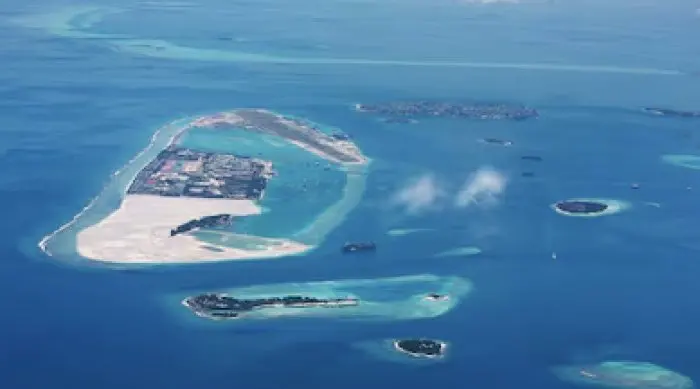
The Maldives has signed off on one of the biggest tourism projects in its history: a $12 billion waterfront and marina destination at Ras Malé, in Fushi Dhiggaru Lagoon, just a 17-minute speedboat ride from the capital, Malé.
The developer is Eagle Hills, the Abu Dhabi-based firm founded by Mohamed Alabbar — the same man behind Emaar Properties. The company already runs large waterfront schemes including Maryam Island in Sharjah ($1.2 billion) and the Durrës Yachts and Marina project in Albania ($2.5 billion), so this is a familiar playbook applied at greater scale in a country that lives and breathes tourism.
So what will actually be built? An integrated destination mixing international hotels and resorts with branded residences, a marina, waterfront promenades, restaurants, shops, wellness and leisure facilities. Schools and healthcare are part of the plan too, plus landscaped public space — a sign this is meant to be a living community rather than a string of resort islands. Buyers would hold properties on long leaseholds of up to 99 years under Maldivian law, with a fresh lease term starting after each sale or inheritance.
The numbers are striking even by Maldivian standards. Eagle Hills projects the full scheme could pull in more than $30 billion of gross foreign investment over its lifetime, attract over a million visitors a year at maturity, and generate upwards of $2 billion in annual tourism revenue, alongside roughly 54,000 direct and indirect jobs. The government calls it the largest investment programme in the country's history, and stresses it comes with no government borrowing or tax concessions.
There's also an environmental angle worth noting. The development sits on reclaimed land, and Eagle Hills says no additional dredging will take place, with independent marine monitoring expected throughout construction. That matters in a nation where lagoon ecosystems are the entire draw.
Ras Malé itself is part of the Maldives' biggest-ever urban expansion: more than 1,100 hectares planned across Fushi Dhiggaru, eventually housing around 65,000 homes plus commercial and tourism districts, all intended to relieve crowded Malé. It follows the 2025 announcement of an $8.8 billion international financial centre in the capital — a clear push to diversify an economy heavily reliant on tourism.
For travellers, the practical takeaway is that a new kind of Maldives experience is on the way: marina-side dining, promenades and town-style amenities rather than the usual fly-in, isolated-resort model. If you like the idea of a Maldives trip where you can stroll, shop and eat beyond your hotel's walls, this is the project to watch.
That said, patience is required. No development timetable, financing details or the size of Eagle Hills' direct capital commitment have been revealed yet, so don't book flights on the strength of the renderings just now. Expect the project to roll out in phases over many years.
First reported by Breaking Travel News