
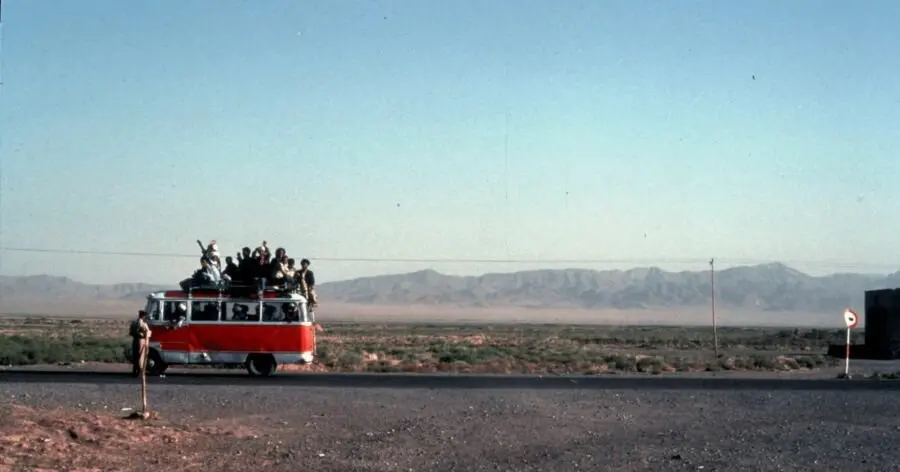
Long before he was America's favourite guidebook author, Rick Steves was a broke 23-year-old backpacking the Hippie Trail from Istanbul to Kathmandu. He has just published the first in a five-part series of journal entries from that summer, dated 29 July 1978, and it captures the crossing from Iran into Afghanistan just months before the world changed for both countries.
The entry opens at 5:45am in Mashhad, where a Spanish travel companion drags him out of bed for the cross-border bus. Three hours later they hit the Iran-Afghanistan frontier, a border post stranded in windy desert. Its museum is a grim roll call of convicted drug smugglers, and the crossing itself takes hours: three signatures to change a single 100-franc note, shot certificates inspected, a luggage search that amounts to a glance, a doctor's visit, a police check that trip up the Polish travellers on board. The no man's land between the two posts is so bleak the backpackers shelter in a wrecked VW van, sharing a small apple.
Then the journey gets properly eventful. Mid-route, the Afghans running the bus try to double the fare from 50 to 100 afghanis, one pulls a knife, and the driver turns back toward Iran. The passengers, a hardened crowd of Westerners, hold firm and negotiate a split payment, half up front and half on arrival in Herat. A roadside tea stop follows — men on rugs drinking tea and smoking hash, a well of cold filthy water, a 25-cent melon — before the bus finally rolls into Herat as the light fades.
What lands hardest is how welcoming the city seems. Herat is green, full of parks, and "hard not to like" by the young traveller's own notes. He checks into the Hotel Mowafaq, the fanciest in town: pool, showers, clean restaurants, and a double room for $5. Dinner at the hotel costs $1.25 for soup, bread, rice and meat, with menus noting that the recent People's Revolution has knocked 10 afghanis off every price. Flower-decorated, horse-drawn taxis rattle through the streets; soldiers are visible in the wake of the revolution that would, within a year, give way to Soviet invasion.
Why read it now? Steves frames these excerpts against the 2021 fall of Afghanistan, and the journal works both as time capsule and travel lesson. It's a portrait of a country before four decades of war, and a reminder of what overland travel once looked like: no bookings, no reviews, just patience, negotiation and hard-won comfort. For anyone who has taken an overcrowded bus across a harsh border, the mix of exhaustion, chaos and sudden delight will feel familiar.
The piece is the first of five journal entries, with the next instalment exploring Herat itself. Source: Rick Steves.