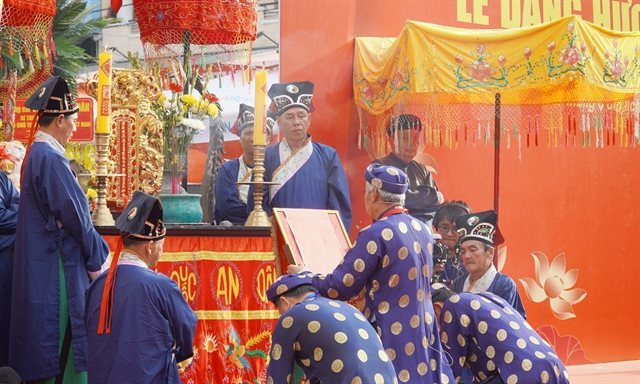
Every autumn, the Mekong Delta city of Rạch Giá fills with millions of pilgrims for one of southern Vietnam's most heartfelt events: the Nguyễn Trung Trực Temple Festival. This year's edition ran October 6-8 at the temple dedicated to the 19th-century resistance hero, timed to the 158th anniversary of his death.
The festival dates back to 1891 and honours Trực, a farmer-turned-guerrilla who led uprisings against French colonisation in the Mekong Delta. His most famous exploit was burning the French navy warship L'Esperance at Nhật Tảo village in 1861, and in 1868 his fighters stormed the French garrison at Rạch Giá itself. Captured after the French took his mother hostage, he was executed at Rạch Giá Market in October 1868, aged just 30. His defiant final words about Vietnam never running out of fighters made him a lasting symbol in the south.
The opening day centred on a solemn procession carrying his spirit tablet to the temple, followed by traditional rituals. Provincial officials used the occasion to stress the festival's role in passing patriotic values to younger generations — and it's recognised as national intangible cultural heritage since 2023.
For visitors, though, the appeal goes well beyond the ceremonies. An Giang staged a two-week programme of cultural events from September 26 to October 10, including a themed gala night called "Nguyễn Trung Trực – An Immortal Icon" that dramatises his life, plus a youth theatre festival and quiz competitions. Volunteer groups from across the region handed out free food and water, and the local generosity is legendary — one An Giang family, the Sếus, made and gave away 15,000 sticky rice cakes (bánh ít) to visitors arriving to burn incense.
If you're travelling in the Mekong Delta around the 26th-28th days of the eighth lunar month (roughly early-to-mid October), Rạch Giá makes a fascinating stop. It's a chance to see living folk religion rather than a staged show: incense queues, riverside processions, communal meals and a city turned out in celebration. It's crowded and intense — millions attend — so book accommodation early and expect road closures around the temple. Pair the festival with An Giang's other draws, like the sacred Sam Mountain area near Châu Đốc and the floating markets along the Hậu River.
Whether you come for the history, the rituals or simply the food and atmosphere, this is one of the delta's most authentic large-scale festivals — and a moving window into how southern Vietnam remembers its heroes.
Story reported by Vietnam News Life.