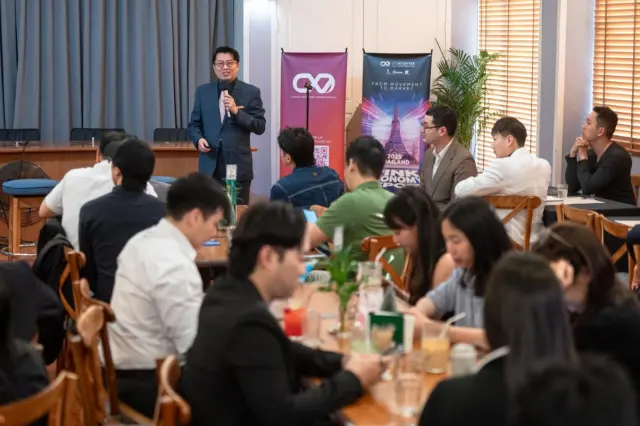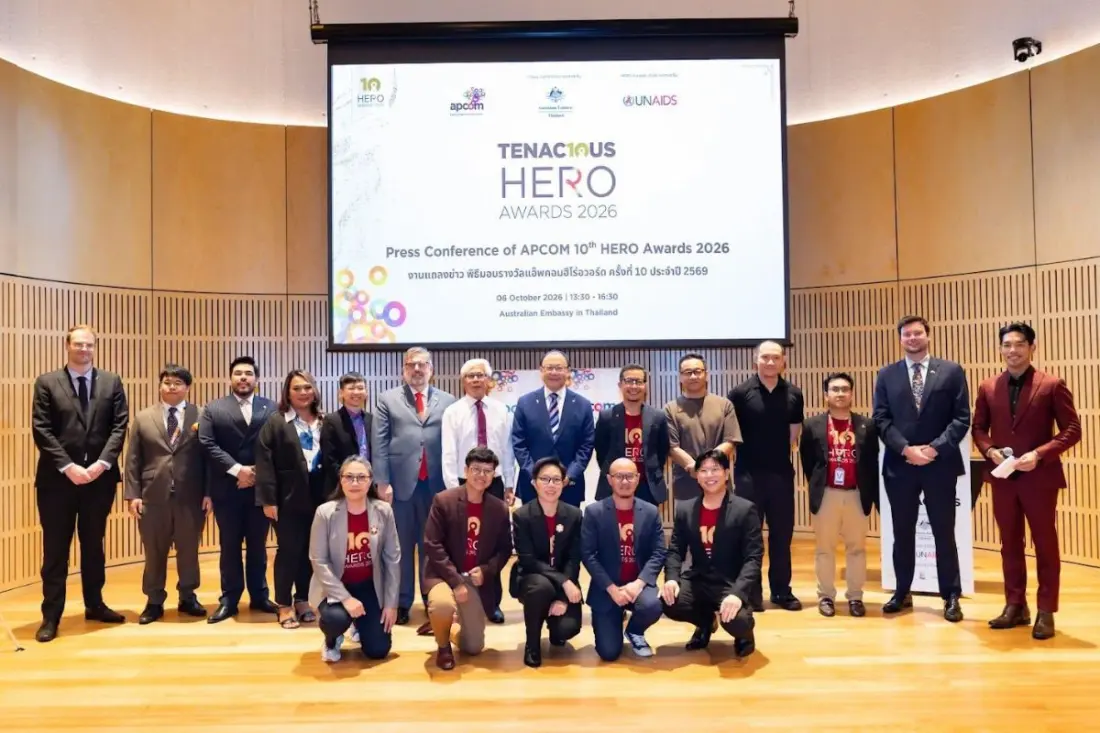
Bangkok will host a milestone edition of the Apcom Hero Awards in 2026, as the Apcom Foundation and the Australian Embassy mark a decade of honouring LGBTI and HIV/Aids advocates across Asia-Pacific. The theme this time is "Ten01CENET( Ten01CENET)" — a nod to the organisation's 20th anniversary coming next year and its plan to profile grassroots communities more deeply.
Midnight Poonkasetwattana, executive director of the Apcom Foundation, explains the choice of co-host: UNAids is marking its own milestone, and the HIV situation in Asia-Pacific still needs collective regional attention. He argues the issue has become regional because several countries in the region still need HIV support, and progress depends on political leaders and governments ensuring funding reaches affected communities — especially younger generations.
This year's edition is framed as a response to a growing anti-gender backlash in the region, where homosexuality remains criminalised in a number of countries, even as unofficial queer spaces like bars continue to exist. Midnight says resilient communities still need allies from other sectors — business, media and academia — to amplify their voices.
Expect representatives from at least 15 countries, with judging still underway. While Apcom normally hands out 11 awards, the 10th anniversary will see more trophies than usual. And there's a new collaborator: Youth LEAD, the regional network of young people living with and affected by HIV, joins as a community partner.
Eumann Murthy, regional director for Asia-Pacific and Eastern Europe/Central Asia at UNAids, puts the emotional case plainly: the awards are always a moment for the community to celebrate how far it has come, while remembering the work that lies ahead.
For travellers, the story is a useful pulse-check on queer Asia. Bangkok remains the region's most visible LGBT hub — its bars, events and community organisations make it a natural gathering point — but the awards are a reminder that visibility and legal safety vary sharply once you cross borders in the region. If you're heading to Bangkok around the 2026 ceremony or planning a broader Asia trip, it's worth knowing which neighbouring destinations are welcoming and which still criminalise same-sex relations. Events like this also signal where community-led organisations are active, which can point travellers toward locally run venues and pride-adjacent happenings rather than purely commercial ones.