
A Barbados trip built around sustainability sounds like a sacrifice, but it mostly means shifting where your money and hours go — trading the self-contained resort corridor for historic houses, a restored wetland, dinner in someone's home and a careful eye on the beach at night.
Start with where you sleep. Sweetfield Manor, a restored early-20th-century manor on a ridge above Bridgetown near the Garrison, has just 10 rooms, tropical gardens, a lagoon pool carved into a grotto and a resident population of peacocks. Its Pavão restaurant covers Bajan and vegetarian cooking across all three meals. Because it sits minutes from Bridgetown, Carlisle Bay and the South Coast, you're positioned to eat and shop independently rather than inside a resort bubble.
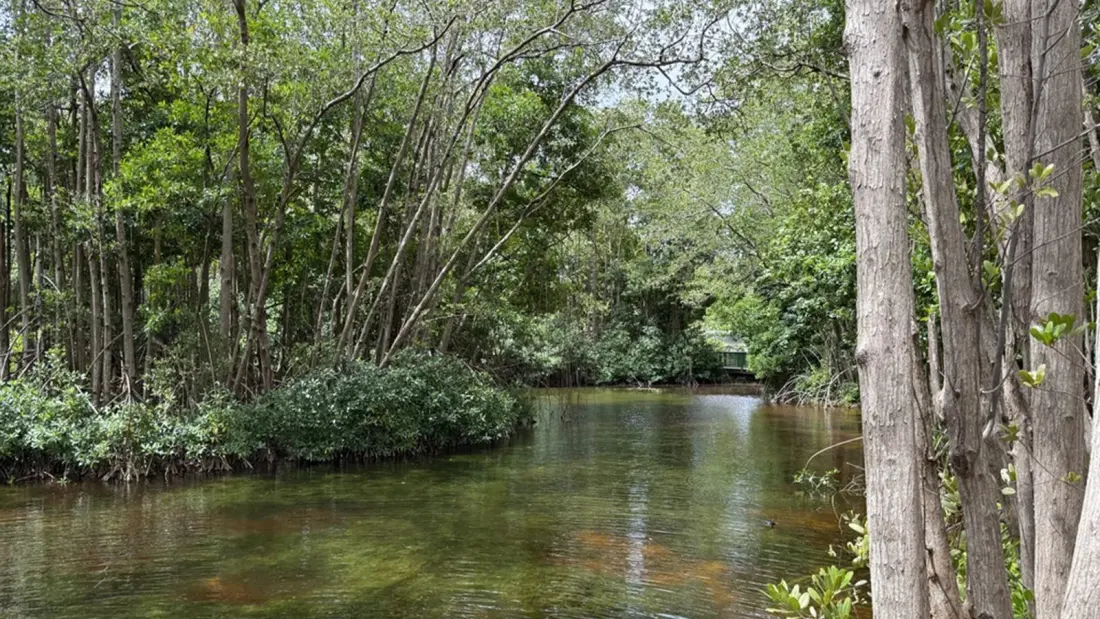
For nature, head to the Graeme Hall Nature Sanctuary in Christ Church, which reopened in 2025 after nearly two decades shut. The 35-acre site protects part of the island's last major mangrove wetland — critical for coastline protection and for native and migratory birds. Trails wind through the habitat, and entry fees fund ongoing restoration and education work.
Food is the easiest cultural bridge. The Dine With a Bajan programme pairs visitors with local hosts for home-cooked meals — think flying fish, cou-cou, macaroni pie, pudding and souse, or whatever the family speciality happens to be. The dish matters less than the conversation, and the money stays with local households.
Barbados' history deserves an afternoon too. The Barbados Museum and Historical Society occupies a 19th-century British military prison at the Garrison Savannah, with galleries covering Indigenous history, African heritage, the colonial era and independence. Bridgetown and its Garrison are a UNESCO World Heritage Site, so you can pair the museum with a walk through the historic district — it's also close to Sweetfield Manor, making a neat same-afternoon combo.
If you want to go deeper, watch for the Barbados National Trust's Open Houses, which occasionally open private heritage properties to the public — Rugby House in St. Thomas, an 18th-century coral-stone home, plus Gibbons House and Hopefield Manor in Christ Church. Foursquare Rum Distillery in St. Philip mixes working copper pot stills with the story of a former sugar factory, and Kingston Quarry has carved coral-stone walls and a Japanese-style garden. The Harry Bayley Observatory in St. Michael runs public stargazing.
One last, easily botched experience: sea turtle hatchlings. Hawksbills and leatherbacks nest on Barbados, and South Coast beaches near Dover and Worthing can produce hatching events — but timing belongs entirely to the turtles. Keep your distance, skip flash photography and lights, and never touch the hatchlings. Many hotels work with the Barbados Sea Turtle Project, which has run a 24-hour hotline (246-230-0142) for over 30 years. Report nesting turtles or hatchlings in trouble rather than intervening yourself.
None of this requires giving up rum punch or beach time. It just means your stay ends with more than a tan — you'll understand the island's architecture, food, ecology and history, and you'll have supported the people and organisations protecting them.