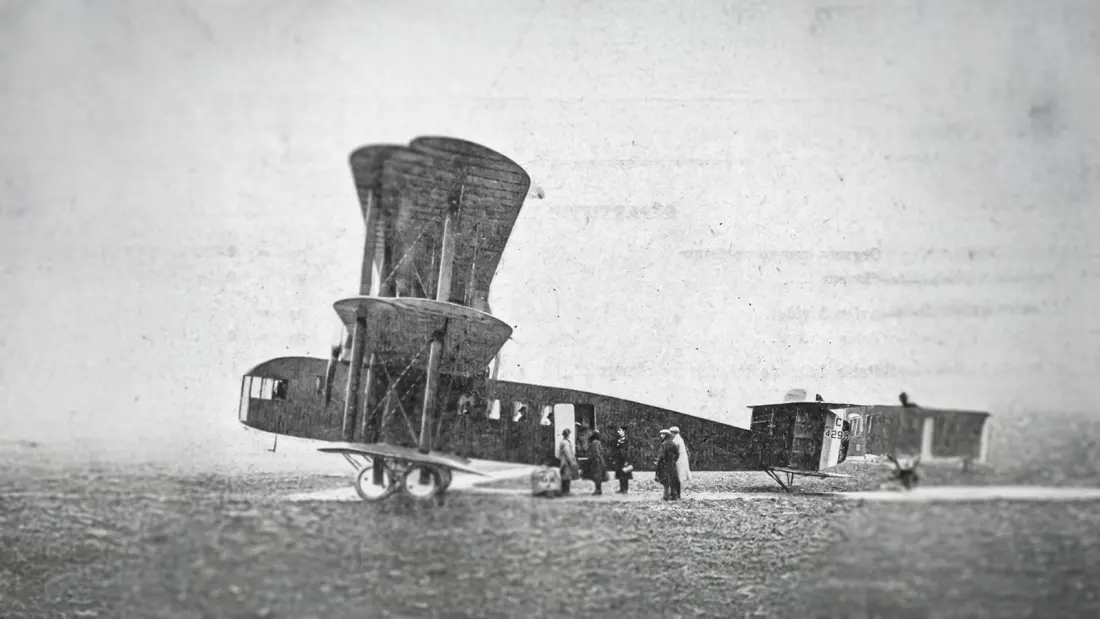
Picture an airliner so luxurious it was billed as a flying palace — and so commercially doomed it never earned a penny. The Bristol Pullman, which first flew in May 1920, was a triplane converted from a heavy bomber meant to strike Berlin in the First World War. It seated 14 passengers in a fully enclosed, wraparound-windowed cabin that wowed crowds at London's Olympia — yet it never carried a paying customer.
The airframe began life as the third Bristol Braemar prototype, a giant triplane bomber designed by Frank Barnwell to meet a straightforward wartime need: a long-range aircraft able to reach Berlin. The war ended in November 1918 before either earlier prototype saw service, and with Bristol still contracted to build a third airframe, officials pivoted to civil transport. The result was the Type 26 Pullman, registered G-EASP, powered by four 400hp Liberty engines with a wingspan of about 82 feet 8 inches and a top speed of 135 mph — quicker than some British fighters of the day.
Its cabin drew genuine praise, and the glazed, fully enclosed flight deck was among the earliest in Britain, giving pilots an excellent forward view. There was one alarming catch: crews worried they couldn't escape quickly in a crash landing, so some reportedly carried fireman's axes to chop their way out.
The Pullman was the star of the 1920 International Aero Show at Olympia — the largest aircraft ever displayed there at the time. But admiration didn't translate into orders. New government rules for civil aviation demanded short takeoffs, slow landing speeds and good economy, and a converted bomber's heavy triplane wings couldn't deliver. Barred from the Civil Aircraft Competition, the Pullman was quietly bought by the Royal Air Force in September 1920, taken to Martlesham Heath, evaluated informally, and dismantled. The sole prototype remains the only one ever built.
The wider context makes the story starker. Judges at the competition disliked all the reworked bombers entered — including the de Havilland DH.18 and Handley Page W.8 — and awarded no first prize. Weeks later, in December 1920, a converted Handley Page O/400 crashed on takeoff at Cricklewood, killing four people in one of Britain's first fatal airliner accidents, underlining the dangers of pressing warplanes into passenger service. In a grim way, the Pullman's commercial failure meant it never put travellers at risk.
Bristol's follow-up, the Type 53 Tramp — once pencilled in for experimental steam turbine power in talks with the Royal Mail Steam Packet line — never flew either; both airframes were scrapped at Farnborough in 1922.
Why does this matter to travellers? It's a reminder of how early commercial aviation got off the ground: the comfort-first ideas the Pullman pioneered, from enclosed cabins to enclosed cockpits, eventually became the standard every modern flight depends on — even if this particular pioneer never left the ground with a ticketed passenger aboard.
Story via Simple Flying.