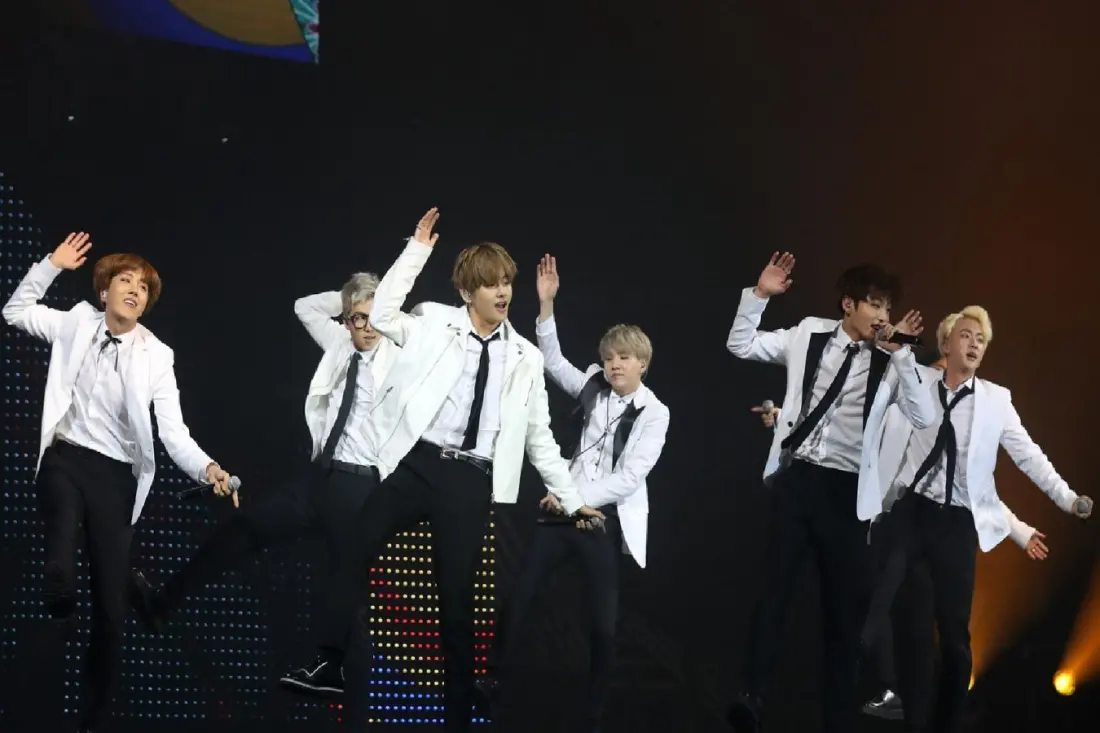
BTS played two nights at Bogota's Estadio El Campin on Oct. 2 and 3, drawing around 53,000 fans per night and an estimated 99 billion Colombian pesos (US$23.8 million) into the local economy. But the real story behind the shows goes back seven decades, to a war most Colombians know only from history books.
When the Korean War broke out in 1950, Colombia was the only Latin American country to send combat troops to the peninsula. Nearly 5,000 soldiers and naval frigates served between 1950 and 1953 under President Laureano Gomez, fighting at battles like Old Baldy and Outpost Harry. The cost was heavy: 163 dead, 448 wounded, 60 missing. That sacrifice created what diplomats call the "Blood Alliance," the foundation of bilateral ties formalised in 1962 and marked since by gestures like a Korean pagoda donated to Bogota's war college in 1994.
From there, the two countries' paths split dramatically. South Korea rode the "Miracle on the Han River" to become a high-tech powerhouse, and after the 1997 Asian financial crisis began treating culture as a strategic export. Colombia stayed tied to commodity cycles and internal conflict. Today the dynamic has inverted: Colombia imports Korean electronics, capital and media, backed by a 2016 free trade agreement and Korean support for its APEC engagement.
BTS itself is a wrinkle in that state playbook. The group came from Big Hit Entertainment, a near-bankrupt outsider excluded from the major broadcasters, and built its empire on direct-to-fan intimacy, lyrics about youth mental health, and fan-led translation networks. The state did legislate in their favour, passing the 2020 "BTS Law" allowing top cultural medalists to defer military service, and appointing the band as presidential envoys to the UN. Yet all seven members chose to serve anyway, protecting the authenticity that makes them valuable in the first place.
In Colombia, that resonance runs deep. Local ARMY networks operate less like fan clubs and more like civic organisations: when an earthquake hit Colombia's Pacific region earlier this year, HYBE donated $300,000 through Fundacion Abaco, but it was fan networks that ran grassroots supply drives and fundraising nationwide. The fandom also shows its teeth, as Noticias Caracol discovered when it filmed BTS's hotel on Oct. 1; the Union de Fanbases de Colombia coordinated mass-reporting that got the reporter's X account suspended within a day.
For travellers, this is a useful lens on Bogota right now. Massive international acts are choosing the Colombian capital, bringing serious spending power with them and signalling a city confident enough to host stadium-scale global tours. If you're visiting around a major concert, expect hotel demand in the El Campin area to spike and book early. And if you want to understand modern Colombia beyond the stereotypes, the organised, socially engaged K-pop fandom, one of the world's largest outside Asia, is as good a place to start as any.