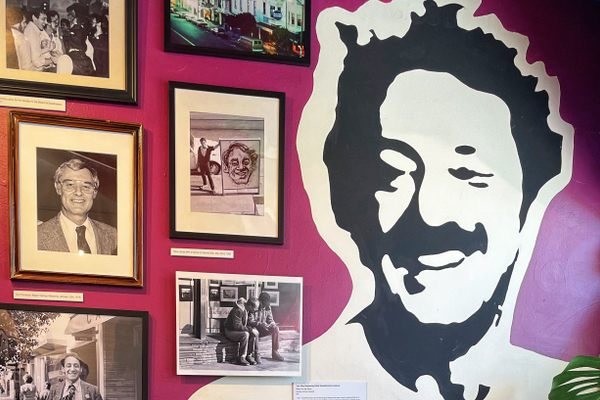
The storefront at 575 Castro Street in San Francisco has a serious resume. Back in the 1970s, it was Castro Camera — the shop where Harvey Milk sold film and plotted the campaign that made him one of the first openly gay elected officials in the United States. Rather than preserve the space as a museum piece, its current tenants have given it a livelier second act.
Today the address is home to Queer Arts Featured, known around town as Queer AF. It's part gallery, part boutique, part hangout — and entirely run with queer artists in mind, specifically those tired of waiting for mainstream galleries to hand them a slot. The walls carry bold, unfiltered queer work, much of it available to buy, so you can walk out with something genuinely one-of-a-kind rather than a Golden Gate Bridge fridge magnet.
The calendar is what sets it apart from a standard shop. There are rotating exhibitions, open mics, craft nights, and clothing swaps focused on gender-affirming wardrobes — practical, community-driven events rather than commercial showcases. History isn't ignored either: the space honours Milk's story and covers the White Night Riots of 1979, the angry response to Milk's killer receiving a light sentence, which unfolded steps from this very corner.
One detail worth seeking out: a pair of handmade ruby slippers crafted by one of the founders. A wink to Oz, and a fitting symbol for a neighbourhood that has long been a home for people building their own.
If you're heading to San Francisco, Queer AF slots easily into a Castro visit. The block between 18th and 19th Streets is the historic heart of the neighbourhood — the Milk-era Castro Camera site, the Castro Theatre a short stroll away, and the Rainbow Honor Walk underfoot. You can drop in simply to browse or shop, or time your visit around a scheduled event. Entry is affordable by design: events run on a sliding scale, so nobody is turned away for lack of funds.
Who's it for? Travellers who want their sightseeing to mean something. This isn't a plaque on a wall — it's Milk's actual storefront, still serving the community he fought for, now through art and gathering rather than film rolls. Come for the history, stay for the art, and maybe leave with a pair of ruby slippers of your own.