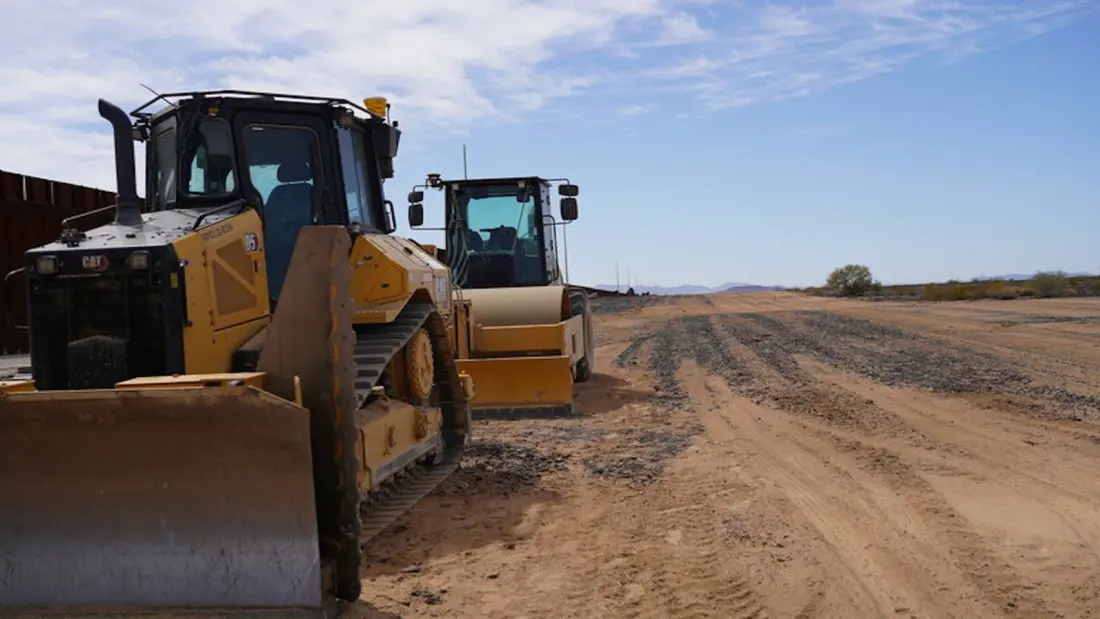
In April, bulldozers working on the US-Mexico border wall near Ajo, Arizona, carved a 50-foot gash straight through the Las Playas Intaglio, a 272-foot-long human-made figure scraped into the desert floor of Cabeza Prieta National Wildlife Refuge. Researchers say the damage severed the carving's 'head' and destroyed roughly 30 percent of it — a loss made worse by news that the geoglyph is far older than anyone realised.
A study published in The SAA Archaeological Record in September dates the intaglio to around 7,000 years ago. That makes it the oldest dated geoglyph in the Americas, predating Stonehenge by 1,500 years, Egypt's pyramids by about 2,000 years, and Peru's famous Nazca Lines by four millennia. Intaglios like this one were made by scraping away dark desert stones to reveal lighter ground beneath, and Arizona's examples are believed to have served religious purposes.
The carving sits on an ancient lava field along the border, on the ancestral lands of the Tohono O'odham Tribe. Its features are visible from space, and its face points south toward the Sea of Cortez, some 45 miles away in Mexico. US Customs and Border Protection says it has secured the remaining portion of the site and is in talks with the tribe, but did not comment on the scale of the damage.
Conservation advocates warn this isn't an isolated incident. The Department of Homeland Security issued waivers in 2025 that bypassed dozens of environmental and cultural protection laws to speed up wall construction across southern Arizona — and researchers behind the dating study caution that further destruction of nearby cultural sites would be a 'national tragedy'. Similar waivers have been used at Big Bend National Park in Texas. There's precedent, too: in 2020, Monument Hill, a burial ground sacred to the O'odham in adjacent Organ Pipe Cactus National Monument, was blasted apart, and protected saguaro cacti — found only in the Sonoran Desert — have been destroyed.
For travellers, the story matters because this corner of Arizona is a genuine, if under-visited, desert destination. Cabeza Prieta covers more than 800,000 acres of undesignated wilderness popular with winter hikers. Next door, Organ Pipe Cactus National Monument offers dark skies, camping and 28 miles of marked trails, and the region anchors the 800-mile Arizona National Scenic Trail, which runs from Mexico to the Utah state line. The wall has also severed the refuge's ecological connection to Mexico's El Pinacate and Gran Desierto de Altar Biosphere Reserve, one of the largest protected desert areas in North America. Access rules and site closures may shift as construction continues, so anyone planning a desert trip here should check current conditions with land managers first.
Story reported by Outside Online.