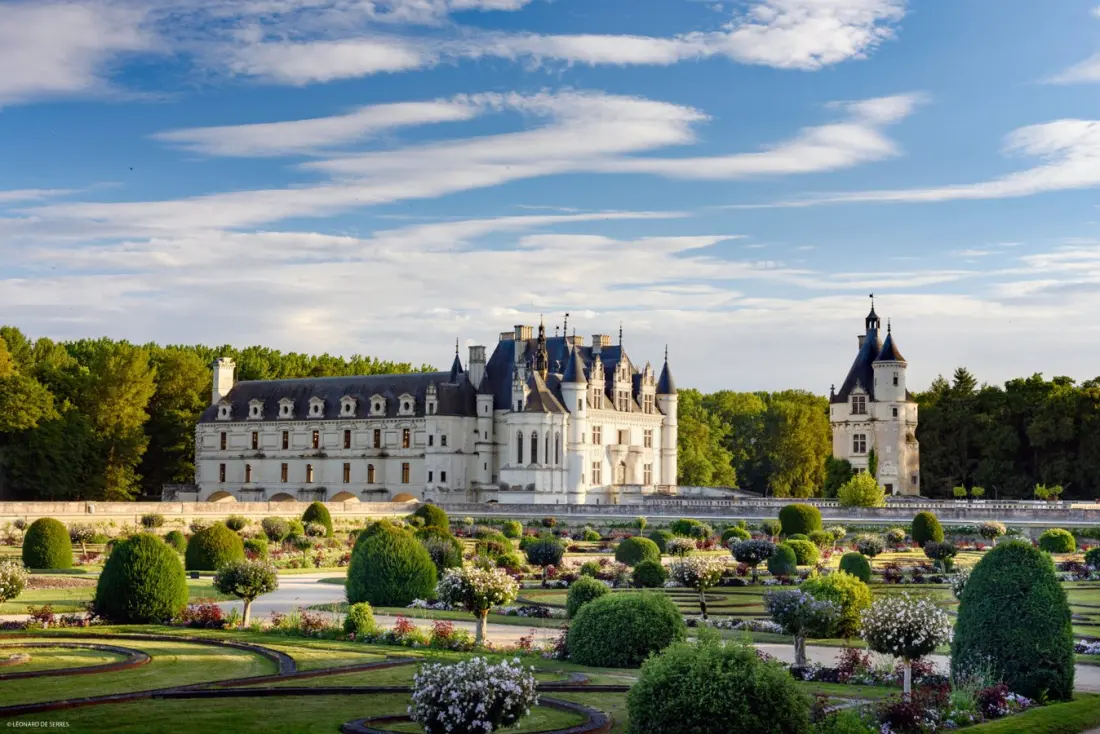
Château de Chenonceau, the Renaissance gem that stretches across the River Cher in the Loire Valley, is decking its halls for the festive season once again. From November 28, 2026 to January 3, 2027, the château runs its 'Christmas and Traditions of the World' programme, and this year's theme looks well beyond France — expect rooms styled around festive traditions from Great Britain, Germany, the Americas, Japan, Iceland and, of course, France itself.
The star of the show is the floral work. Jean-François Boucher, holder of the coveted 'Meilleur Ouvrier de France' title, leads the château's Floral Workshop, crafting arrangements from fresh blooms, foliage and natural materials designed to suit each historic interior. A behind-the-scenes video shows how the team puts it all together.
The château's famous Gallery — the long, arched hall built over the river — gets a glamorous makeover this year as a Viennese ballroom, its tall windows still framing views over the water below. Down in the kitchens, built into the bridge's piers, the tour turns culinary: Christmas in India, Provence and Alsace, including Provence's famous tradition of thirteen desserts. Families are covered too, with surprises for children hidden around the kitchens and a small forest of Christmas trees made entirely of teddy bears tucked away in one of the rooms.
The decorations are only half the reason to go. Chenonceau is nicknamed the 'Château des Dames' because of the women who shaped it — Diane de Poitiers, Catherine de' Medici, Louise Dupin and Madame Pelouze among them. Around twenty rooms are open to visitors, from the Guards' Room and Chapel to the salons of François I and Louis XIV, packed with paintings, tapestries and furniture from the 16th to 18th centuries. Outside, the Renaissance gardens laid out by de Poitiers and de Medici take on a quieter winter mood, a calm contrast to the decorated interiors.
The château's 20th-century history adds another layer. The Menier family turned it into a military hospital during the First World War, and in the Second World War the gallery crossing the river became an escape route between occupied and free France, with the family helping people flee Nazi persecution.
Practically speaking, adult tickets start at €19, children aged 7–18 pay from €15, and under-sevens go free. There's a late opening on December 23 if you want to see the château lit up after dark.
For anyone planning a winter break in the Loire — a region better known for summer château-hopping — this is a good excuse to see one of France's most-visited châteaux at its most atmospheric, with fewer crowds, festive florals and a bit of Christmas-themed globe-trotting thrown in.