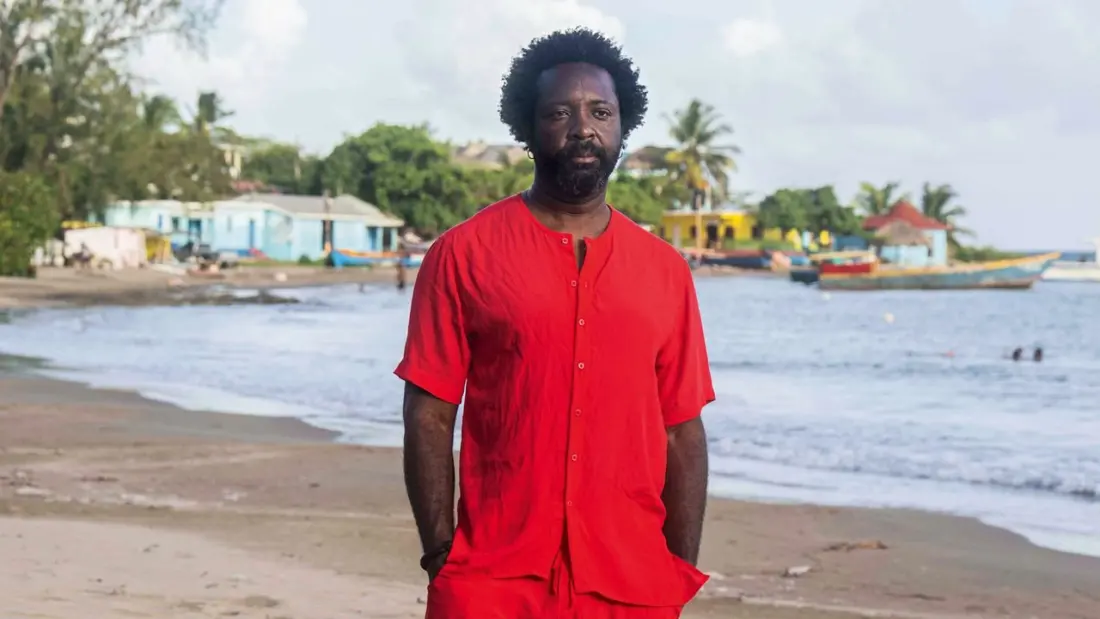
Booker Prize winner Marlon James has a simple theory about Jamaica's capital: there isn't one Kingston, there are four, five, six of them — layered, contradictory, sometimes only a block apart. His new novel The Disappearers (£20, Hamish Hamilton) digs into the version tourists rarely hear about, and along the way offers a genuinely useful reading list for anyone who wants to understand the island beyond the resort strip.
The book, a contender for this year's Booker, follows a real-life incident: a mob attack on a group of gay men rehearsing a play in 1988, one of whom is murdered and others who vanish. Told across nearly two decades through multiple viewpoints, interviews and letters, it's a detective story that doubles as an investigation of queer Kingston — a city that once supported four or five operating gay bars. James interviewed around a dozen people to build it and says the portrait turned out more complicated than he expected: not a nation of knee-jerk hostility, but secret communities finding companionship, humour and joy under pressure.
He's honest about why he wrote it — a kind of FOMO. While he was at church "praying the gay away", his peers were living the rich, risky queer life of the city he missed. He also traces Jamaica's inherited anti-sodomy laws back to Britain, which didn't decriminalise until 1967, though he insists Jamaicans must own their own hatreds too. His read now? Attitudes are softening, and young queer Jamaicans aren't leaving. He himself is openly public at home — cab drivers know him as "the gay one".
For travellers, the gold is in his personal map of the island. James loves Treasure Beach and anywhere in St Elizabeth parish, black-sand beaches precisely because nobody goes to them, and St Mary, his family's home parish, where he tends to show up unannounced at GoldenEye — the former Ian Fleming estate turned hotel. He recommends the caves around Hellshire, used since Taíno times, old Spanish Town for its faded colonial resemblance to London, and the hills above Kingston. What he won't do is set a novel in cruise-ship Ocho Rios.
His Kingston itself is worth a look if you travel for culture rather than all-inclusives: a "maximum city" that is sophisticated and chaotic in the same afternoon, where by evening the streets smell of dew and crickets and the whole place sounds like countryside. Pair the novel with his earlier A Brief History of Seven Killings, also set in the city, and you'll land with a sharper sense of place than most guidebooks can give you.
Who's this for? Readers who choose destinations through books, and anyone heading to Jamaica who wants the island's complexity alongside its beaches. It's not a light beach read — James jokes he isn't "working for the Jamaican tourist board" — but it's a truer invitation than most.