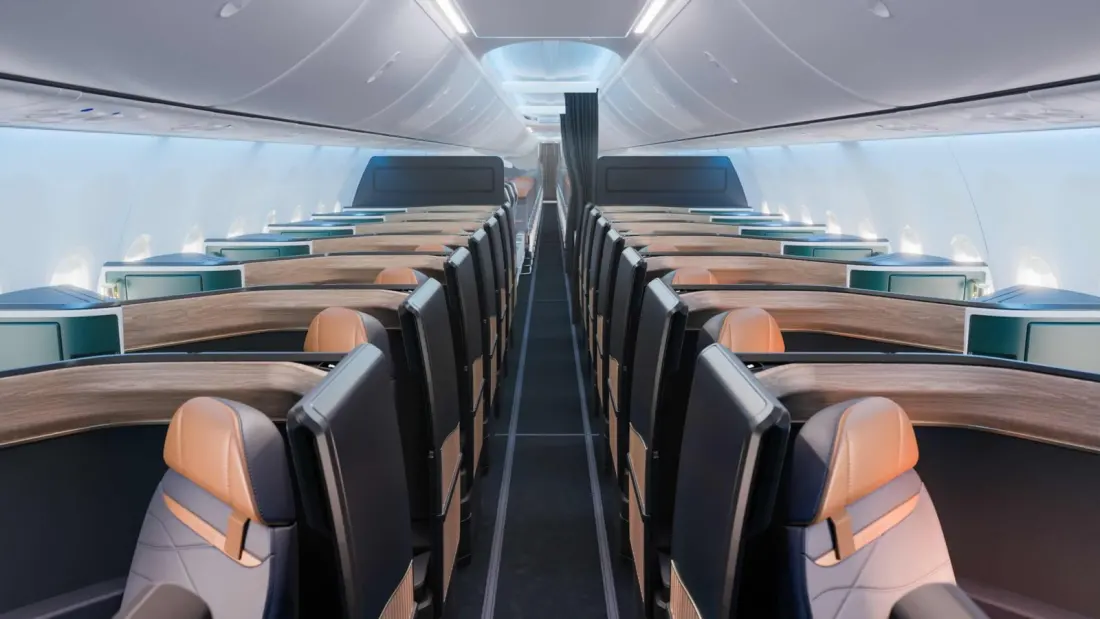
Alaska Airlines has spent years as the odd one out on transcontinental routes: while American, Delta, United and JetBlue all offered beds in their premium cabins on coast-to-coast flights, Alaska stuck with recliner-style first class seats. That changes with Project Gotham, the initiative the airline detailed at its Investor Day this week.
The plan: at least 25 Boeing 737 MAX 10 aircraft fitted with 12 lie-flat "Aurora Suites" each, plus 12 seats in Premium Reserve, a new premium economy product. Chief Commercial Officer Andrew Harrison was emphatic that this is a real commitment rather than a trial - "this is not a test," he told investors - with rollout beginning in 2028.
New York City is the headline beneficiary, with Seattle, San Francisco and Los Angeles also central to the deployment. The logic is straightforward. On a five-to-six-hour flight, and especially an overnight red-eye, the difference between a wide recliner and a flat bed is the difference between arriving wrecked or rested. Alaska's service and West Coast network have kept many flyers loyal, but premium travellers comparing fares have increasingly had little reason to pick Alaska when a competitor offered a bed for a similar price.
Why did it take so long? The author of the source piece points to a mix of operational logic and deliberate choice. A cabin identical to the rest of the fleet gives an airline flexibility to swap aircraft across its network, and beds eat into seat count, so they only pay off if premium demand justifies the lost capacity. After absorbing Virgin America in the late 2010s, Alaska had a chance to rethink its transcontinental product and declined - a 2018 report explicitly ruled out lie-flat seats. What has changed, it seems, is the revenue maths, plus a new context: with Hawaiian Airlines now part of the group, Alaska is building an international business class operation, and a bed on selected domestic routes fits that picture far more naturally.
The Aurora overhaul goes beyond seats, with promised upgrades to dining, airport service and lounges - all aimed at persuading premium flyers to switch airlines rather than simply charging loyal ones more.
For travellers, the practical takeaways are simple. If you fly premium between the West Coast and New York, Alaska will become a genuine option from 2028 - but that's years away, and route schedules and exact deployment are not yet announced, so don't rearrange any loyalty just yet. Until then, Alaska's transcontinental first class remains a recliner product, and sleep-focused flyers on red-eyes will keep finding Delta's Mint-style suites, United's Polaris-configured aircraft and JetBlue's Mint more compelling. The other thing to watch is whether the premium revenue materialises: if it does, expect these 25 aircraft to be the start rather than the ceiling, and possibly a wider rollout of the Aurora Suites concept across the network.
Who should care: frequent coast-to-coast flyers, Alaska Mileage Plan members weighing whether to stay loyal, and anyone who has ever landed at JFK at 6am after a sleepless night in a reclining seat. Project Gotham is Alaska's admission that on long domestic routes, the seat is the product - and that it finally intends to compete on those terms.
Original reporting: Live and Let's Fly.