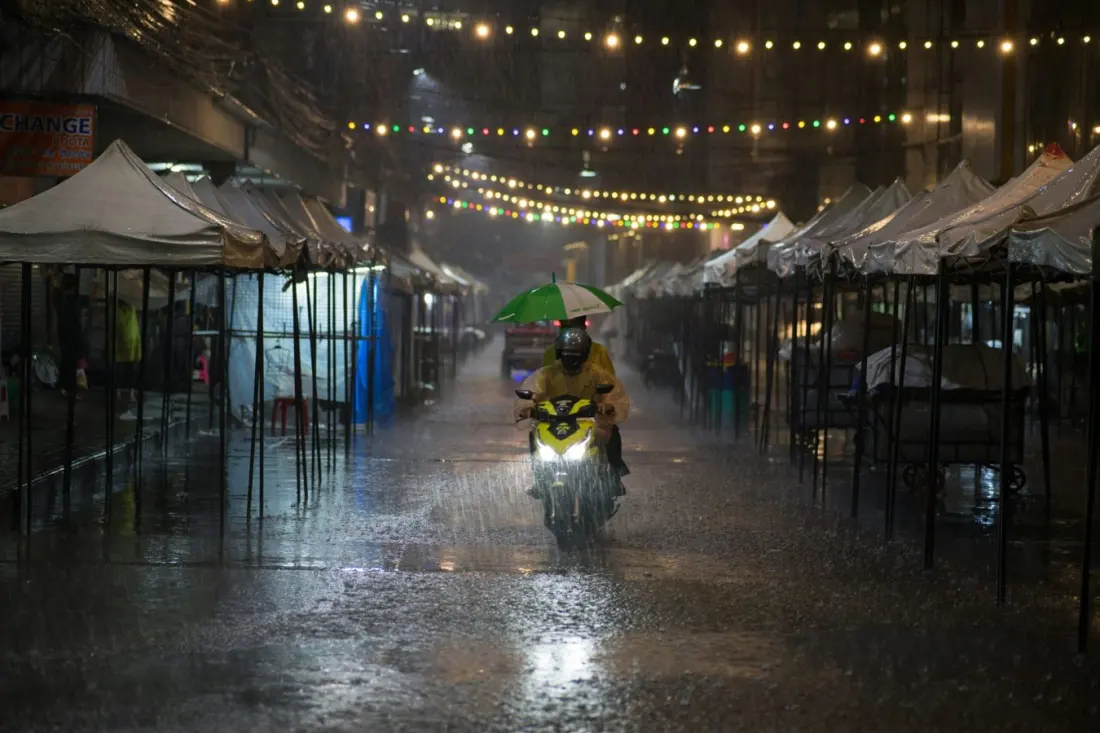
Heavy rain has swamped parts of Bangkok and nearby provinces, with all 50 districts of the Thai capital declared disaster-affected areas. Roughly 700,000 residents have been hit by the flooding, according to the city's Flood Control Centre, with eastern neighbourhoods among the worst affected. Water is now receding in places, but the city's governor warned it could take a couple of days to clear main roads and up to a week in lower-lying areas.
So is Bangkok off-limits? No. The UK's Foreign, Commonwealth and Development Office has updated its Thailand advice to flag flooded roads and disruption in Bangkok, Nonthaburi, Pathum Thani and Samut Prakan, but it has not advised against travel to the capital over the floods. Its stricter 'all but essential travel' warning applies only to areas near the Malaysian and Cambodian borders, for separate security reasons. The disaster declaration itself is not a visit ban.
Getting around is the real issue. Most attractions are open, both airports are operating and the city's rail services are running, according to the Tourism Authority of Thailand, but some roads remain flooded. Taxis may be slow to arrive and local services may be rerouted, so the TAT suggests checking weather and transport before heading out and padding the journey time to airports and train stations.
Air travel has a warning attached, too. Suvarnabhumi and Don Mueang airports are both open, but Thai Airways said flooding had stopped many staff reaching work, prompting around 30 cancelled departures from Bangkok. The airline has also been clearing a large baggage backlog at Suvarnabhumi — so serious that military personnel were brought in to help. Anyone flying soon should confirm their flight directly with the airline and, if bags go missing, use the Lost & Found desks or the airline's tracking channels.
There's a bureaucratic wrinkle as well: the Thai government declared 28 and 29 September special public holidays in Bangkok and the three neighbouring provinces to cut down on travel. Essential services continue, but some government offices may be closed or thinly staffed, so check before heading to any appointment.
If you have a trip booked, the practical advice is to check each leg — flight, hotel, onward transport — rather than relying on a citywide update, since conditions vary street by street. And note that the FCDO's flooding warning does not automatically entitle you to a full refund if you cancel. What you can recover depends on your booking, whether the provider cancels a service and the terms of your insurance, so talk to your provider before pulling the plug and read your policy wording carefully.
The bottom line: Bangkok remains open and largely functional, but expect slower journeys, possible flight changes and some delay risk on luggage. Check your specific route and stay out of floodwater — a wet street can hide more problems than it looks.