In Laayoune, the largest city of Western Sahara, a small museum called the Musée Industrie Lithique holds thousands of years of desert history — and one very stubborn curator. The museum is the work of a local collector known as Mr. Taki, who spent years filling his home with prehistoric tools, fossils and other finds from the surrounding Saharan region before opening the museum to the public around 2023.
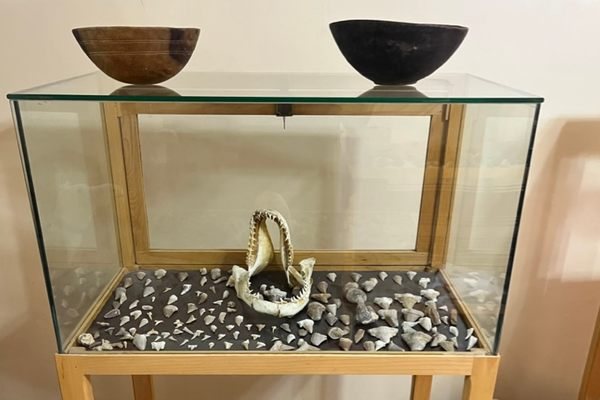
Inside, glass cases display dozens of lithic objects — stone tools and artifacts sent to or gathered by Mr. Taki — while the rooms themselves are packed floor to ceiling with larger pieces. It's less a formal institution than a personal obsession made public, and visitors consistently mention the curator as the main attraction: an internationally recognized expert whose awards from the UN and other organisations now occupy their own corner of the museum.
The collection has celebrity pedigree, too. Back when it still lived in Mr. Taki's house, Tom Hanks paid a visit and tried to buy a large sandrose — a naturally sculpted crystal formation found in deserts. Mr. Taki declined, and the sandrose remains in the museum. A photo of the Hanks visit is now on show at the small souvenir shop Mr. Taki runs at Laayoune airport, which also carries a mini version of the display for travellers passing through.
Mr. Taki is also the go-to source on an unexpected chapter of local history: the Taiwanese writer Sanmao, who lived in Laayoune for years and wrote about it in beloved essays that made the city famous across the Chinese-speaking world. Fans of her work still make the trip, and Mr. Taki is the person to ask.
Practically speaking, this is not a turn-up-and-walk-in kind of place. Visits should be arranged in advance — Mr. Taki takes bookings via WhatsApp — and on Google Maps the museum appears under the name "Association de protection des industries préhistoire," so don't panic if you can't find it by its museum title.
Laayoune sits well off the typical Morocco itinerary, deep in the contested territory of Western Sahara, which is exactly why a stop here appeals to travellers who like their sights strange, personal and off the grid. Pair a museum visit with the city's Spanish colonial centre, the Saguia el-Hamra river valley and the Atlantic coast an hour west, and you've got a genuinely unusual Saharan detour. Just don't bother trying to buy the sandrose — it's been asked after by bigger names than you.