Most visitors race along the coast towards Dubrovnik and never glance inland. Twenty-something kilometres away, in the quiet hills of Dubrovačko Primorje, two village ponds have quietly become a first for the country: in January 2022, the ponds at Donji Majkovi and Prljevići were declared Croatia's first herpetological reserve — a protected zone for reptiles and amphibians.
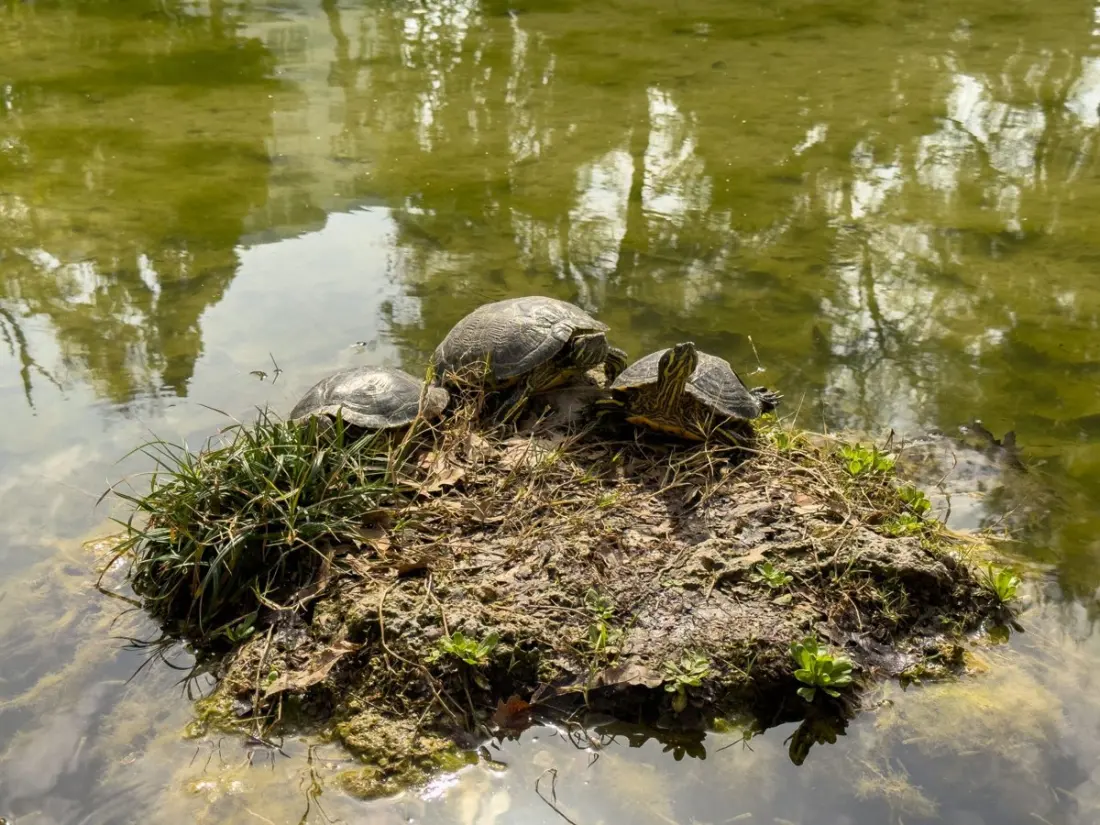
The stars here are European pond turtles, strictly protected in Croatia and clinging on in only a handful of spots between Pelješac and Prevlaka. The Majkovi ponds are one of just four areas in the country where the species still lives. Alongside the turtles, 19 species of amphibians and reptiles have been recorded at the site, ten of them strictly protected. That record earned the ponds a place in the EU's Natura 2000 ecological network.
Why do these turtles need rescuing? The animals are modest in size — shells around 20 cm long — and their numbers are shrinking. The main culprits are habitat loss and conventional farming: pesticides and artificial fertilisers do serious damage. Harm one of these turtles and you risk a fine, so if you visit, look and don't touch.
Majkovi works well as more than a turtle stop. A hiking trail sets off from the village towards Neprobić, a 963-metre peak near the Bosnia and Herzegovina border that takes about three hours on foot. The reward is a wide-open view: Slano bay, the Elaphiti Islands, Mljet and Pelješac on one side, the hills of Herzegovina on the other.
Back down in Slano, a short drive away, there's a cultural bonus most people misread at first. The Rector's Palace here shares a name with Dubrovnik's famous one, but it has a story of its own. Built for defence and administration, it was attacked by pirates and hajduks in the 16th and 17th centuries, shaken by the 1667 earthquake, burned in 1806 and again during the Homeland War. The Society of Friends of Dubrovnik Antiquities restored it in 2017 and it now hosts exhibitions and cultural events. Entry is two euros, and it opens daily except Sunday.
For travellers tired of Dubrovnik's crowds, this corner of southern Dalmatia offers something different: nature worth protecting, a leg-stretching hike, and history in a village setting — all within about half an hour's drive of the city, heading towards Pelješac.