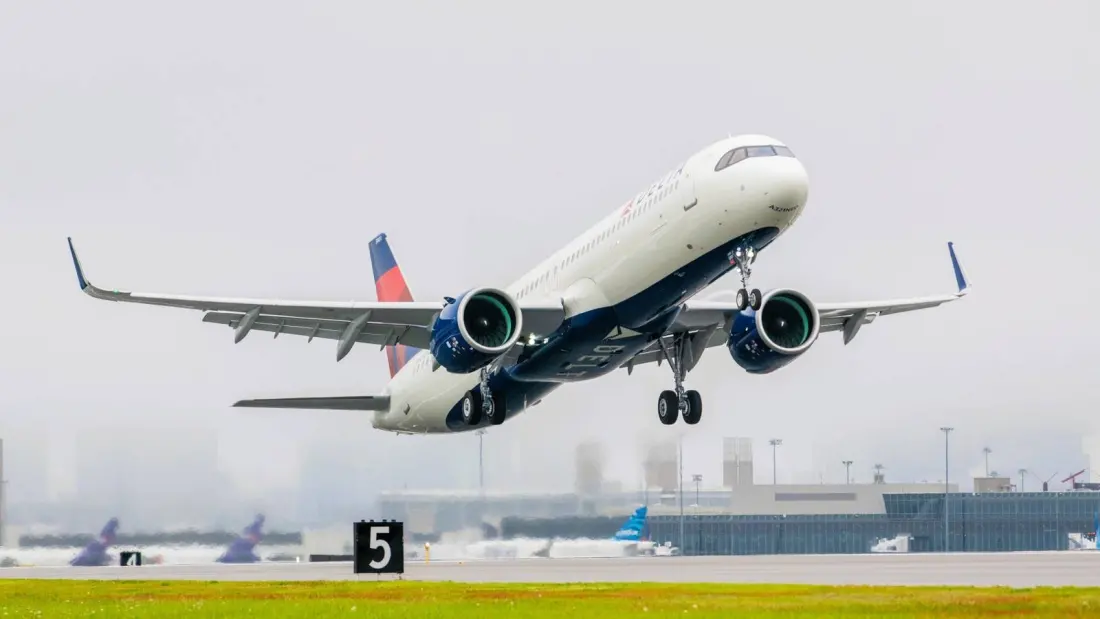
A Delta flight from Maui to Seattle turned into a medical response scene late Saturday night when fumes filled the cabin and forced the crew to divert to Honolulu. Four passengers ended up in an emergency room, though all were reported stable.
The flight, Delta 394, left Kahului on Maui with 189 passengers aboard an Airbus A321neo, bound for Seattle-Tacoma. The fumes were noticed shortly after departure, while the plane was over the Pacific. With a five-hour ocean crossing ahead and an unidentified smell in the cabin, the crew followed standard procedure and turned back to the nearest suitable airport: Daniel K. Inouye International in Honolulu.
The landing itself was smooth. Passengers walked down air stairs and were bussed away from the aircraft. But Honolulu EMS was called to the airport around 11 PM after travellers reported headaches and nausea. Three women, aged 42, 27 and 31, were treated on site and taken to an emergency room in stable condition. The Federal Fire Department transported a fourth patient, also stable. Delta separately confirmed that one flight attendant sought medical attention as well.
What caused the fumes is still unknown. The airline hasn't identified the substance, and answers will likely depend on a full technical inspection of the aircraft, plus any review by aviation authorities. Adding to the puzzle: after landing, crews observed fuel discharging from the plane, and it's not yet clear whether that was connected to the cabin-air problem or an entirely separate issue.
Delta put passengers on a replacement aircraft the following morning, and the airline says it is issuing refunds and contacting travellers directly to apologise. The A321neo will stay out of service until technicians and investigators have established what happened.
For anyone who flies Hawaii's long overwater routes, the incident is a useful reminder of why diversions happen even when the plane is flying perfectly well. An unexplained cabin smell is treated seriously because its source is unknown and symptoms can develop mid-flight — and on a Maui-to-Seattle routing, the nearest airport with full medical and maintenance resources is Honolulu. That's exactly how the system is supposed to work, even if it means an unplanned night in Waikiki and a much longer trip home.
No life-threatening injuries have been reported, and Delta has committed to working with authorities on the broader review. The key questions — what entered the cabin and how — remain open until the inspection is complete.