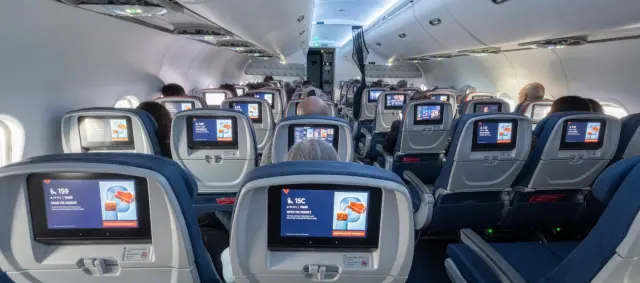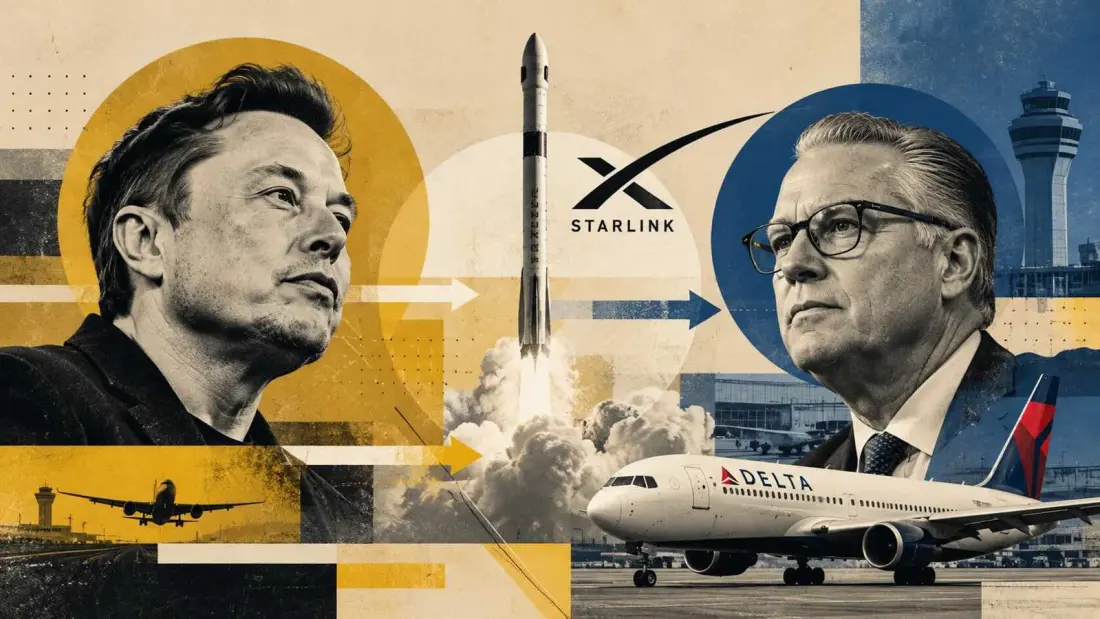
Delta has become the last major US carrier standing between Elon Musk and the skies. At a recent company event, CEO Ed Bastian reportedly explained why the airline refuses to sign up for Starlink, and his reasoning was refreshingly blunt: 'We do not want to be with Elon Musk. Trust me.' Aviation watcher JonNYC shared the remarks, though he flagged that he couldn't verify the exact wording. Bastian also reportedly said Delta had tested Starlink but walked away because of Musk himself, adding 'it's all true what they say about him.'
The context matters. United Airlines is rolling out Starlink across its fleet at speed — it's already live on more than 560 aircraft, with the full installation expected before the end of 2027. For a carrier like Delta that has staked its brand on a premium onboard experience, choosing not to install the connectivity product passengers actually rave about is an awkward position to defend. Bastian's 'trust me' reads like an attempt to reassure employees and travellers alike that there are good reasons for the standoff — whether those concern Musk's reliability as a long-term contract partner, the multi-year commitment of equipment across hundreds of planes, or simply personality.
Musk, predictably, responded on social media rather than with a shrug. He mocked Delta's onboard internet — 'best way to sandbox an AI is to put it on a Delta flight' — and declared that Bastian 'will lose his job over this.'
So what is Delta offering instead? More than you might think. Fast Wi-Fi is already free for SkyMiles members across much of the fleet, and Amazon Leo installations are scheduled to begin in 2028, with an initial commitment covering 500 aircraft. In the shorter term, Delta is leaning on Viasat, whose ViaSat-3 F2 satellite entered service over the Americas this month, following F3 across Asia-Pacific in August — a completed constellation the company says substantially boosts available bandwidth.
Whether that stack holds up is the real question. Musk's product is genuinely popular with flyers: the writer of the original piece notes nearly every recent United flight has had working Starlink, and it's easy to see why frequent travellers — the ones answering emails, streaming, or just messaging home from 35,000 feet — care far more about the connection than about the personalities behind it. Delta's bet is that passengers will accept good-enough internet from Viasat and later Amazon rather than excellent internet from Musk. If the bet lands, nobody will remember this spat. If it doesn't, United could leapfrog Delta on connectivity across its entire fleet before Delta even installs its first Amazon Leo antenna.
For travellers, the takeaway is simple: if reliable, fast and free in-flight Wi-Fi is a deciding factor when you book, United currently has the clearer advantage, while Delta flyers should watch for Viasat performance improving this year and the Amazon rollout arriving from 2028. The Delta–Musk feud makes for good headlines, but the scoreboard that counts will be the one measured in megabits per second at cruising altitude.