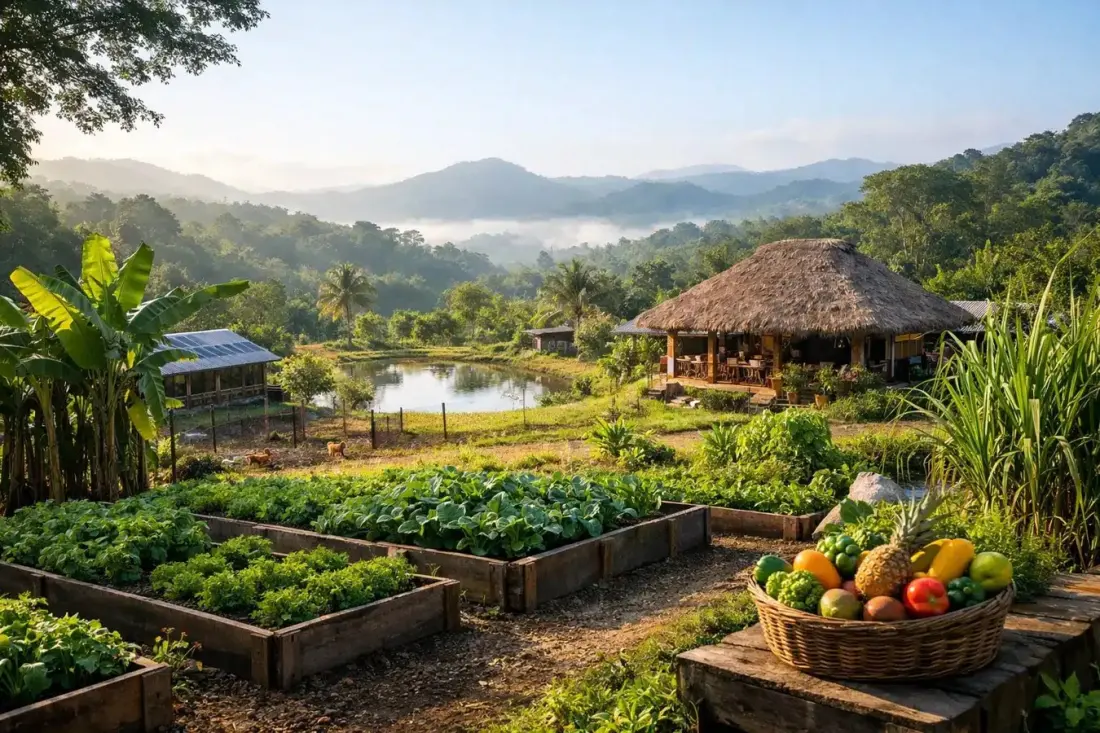
Costa Rica has spent decades building a green reputation, and a new wave of travellers wants to see behind the brochure. A thoughtful piece from Howler Costa Rica rounds up five working eco farms around the country that let you do exactly that — from a regenerative cacao-and-spice plot near Arenal to a permaculture food forest on the southern Caribbean coast.
The starting point is understanding what an eco farm actually is. There is no single definition: some operations are organic, some regenerative, some biodynamic or community-run, and smaller farms often follow excellent practices without paying for formal certification. The reliable signs are practical — diversified crops instead of a monocrop, composting and natural soil amendments, careful water use, protected forest, shade-grown production, and fair year-round work for local staff. An honest farm should be able to explain its methods plainly, including the hard parts: heavy rain, fungal pressure, pests, rough roads and volatile markets.
The five examples span the country. Finca Luna Nueva, near Arenal in the northern lowlands, is one of Costa Rica's best-known regenerative farms, layering rainforest restoration with medicinal plants, spices and food crops — a lesson in tropical soil as a living system rather than dirt awaiting fertiliser. Rancho Margot, in the hills above Lake Arenal, blends lodging with gardens, livestock, renewable energy and waste systems, and raises a fair question for bigger properties: do visible operations back up the environmental claims? Finca Rosa Blanca, in the coffee hills outside San José, pairs comfortable hospitality with a working coffee estate, where shade trees support birds and pollinators and smart wastewater management protects nearby streams.
For a different angle, EARTH University in the Caribbean lowlands is an agricultural campus rather than a farm stay, training students in food systems and rural development — worth knowing for anyone thinking beyond a weekend visit. And Punta Mona, on the remote southern Caribbean coast, is a long-standing permaculture project where getting there takes real effort. That is the point: low-impact living asks visitors to slow down, though it won't suit anyone chasing resort-level comfort.
Why does this matter for your trip? Because the right farm visit depends on what you want. Families may prefer an accessible coffee or chocolate tour near main routes. Anyone scouting relocation or a land purchase should seek out regenerative farms that discuss stewardship, infrastructure and seasonal realities. Before booking, ask what the farm grows, how it manages water, whether local staff are employed year-round, and whether its organic claims are certified, in transition or simply practiced without certification. None of these answers is automatically a dealbreaker, but clarity separates genuine projects from pretty photos.
Access is part of the experience too. Many of the most inspiring projects sit down rural roads where rain and distance shape daily life — confirm transport, accommodation, dietary options and activity levels before you go. The best visits change how you see a plate of fruit or a morning coffee long after you leave the farm gate.